“As long as I live, I’ll hear waterfalls and birds and winds sing.” — John Muir
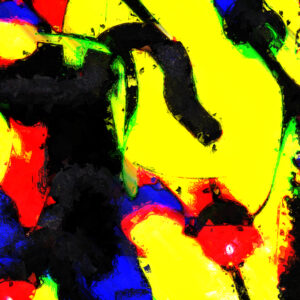
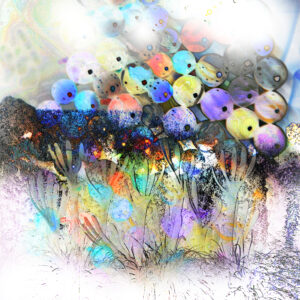
There is an elemental force within the waterfall that resists containment. It is movement without hesitation, sound translated into motion, gravity made visible. In Cascade of Color, that force is not merely observed but reimagined—transformed into a language of abstraction where emotion, pigment, and energy converge into a single uninterrupted descent.
Rather than functioning as a literal landscape, the work operates as an experiential field. The waterfall becomes a metaphorical structure through which color itself is allowed to fall, fracture, and reform. The result is not representation, but immersion—an environment built from layered perception rather than fixed geography.
Waterfalls have long occupied a central place in art history, often symbolizing purity, renewal, and the sublime power of nature. In Romantic painting traditions, they were rendered as monumental natural events—forces that dwarfed human presence. In contemporary abstraction, however, such subjects evolve beyond depiction into sensation. Cascade of Color exists within that evolution, where the subject is no longer the waterfall itself, but the experience of standing within its energy.
At the core of the work lies a disciplined yet intuitive overpainting process. Each layer contributes to a cumulative surface that behaves almost like sedimentary time. Earlier marks remain embedded beneath subsequent passages, creating a visual memory structure within the canvas. Nothing is fully erased; instead, everything is absorbed, modified, and recontextualized. This method produces a depth that feels less constructed and more unearthed.
The surface reveals subtle tensions between concealment and exposure. Beneath luminous passages of pigment, traces of earlier decisions persist—ghosted forms and fractured undertones that suggest movement even in stillness. This layered construction mirrors the physical behavior of water as it travels downward, constantly reshaping itself while retaining continuity. In this sense, the painting becomes both subject and process simultaneously.
Color functions as the primary emotional architecture. Rather than adhering to naturalistic observation, chromatic choices are elevated into psychological territory. Cool tonalities suggest atmospheric depth and quiet suspension, while warmer accents interrupt and activate the composition, introducing moments of intensity and visual acceleration. These shifts in temperature create a rhythmic cadence across the surface, echoing the unpredictable turbulence of falling water.
The vertical orientation of the composition reinforces this sense of descent. The eye is drawn downward through successive fields of pigment, experiencing a controlled dissolution of form. Stability yields to motion, and motion dissolves into abstraction. This progression is not abrupt but continuous, echoing the way water transitions from stillness to velocity without interruption.
Within this descent lies an exploration of release. Waterfalls are often associated with surrender—an acceptance of force beyond control. That idea manifests visually through the surrender of form to flow, structure to gesture, and clarity to atmosphere. Rather than resisting movement, the composition embraces it, allowing instability to become a source of coherence.
The emotional resonance of the work emerges through this controlled instability. There is a tension between structure and spontaneity, between deliberate construction and intuitive response. The painting does not resolve this tension; instead, it sustains it. That sustained ambiguity creates an environment in which interpretation remains open, shifting with time, light, and proximity.
Craftsmanship plays a defining role in the physical presence of the piece. Surface complexity is achieved through repeated engagement with the medium, where each application of pigment contributes to a broader visual system. Texture becomes an index of time, recording the sequence of decisions embedded within the work. This accumulation produces a tactile depth that invites prolonged viewing, revealing new relationships with each encounter.
The influence of formal fine art training is evident in the compositional balance and structural awareness underlying the abstraction. Spatial harmony is maintained even amid expressive disruption, allowing the work to oscillate between control and release without collapsing into chaos. This equilibrium is central to the integrity of the piece, ensuring that emotional intensity is supported by compositional rigor.
Equally significant is the conceptual framing of authenticity. Each original work is accompanied by a Certificate of Authenticity (COA), establishing provenance and confirming its status as a singular creation. In the contemporary art market, such documentation functions as both legal verification and historical record, linking the physical object to its origin within the artist’s practice. Over time, this connection contributes to the work’s cultural and collectible significance.
In a visual culture increasingly defined by reproduction and digital replication, material originality carries heightened importance. The physical painting retains qualities that cannot be translated into reproduction—subtle variations in texture, micro-layering of pigment, and the unpredictable behavior of medium across surface. These qualities exist only within the original object, reinforcing its uniqueness and permanence.
Cascade of Color ultimately operates as both artifact and experience. It captures not a single moment in nature, but the continuous condition of becoming. The waterfall is not fixed; it is perpetual motion, endlessly reconfigured through perception. Within this framework, the painting becomes a space of contemplation—an invitation to witness movement as something both external and internal.
The enduring presence of waterfalls in human imagination lies in their duality: they are at once forceful and meditative, chaotic and ordered, destructive and renewing. This duality is embedded throughout the work, where visual intensity coexists with quiet balance. The result is a sustained visual rhythm that resists final interpretation.
Like the river that precedes the fall, meaning gathers gradually within the work, accumulating through repetition, variation, and flow. What emerges is not conclusion, but continuation—an ongoing descent into color, memory, and perception, where the act of seeing becomes inseparable from the experience of motion itself.
The Exhibition Canvas comes in 3 sizes and goes through several steps that include overpainting with acrylics, signing with acrylics on the front and a final glazing to protect the canvas before being rolled in a sealed tube then a box ( shipping is free in the USA )
The Matted Prints come in 3 sizes and are shipped in a box. ( shipping and handling is free in the US)
The Glossy Poster Print measures 16 x 24 and arrives in a sealed tube that is placed in a box. ( shipping is free in the US )
The 4 Inch Round Peel And Stick Decal is perfect for many applications beyond cars and comes in a sealed envelope ( shipped for free )
11 x 14 limited edition- Canvas Black Floating Frame available with two options ( shipping is free in the US )
The painting is unstretched and comes to you rolled in a sealed plastic sleeve with a heavy duty tube. This assures you that the shipment will arrive in great shape. The addition of brush strokes and sealant creates a unique one of a kind look to every painting. Once you receive the painting take it to your framing shop and get it stretched or framed.