“Great dancers are not great because of their technique, they are great because of their passion.” — Martha Graham
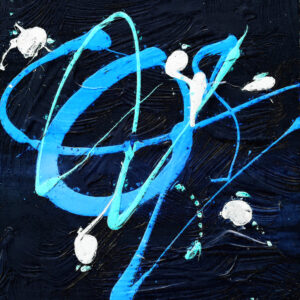
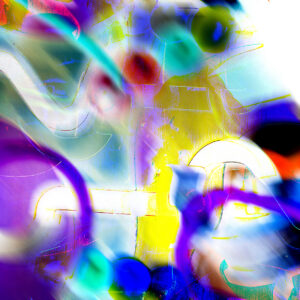
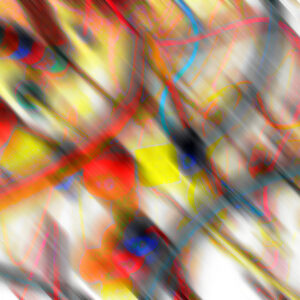
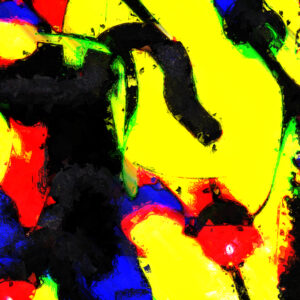
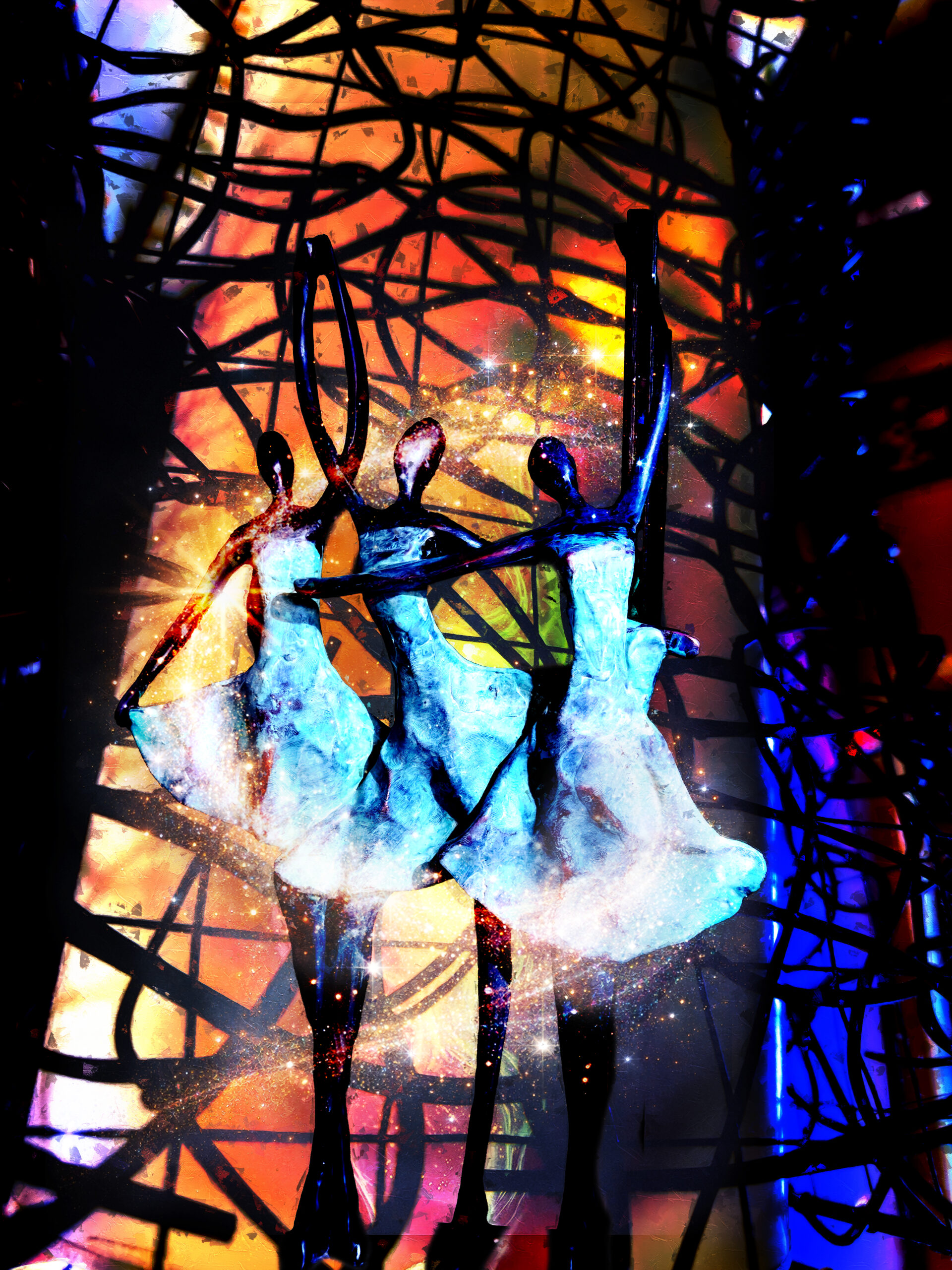
Dance to Every Beat — Original Painting by Michael John Valentine
“Dance to Every Beat” exists at the intersection of movement, music, photography, and paint — a place where rhythm becomes visible and emotion becomes physical. This piece reflects Michael John Valentine’s distinctive creative process, one that begins not with a brush, but with a camera capturing fleeting human motion. The painting is not simply inspired by dance; it is born directly from the energy of real movement, translated through multiple artistic mediums until it becomes something entirely new.
At the core of Valentine’s work is original photography, often captured in environments where music, motion, and atmosphere converge. In these moments, dancers are not posing — they are responding instinctively to sound, rhythm, and emotion. The camera freezes a fraction of time that would otherwise disappear forever. These photographs become the structural foundation for the painting, preserving authenticity while allowing imagination to expand beyond reality.
Photography alone captures motion, but painting allows motion to evolve.
Once the photographic image is selected, Valentine begins the transformation process. The image is printed onto canvas, becoming a starting point rather than a finished work. Acrylic paint is then layered over the photograph — sometimes subtly, sometimes boldly — creating a hybrid form that exists between documentation and abstraction. This is where the artwork becomes truly alive. Brushstrokes amplify rhythm, color intensifies emotion, and texture introduces physicality that photography alone cannot provide.
The dancer in “Dance to Every Beat” is not defined by anatomical precision or literal realism. Instead, the figure becomes a visual instrument of music itself. Color radiates outward like sound waves. Movement is suggested through layered strokes and graffiti-influenced marks that echo the improvisational nature of dance. The painting feels less like a still image and more like a moment that continues to vibrate with energy.
Music has always been inseparable from dance, and this piece reflects that relationship through composition and color. The background pulses with expressive tones that suggest rhythm rather than environment. Rather than placing the dancer in a defined physical setting, Valentine creates a sonic atmosphere translated into visual form. The viewer does not simply observe the dancer — they feel the beat implied by the movement.
This approach reflects a philosophy that art should capture experience rather than appearance. Dance is temporary by nature; it exists only in the instant it is performed. Valentine’s process mirrors this reality. The original photograph preserves a fleeting second of motion, while the painting expands that second into something enduring. The result is a visual memory of rhythm — a permanent echo of a temporary performance.
A defining characteristic of Valentine’s work is the overpainting process, which ensures that every canvas becomes a one-of-a-kind piece. Even when prints originate from the same photographic source, no two overpainted canvases are ever identical. The brushwork, layering, and spontaneous gestures vary with each piece, making every collector’s version unique.
This individuality is essential to the meaning of “Dance to Every Beat.” Just as no two dancers interpret music in exactly the same way, no two painted canvases emerge with identical expression. Each version becomes its own performance — a visual improvisation guided by the artist’s instinct in the moment of creation.
Texture plays a central role in this transformation. The physical surface of acrylic paint introduces depth and movement that shift depending on light and perspective. From a distance, the piece communicates energy and rhythm; up close, the viewer discovers brushstrokes, layered pigment, and tactile marks that reveal the artist’s hand. This dual experience parallels dance itself — choreography seen from afar becomes emotion felt up close.
The fusion of graffiti influence and fine-art painting further reinforces the theme of movement. Graffiti, like dance, is rooted in immediacy and expression. Both art forms emphasize spontaneity, rhythm, and physical engagement with space. By incorporating gestural marks and bold color transitions, Valentine connects contemporary urban energy with timeless artistic practice.
“Dance to Every Beat” ultimately becomes more than a depiction of a dancer. It becomes a meditation on how humans respond to music instinctively, without language or instruction. The figure in the painting represents freedom — the freedom to move, interpret, and exist fully within sound and emotion.
Valentine’s photography-to-painting process preserves the authenticity of the original moment while allowing imagination to reshape it. This layered approach creates artwork that feels both real and dreamlike, grounded in a specific instant yet expanding beyond it.
Collectors often describe this fusion of mediums as cinematic — as if the painting captures a frame from a larger story still unfolding. That sense of continuation is intentional. The dancer appears suspended between beats, between steps, between moments of music. The painting invites the viewer to complete the rhythm in their own mind.
Like dance itself, the artwork is about presence — being fully engaged in a moment that cannot be repeated.
And just as every dancer interprets music differently, every collector experiences this painting differently. Some see celebration. Others see release. Others see memory or nostalgia. This openness of interpretation is part of the artwork’s living quality.
“Dance to Every Beat” stands as a signature example of Michael John Valentine’s artistic philosophy:
capture the moment with photography, transform it with paint, and preserve its energy forever.
Each overpainted canvas becomes its own performance — a permanent dance translated into color, texture, and motion.