
“Art enables us to find ourselves and lose ourselves at the same time.” — Thomas Merton
A Deep Dive into Psychedelic Flower Abstract Art
by Michael John Valentine
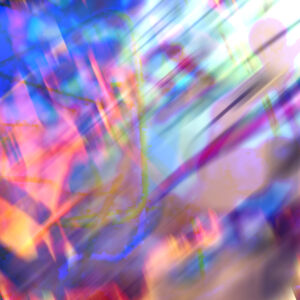
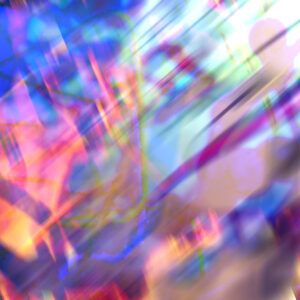
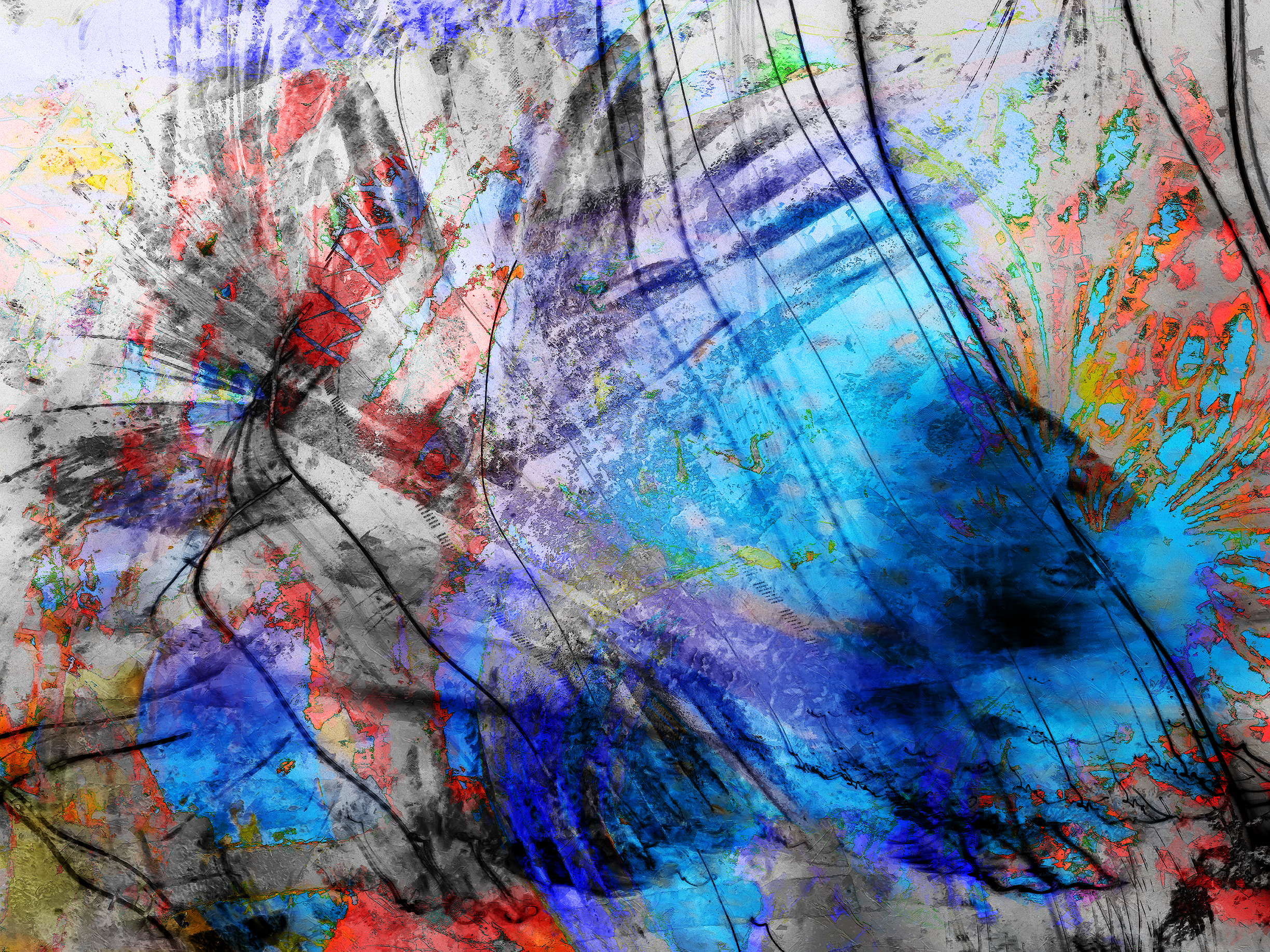
Michael John Valentine’s Psychedelic Flower Abstract Art is an invitation — an alluring portal into a world where color, form, and emotion merge beyond literal perception. This work is not simply an image; it’s a visceral encounter, a living tableau that transcends traditional representation. As abstract art seeks to express that which lies beyond words, Valentine’s piece achieves this by evoking the ineffable — stirring a resonance within the viewer that feels both deeply personal and profoundly universal.
An Explosion of Sensory and Symbolic Energies
At its core, Psychedelic Flower Abstract Art harnesses the floral motif not for botanical precision, but as a vessel of energetic and emotional depth. Flowers have long served as symbols of transformation, rebirth, and the fleeting nature of beauty — from Georgia O’Keeffe’s immersive blossoms to contemporary interpretations that bend perception. Valentine’s piece pushes these associations further, conjuring a psychedelic experience that nudges the viewer toward inner introspection and outward wonder.
Here, the psychedelic is not merely stylistic flourish. In the broader artistic lexicon, psychedelic art is defined by its vivid colors, surreal distortions, and evocative patterns that suggest altered states and expanded perception. It is art that seeks to reveal the unseen, that mirrors the richness of the psyche itself — what British psychologist Humphry Osmond called “mind‑revealing.”
Valentine’s work uses this lineage as a springboard, blending intense chromatic interplay with abstracted floral forms to elicit impact not just visually, but emotionally and spiritually.
The Alchemy of Composition
Unlike traditional floral art — where the flower is a subject, recognizable and contained — in Psychedelic Flower Abstract Art, the blossom dissolves into an almost cosmic display of movement and pattern. The petals are not static; they pulse, ripple, and radiate outward in spirals of color, recalling fractal geometries or neural pathways firing in ecstatic alignment. These forms are at once organic and otherworldly, reminiscent of fractal‑based floral interpretations found in contemporary digital canvases.
The palette chosen by Valentine likely spans intense primaries and jewel tones — electric blues, radiant magentas, luminous yellows — each hue vibrating with its own frequency. This chromatic dynamism is crucial in psychedelic sensibilities, where color becomes a tactile force, guiding the viewer’s gaze and emotional response. The result is not simply seen; it is felt.
Indeed, color in psychedelic compositions often functions like music — a symphony of tones that resonate with the viewer’s internal rhythms. Valentine’s usage, therefore, suggests not just an aesthetic choice, but a practice in synesthetic communication — where the senses blur and visual perception almost sounds like music in the mind’s eye.
Process, Materiality, and Craft
Although the image itself is abstract, the craftsmanship behind Valentine’s work is grounded in a meticulous blend of media. According to the work’s description, the piece features overpainting in select areas, and is sealed with a glossy protectant, offering depth and dimensionality to each brushwork gesture. This approach reflects a hybrid methodology — photography melded with traditional acrylic application — that emphasizes both texture and luminosity.
This hybrid technique imbues the work with a tactile quality uncommon in purely digital art. The interplay of layered paint and surface sheen invites close viewing, rewarding those who lean in with subtle shifts in tone and reflective nuance. These qualities elevate the piece from mere visual spectacle to an object of contemplation, where light and shadow engage in constant dialogue.
Theme: Nature Meets Imagination
Flowers, archetypal symbols of nature’s beauty, are reimagined here as conduits to inner space. This aligns with a larger trend in contemporary art — where natural motifs become metaphors for psychological or spiritual states rather than literal depictions. In Valentine’s hands, the flower becomes a living metaphor: a blossom of consciousness, unfurling not in a garden, but within the mind’s eye.
This symbolic layering echoes themes found across psychedelic traditions, where the floral — especially the radiantly colored or hyper‑patterned — often represents growth, transcendence, and the interconnectedness of life. Flowers are at once delicate and powerful, ephemeral yet eternal in their symbolic resonance. Here, Valentine captures this duality with finesse.
Viewer Engagement and Interpretation
What makes Psychedelic Flower Abstract Art compelling is its capacity for personal interpretation. Abstract work does not hand the viewer a fixed story; it invites them to participate in meaning‑making. In this sense, the piece becomes a mirror — reflecting back fragments of the viewer’s own psyche. Some may find in it pure visual joy, others a meditative escape, and still others a portal to the ineffable.
The psychedelic quality of the work — its kaleidoscopic energy and shifting forms — encourages this interpretive openness. As one might experience in other psychedelic art traditions, where imagery seems to pulse and breathe with an inner life, Valentine’s composition dances on the threshold between the concrete and the imagined.
This kind of engagement is uniquely powerful because it positions the viewer not as a passive observer, but as an active participant in the creative experience.
A Statement on Contemporary Artistic Vision
In a world where visual culture moves at high speed — where images flicker briefly on screens before fading — Valentine’s work stands as a testament to the value of sustained attention. It asserts that art can still inspire wonder, slow down perception, and open pathways to subjective exploration.
The choice to blend photographic elements with painterly abstraction speaks to a broader contemporary dialogue between realism and imagination. Unlike purely digital psychedelia, Valentine’s piece retains an artisanal presence — the residue of physical brushstroke, the texture of material applied by human hand. This anchoring in craft enriches the work’s emotional depth, even as its forms transcend realism.
In this way, the piece embodies a bridge between worlds — the familiar and the fantastic, the natural and the surreal.
Conclusion: A Living Experience of Art
Psychedelic Flower Abstract Art by Michael John Valentine is more than decoration. It is an immersive aesthetic statement — one that draws from the rich history of psychedelic expression, floral symbolism, and abstract exploration. It engages the viewer on multiple levels: visual, emotional, symbolic, and introspective.
It reminds us that art does not simply depict life — it expands it. In an era flush with images, this work invites us to slow down, to open our senses, and to let color and form become a language through which we might glimpse facets of beauty otherwise hidden.
In this, Valentine’s creation does exactly what great art aspires to do: it reveals something of ourselves in the process of looking, and in doing so, allows us, like Merton suggests, both to find and to lose ourselves in the experience.