“Nobody sees a flower — really — it is so small. We haven’t time, and to see takes time like to have a friend takes time…”
— Georgia O’Keeffe on why she painted flowers big, inviting intimate looking and deep seeing.
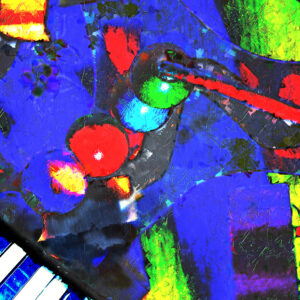
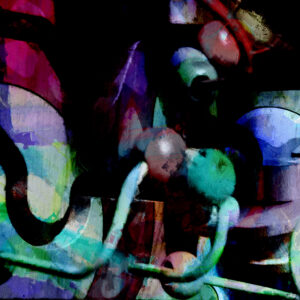
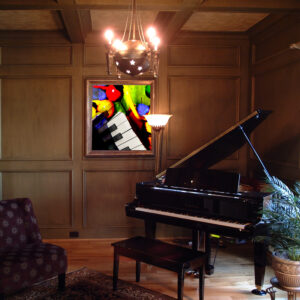
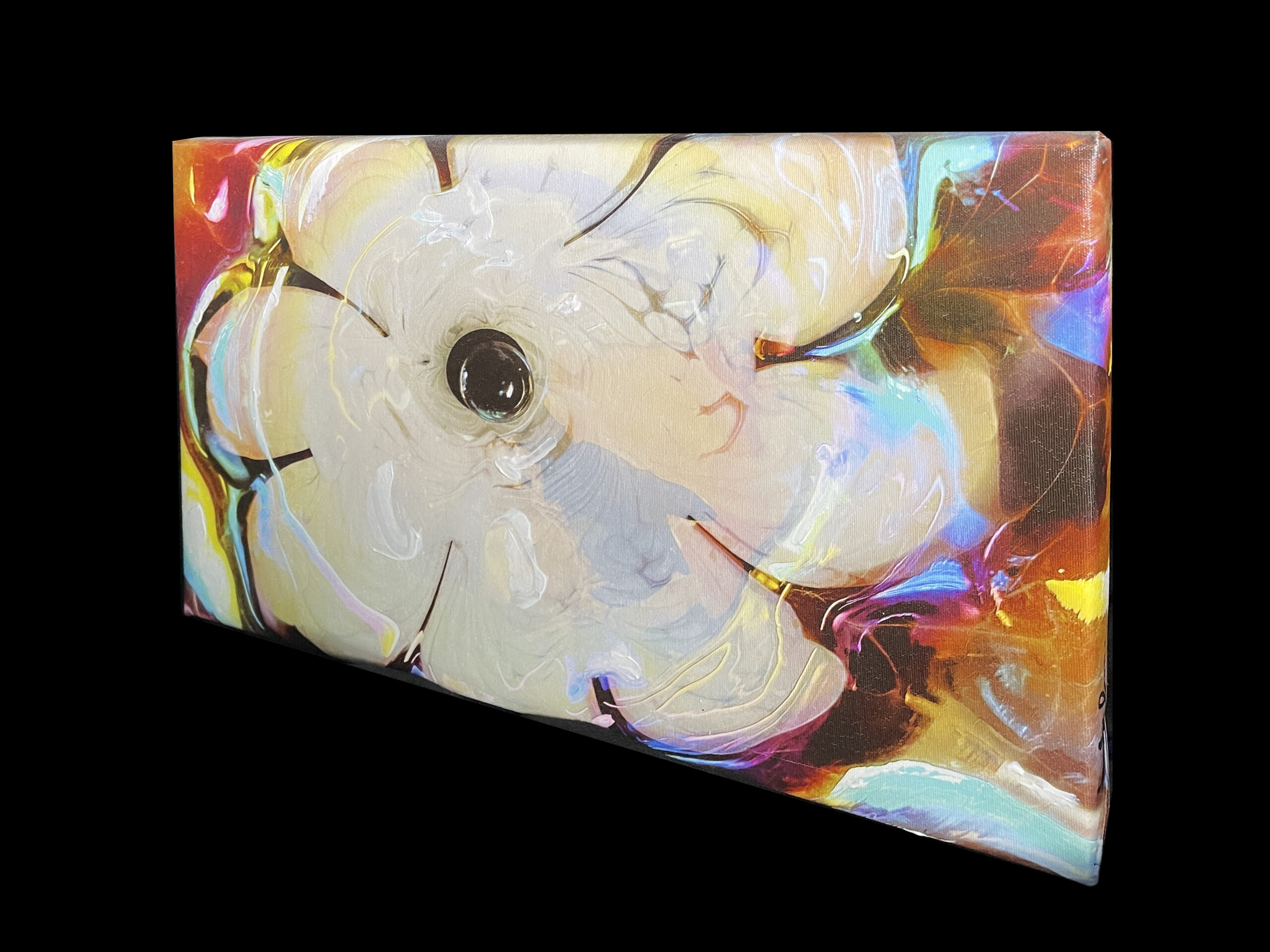
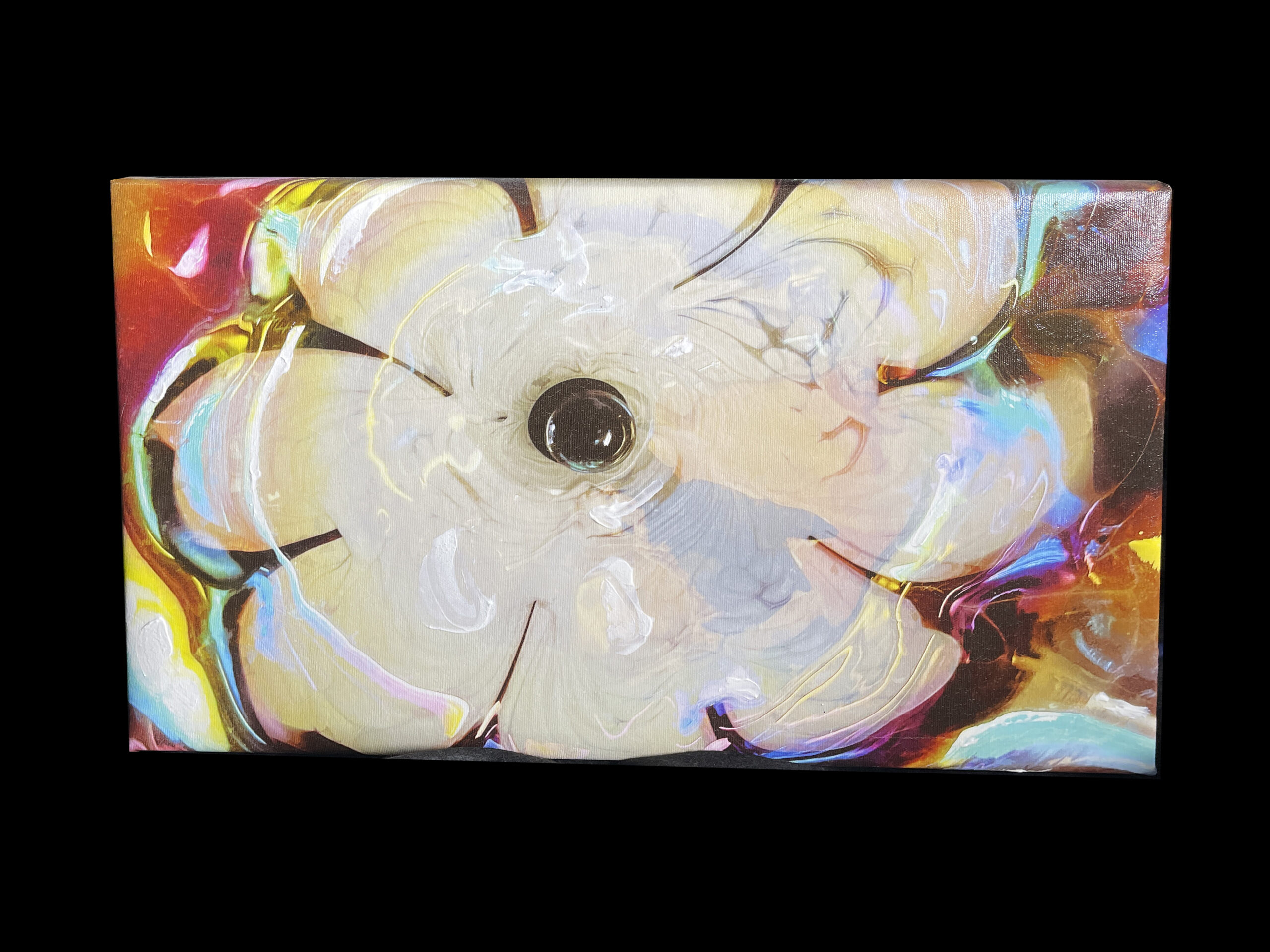
11.5 × 20 Abstract Glass Flower Wall Art — Gallery Wrapped Canvas Original Painting
Michael John Valentine — Cornelius, North Carolina
This singular original — 11.5 x 20 Abstract Glass Flower Wall Art Gallery Wrapped Canvas Original Painting — is not merely a wall decoration. It is a visual narrative of perception, memory, and a lifelong artistic pursuit that bridges photography, intuitive abstraction, and painterly gesture.
Dimensions: 11.5 × 20 in (Gallery Wrapped Canvas)
Medium: Acrylics over photography-inspired composition
Signed + Certificate of Authenticity Included
One-of-a-Kind Original by Michael John Valentine
The Philosophy of Seeing: From Lens to Light
Many artists paint flowers for their beauty. Few unpack the idea of a flower — how it is perceived, remembered, and then re-imagined. In her groundbreaking work, Georgia O’Keeffe articulated that a flower’s true essence cannot be captured simply by depicting its surface: instead, one must see deeply, linger, and invite others to see as well.
This ethos — the commitment to slow seeing — underpins Valentine’s creative journey. While the final work is abstract, its genesis emerges from an exacting vision: the photograph. Long before the brush touches canvas, there is a moment of quiet encounter between the world and the artist’s eye. Each source photograph is not a reference but a memory of light, shape, and emotional resonance — an imprint that shapes the abstractions that follow.
Photography as the Root of Visual Imagination
Michael John Valentine’s art begins with photography — not casually, but as a foundational act of seeing. For over five decades, his rigorous engagement with the camera has taught him how light falls, how color breathes, how form pauses between visibility and suggestion.
Photography, in Valentine’s studio, functions as both witness and catalyst. Rather than document the world literally, his images capture moments of awareness — a subtle glow of dawn, the reflective pulse of glassy petals, the way shadow curves around form. These “captured memories” become the seeds of abstraction.
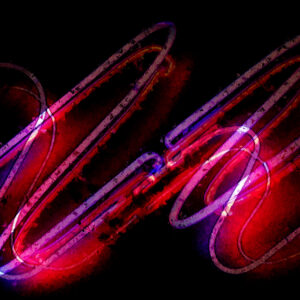
Some works begin with a single photograph; others — particularly rich pieces like this Abstract Glass Flower — emerge from the digital blending of multiple images. Valentine often layers 3 to 8 original photographs together in digital space, allowing their textures and tonal harmonies to fuse into a new visual DNA before ever touching paint. This process — a negotiation between chance and intention — yields a composite blueprint that feels alive with depth and movement.
From Digital Seed to Painterly Bloom
Once the photographic foundation is composed, the transformation from pixel to pigment begins.
Gallery Wrapped Canvas:
The canvas itself becomes a sculptural field. Gallery wrapped edges elevate the surface beyond a flat panel into a freestanding presence — a canvas that commands space and invites proximity.
Acrylic Expression:
Valentine chooses acrylic for its responsiveness. Unlike oil paints, which dictate pace through slow drying, acrylics answer with immediacy. This responsiveness allows gestures to remain fresh, vivid, and intimate — as alive as the photographs that inspired them.
Tools of Gesture:
Palette knives yield bold, tactile strokes; brushes articulate delicacy; splatter techniques release energy and rhythm across the surface. These elements converge — not as decorative effects — but as a conversation between control and spontaneity, color and structure, form and suggestion.
The Language of Abstraction — Glass and Bloom
This painting’s title hints at both form and effect: “Abstract Glass Flower.” As a collector might observe, its surface evokes translucence and reflection — qualities we associate with both glass and petals kissed by light. But more than an optical phenomenon, this painting reaches for emotional resonance.
Where traditional floral depictions might depict petals and stems, here the flower becomes gesture and essence — refracted and reshaped, like light passing through glass. The floral metaphor is present, but it is internalized, felt rather than catalogued. This is abstraction informed by real observation and poetic imagination.
Materiality Meets Memory
Every layer — from digital composite to acrylic envelope — registers a moment in time: a light captured, a mood felt, a gesture made. This deep lineage of process — photographic intuition, digital modulation, painterly decision — ensures the final work contains something visceral, something unforgettable.
A collector who acquires this painting acquires:
-
A narrative object, not a mere decorative piece.
-
A bridge between photographic truth and painterly interpretation.
-
A work that rewards time, reflection, and emotional engagement.
Owning this canvas is an invitation to see slowly — to revisit how you encounter form, light, and suggestion each time your eye returns to the piece.
Certificate of Authenticity + Collector Confidence
Like all original signed canvases by Michael John Valentine, this work includes a Certificate of Authenticity, documenting provenance and craftsmanship. This essential document assures longevity, value, and artistic integrity — attributes discerning collectors expect and affirm.
Why This Work Matters to the Discerning Collector
In an art world often driven by trends, novelty, or purely decorative abstraction, this painting stands apart — by virtue of process, vision, and depth.
It:
-
Honors the visual lineage from photographic perception to abstraction.
-
Embodies a philosophy of seeing — echoing O’Keeffe’s belief that truly seeing a flower is an act of contemplation.
-
Balances intuitive expression with disciplined craftsmanship.
-
Rewards prolonged engagement — its layers unfold with each viewing.
This is more than an artwork. It is a visual meditation — one that harmonizes memory, perception, and the poetry of form.