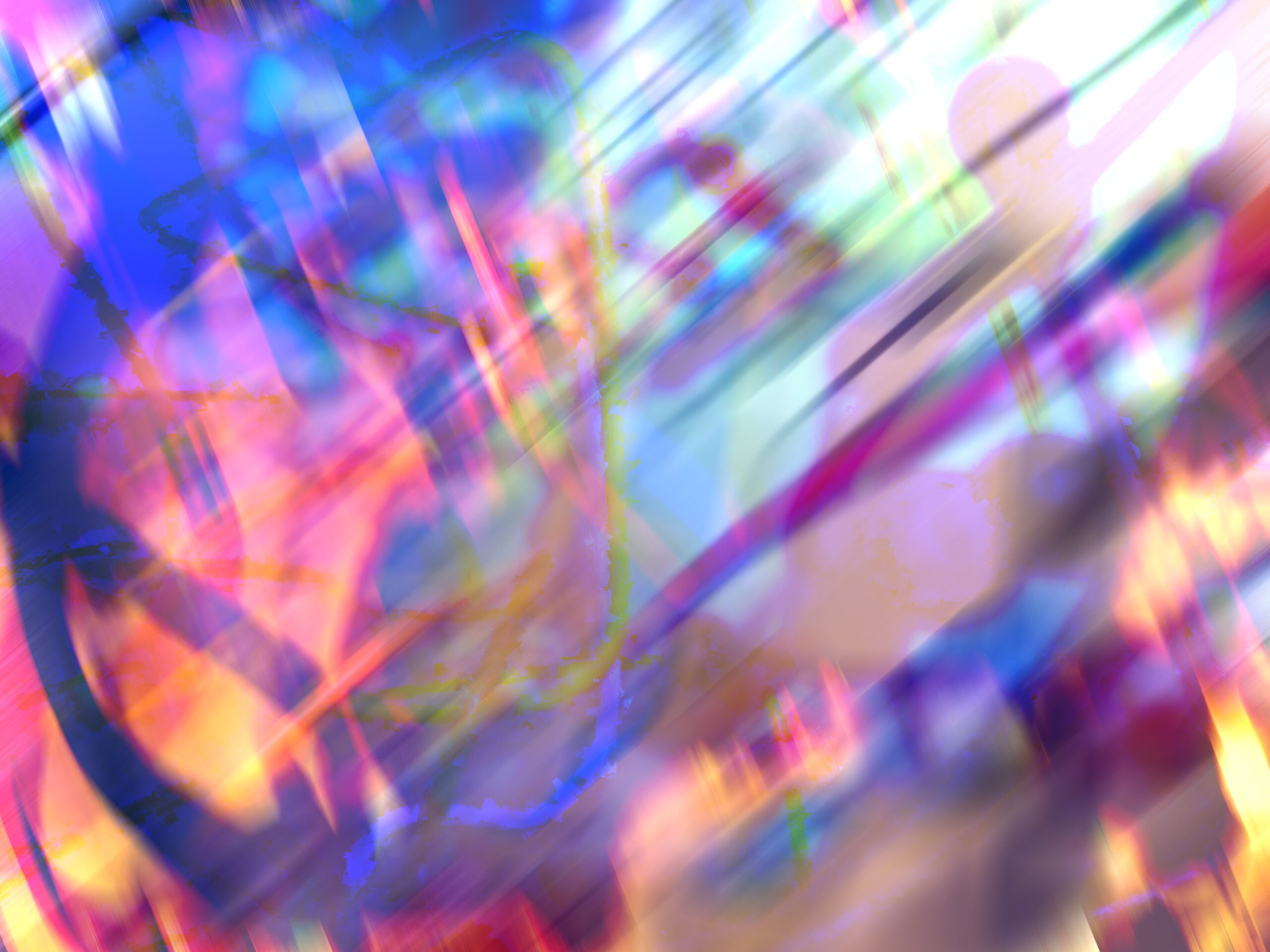
A Meditation in Motion: The Artistry of Abstract Liquid Lines
At first glance, Abstract Liquid Lines unveils itself not merely as an artwork but as a visual poem — a lyrical expression of rhythm, hue, and form that transcends the boundaries of traditional abstraction. This original painting by Michael John Valentine embodies over five decades of disciplined artistic mastery, marked by a life devoted to exploring the interplay of color, movement, and emotional resonance on canvas.
What distinguishes this work — and indeed all of Valentine’s art — is the meticulous balance between intuitive creation and technical precision. Abstract Liquid Lines is executed on unstretched exhibition canvas — a deliberate choice that invites personalization in presentation, whether through bespoke framing or gallery‑style stretching. Each canvas arrives sealed in a heavy‑duty tube, accompanied by a Certificate of Authenticity, to protect the integrity of the piece until it reaches its permanent home.
The Poetry of Line and Flow
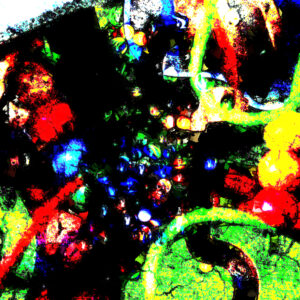
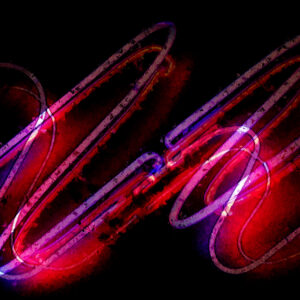
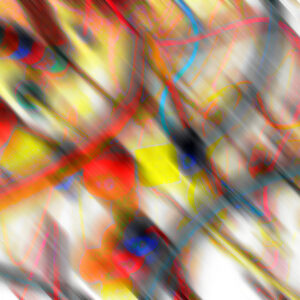
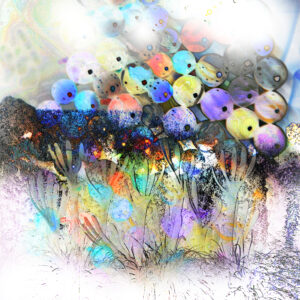
At the heart of Abstract Liquid Lines is its signature — an elegant choreography of undulating lines that ripple across the canvas with a sense of fluid continuity. These lines possess a sensuous cadence, suggesting a universe in subtle motion: currents of thought, pathways of emotion, invisible rhythms made palpable. Valentine’s overpainting technique — a layered application of acrylic and sealant — gives each brushstroke a visceral presence, allowing surfaces to shimmer and shift depending on how light plays across them.
This interplay of texture and sheen is not incidental; it is crafted to reward the observer over time. From certain angles, the composition may whisper in soothing pastels and subdued depths. From others, it may surge with intensity, as though the lines themselves carry a charged energy that beckons the viewer into a deeper contemplation. The act of observation becomes a journey — one where meaning is co‑created by the artwork and its audience.
Craftsmanship Rooted in Experience
Michael John Valentine’s artistic journey — beginning with formal study at Kent State University and expanding over 55 years of dedicated practice — provides the foundation for this work. In every canvas, one perceives the imprint of a seasoned creator who has traversed many avenues of style, technique, and emotional inquiry. Abstraction, for Valentine, is not merely an aesthetic choice but an expressive language — a means to articulate what is felt but cannot be spoken.
The overpainting process, which characterizes Abstract Liquid Lines, is emblematic of this approach. Layers are thoughtfully built, nuanced in tone and movement, then selectively reworked to uncover a sense of depth and luminosity that static surfaces rarely convey. A glossy protectant seals the work, locking in the vibrancy of each hue while creating a subtle luster that enhances the tactile quality of the paint.
This technique — at once intentional and intuitive — allows the painting to evolve organically over time, as if the lines themselves are alive, continuing to breathe and unfold within the viewer’s imagination. It is an embodiment of artistic intention meeting the unpredictability of expressive movement.
Spatial Dialogue and Emotional Architecture
One of the most compelling aspects of Abstract Liquid Lines is how it engages space. The composition guides the viewer’s gaze in a contemplative pilgrimage from left to right, from foreground to background. Lines intersect and diverge, creating visual pathways that suggest narrative arcs without prescribing fixed interpretations.
Unlike figurative or representational art — which anchors the viewer to specific subjects — this abstraction invites individual meaning. Some collectors may see echoes of natural phenomena: the flow of water, the wind’s invisible currents, or the pulsating patterns of light on a calm horizon. Others may experience something more introspective — a mapping of memory, emotion, or inner movement. This openness to interpretation is what elevates the piece beyond mere decoration into the realm of personal expression and poetic introspection.
Collector Worthiness and Legacy
In the world of fine art, where provenance and exclusivity are key to long‑term value, Abstract Liquid Lines stands out. Each version of the canvas is a one‑of‑a‑kind creation — signed, sealed, and accompanied by a Certificate of Authenticity that confirms its origin and ownership. Such documentation is critical for collectors who value traceability and legacy, reinforcing the piece’s standing as not just a visual treasure but a tangible asset in a curated collection.
This ensemble of originality, craftsmanship, and emotional depth transforms Abstract Liquid Lines from an artwork into a legacy piece. Its presence in a private collection signals a refined appreciation for contemporary abstraction — an acknowledgment that art can be both intellectually engaging and aesthetically commanding.
The Collector’s Experience
For the discerning collector, acquiring Abstract Liquid Lines is more than a transaction — it is an initiation into a dialogue with the artist’s vision. Displayed prominently, the painting becomes a focal point that anchors a space, invites reflection, and animates conversation. Its dynamic lines echo a rhythm that adapts to light, mood, and perspective, ensuring that each viewing experience is unique.
Moreover, the flexibility of presentation — unstretched canvas ready for custom framing — allows collectors to tailor the piece to their environment, harmonizing it with architectural features or interior design elements. Whether installed in a contemporary living room, an executive office, or a curated gallery wall, Abstract Liquid Lines commands attention with quiet authority.
Conclusion: A Canvas of Continuity
In a cultural moment often saturated with fleeting visual trends, Abstract Liquid Lines stands as a testament to enduring artistic values: authenticity, technical mastery, and emotional resonance. It defies passive observation, instead inviting ongoing engagement — a testament to Valentine’s nuanced understanding of art as perpetual encounter rather than static object.
For those who seek art that embodies both intellectual depth and aesthetic allure, this painting offers a rare convergence of vision, craft, and expressive subtlety. It is not merely seen — it is felt, pondered, and lived.