“Through abstract photography, I don’t just capture what the eye sees — I blend the unseen rhythms of light, color, and motion, transforming the everyday pulse of a city into a visual poem that resonates beyond representation.” Michael John Valentine
In the Abstract Realm: A Luxurious Reflection on My Photography
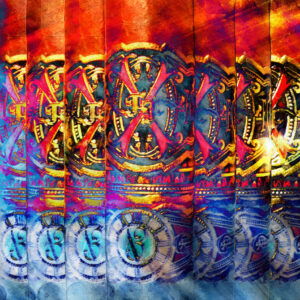
In my work, abstract photography is not merely a genre — it is a language, a way of feeling the world through light, shape, and ephemeral gesture. At its core, abstract photography abandons the literal for the lyrical, dissolving the familiar contours of reality into a visual symphony of texture, color, and form. This form of visual expression compels the viewer not to recognize the subject, but to experience the moment — to move beyond what the mind knows and into what the senses feel.
Unlike traditional photography that seeks to represent the world as we see it, abstract photography embraces the intangible and the interpretive. It uses the tools of the craft — camera, light, perspective — not as instruments of documentation, but as brushes in an artist’s palette. Through deliberate choices in focus, composition, and exposure, I isolate fragments of light and shadow, orchestrating them into compositions that speak to the rhythm and emotion beneath the surface. Here, every photograph is both an invitation and a question: What do you see, and what do you feel?
The City as Muse
When I turn my lens toward the city — especially my beloved Charlotte — I am not simply photographing architecture or urban life; I am translating the pulse of the streets into abstract form. The neon lights, the reflections on wet pavement, the overlapping geometries of steel and glass become raw material for visual exploration. These images are less about what the city is and more about what it feels like — the velocity of night, the convergence of motion and stillness, the dreams suspended in every flicker of light. My abstract cityscapes dissolve familiar landmarks into realms where color and form take precedence over literal identity.
The work titled Abstract In The City Of Charlotte Fine Art invites viewers into this transformed perspective. Through layered acrylics and refined overpainting, the vibrant energy of Charlotte’s urban tapestry emerges in ways that cannot be seen with the naked eye alone. Light is not captured — it is reimagined. Shadows do not fall — they dance. And shapes are not depicted — they are felt.
From Photography to Fine Art
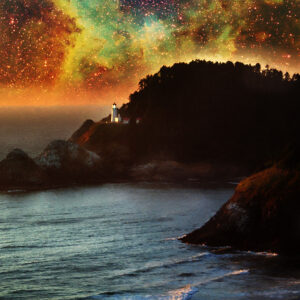
My creative process begins with a camera, but it does not end there. The original photograph is merely the starting point — a seed from which a larger vision grows. I then bring the imagery into my studio, blending it with acrylics, glazing, and mixed media techniques that elevate the photograph into a singular work of fine art. This fusion of photography and painting honors both precision and spontaneity, bridging the exactitude of the lens with the emotive force of the artist’s hand.
This is not digital imitation or synthetic abstraction. Every piece is handcrafted, meticulously layered, and authentically authored. My approach aligns with the roots of abstract photography: to liberate the image from literal interpretation and instead emphasize visual relationships — shape, contrast, texture, color — that evoke a deeper response from the viewer.
The Power of the Unseen
In abstract art, the familiar becomes unfamiliar. A streetlight might metamorphose into a ribbon of color; a reflective window might dissolve into a cascade of form. The image becomes less about what is present and more about what resonates. This turns the photograph from a representation into a catalyst for emotion. Abstract photography asks: How does this make you feel? What memories or impressions stir when the recognizable dissolves?
This power — the ability to shift perception — is the heart of my artistic intent. I want viewers not to identify the subject, but to interpret their own experience of it. Just as a piece of music can stir hidden emotions without a single word, abstract photography moves beyond the literal to engage intuition, memory, and imagination.
The Creative Philosophy
Abstract photography thrives in ambiguity. It invites curiosity. It resists easy answers. In this space between knowing and wondering, the viewer becomes a participant — co-creating meaning with the artwork. In my own artistic philosophy, I embrace this openness. I don’t seek to tell the viewer what they should see; I encourage them to discover what they see.
This approach aligns with the broader understanding of abstract photography — that it does not demand comprehension, but contemplation. Forms become suggestions rather than definitions; colors become sensations rather than descriptions. Abstract imagery is not anchored to a physical object or scene; it floats freely in the realm of perception.
A Journey of Emotion, Memory, and Form
To create abstract photography is to engage with the unseen dimensions of experience — the feelings that accompany a moment, the memory that lingers in a hue, the trace of emotion captured in a sliver of light. This work resonates not because it shows a street corner or a skyline, but because it distills the essence of what it felt like to be there.
Each piece I create, especially those rooted in urban abstraction, asks viewers to pause — to slow down in a fast world — and to consider not what their eyes recognize, but what their hearts remember. In doing so, the ordinary becomes extraordinary; the everyday reveals its hidden poetry.
The Collector’s Experience
For those who choose to bring this art into their lives, the experience is meant to be transformative. These works are not mere decorations — they are investments in reflection and discovery. Whether displayed in a home, corporate setting, or curated collection, they invite ongoing engagement. Their visual complexity rewards repeated viewings; their emotional depth reveals new layers over time.
Collectors of abstract photography don’t just acquire art — they acquire a personal dialogue. Each piece carries not just pigment and photographic detail, but intention and insight. It is a testament to the power of perception, a reminder that beauty exists not only in what we see but in how we see.
In Closing
My abstract photography transcends representation to touch something deeper — the rhythmic interplay of light and emotion, the hidden geometry of experience, and the unseen melodies that color our memories. Through this work, I invite viewers not to interpret reality, but to reimagine it. In the space between form and feeling, we discover not only the art — but ourselves.