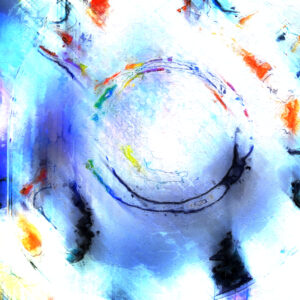
“I perhaps owe having become a painter to flowers.” — Claude Monet
Claude Monet (1840‑1926), the pioneering French Impressionist, once humbly attributed his artistic calling to something as delicate and fleeting as flowers. In that singular line — “I perhaps owe having become a painter to flowers” — Monet encapsulates not just the origins of his longstanding engagement with nature, but the very philosophy that fueled his revolutionary vision: art born from observation, emotion, and the ever‑changing dance of light and life itself.
Flowers were far more than charming subjects for Monet. They shaped the way he saw the world, taught him to see color and atmosphere as dynamic forces, and guided him toward a mode of painting that would redefine Western art. This deep connection to floral forms and garden landscapes continues to inspire contemporary painters — including the Michael John Valentine Monet Style Flower Art collection — that channel the spirit of Monet’s approach into fresh interpretations.
Monet’s Garden as Artistic Laboratory
Disney’s Impressionist might be a familiar label, but Monet’s practice was rooted in a relentless engagement with nature itself — especially gardens and flowers. His famous garden at Giverny, painstakingly shaped over decades, wasn’t merely an idyllic backdrop: it was his creative laboratory. Here, he tended plants, arranged vistas, and watched the light shift from dawn to dusk, season to season. The subtle play of color and atmosphere in blossoming flora became a site of study, a motif for seeing rather than simply depicting.
In this garden, flowers weren’t passive models. They were living experiments in how color responds to light, how reflections on water can thunder with color, and how texture and form can evoke not just a scene but a feeling. Monet’s famous water lilies, irises, and poppies leap from the canvas with a vibrancy that owes less to botanical accuracy than to the experience of seeing — how time alters perception and how nature’s fluidity teaches patience and curiosity.
“Flowers As Teachers”
When Monet said he owed becoming a painter to flowers, he wasn’t offering a picturesque metaphor so much as revealing the pedagogical role those blooms played in his life as an artist. Flowers taught him several core lessons:
-
Light Is Subject — Rather than fixing solid forms, Monet learned that capturing light’s fleeting qualities was the real challenge of painting. Flowers, with their constantly shifting colors under changing sunlight, revealed the impossibility of freezing a moment — and the beauty in trying.
-
Perception Is Dynamic — A flower at noon is not the same flower at dusk. Rather than painting symbols or static representations, Monet painted events — moments of seeing that exist between eye and atmosphere.
-
Observation Over Replication — For Monet, painting wasn’t about copying nature but about interpreting the sensations it aroused. Flowers, in their ephemeral and variable states, were the ideal subject to develop this approach.
Monet didn’t so much master nature as follow it. His famous acknowledgment — “I am following Nature without being able to grasp her” — underscores a lifetime spent chasing essence rather than conquering external form. In this sense, flowers were not just inspiration but teachers that never quit revealing new lessons.
From Giverny to Contemporary Interpretations
The legacy of Monet’s floral obsession echoes into today’s art — particularly through works like Michael John Valentine’s Monet Style Flower Art. While distinct in technique and expression, such contemporary pieces pay homage to Monet’s foundational belief: the emotional and perceptual richness of natural subjects outweighs any rigid adherence to representational detail.
Valentine’s work, available in prints and hand‑enhanced canvases, channels this ethos by emphasizing color, movement, and the visceral joy that flowers can evoke. These pieces invite viewers to step into a world of sensory experience, where the brushwork isn’t merely describing petals but suggesting an atmosphere, a mood, or a memory — a very Monet‑like approach to painting.
In celebrating flowers as muse, Monet reminds us that art begins with wonder. His emphasis on nature’s transient beauty teaches contemporary artists and collectors alike that true artistic insight arises from living closely with one’s subject, and from honoring not just what we see but how we feel it.
Monet’s Enduring Floral Wisdom
The profound simplicity of Monet’s quote — “I perhaps owe having become a painter to flowers” — invites reflection on the humble but transformative power of nature. It suggests a path to creativity forged not through grand ambition alone, but through patient observation and an open heart. Through this lens, flowers become lifelong companions in the artist’s journey — first as inspiration, then as enduring teachers of light, color, and the poetry of moments.