Old Baldy Lighthouse — A Maritime Sentinel of Time
Old Baldy stands not merely as a beacon but as a monument to centuries of coastal navigation, human endeavor, and the ever‑shifting relationship between land and sea. Its enduring silhouette, now immortalized in fine art on canvas or print, evokes a story of resilience, history, and aesthetic legacy.
Origins — Coastal Necessity and Early Light
Before Old Baldy existed, the first Bald Head Island lighthouse was lit in 1794 — the very first authorized lighthouse in North Carolina — born from the urgent need to guide ships entering the Cape Fear River, a vital artery for trade and naval stores in the young United States. That original lighthouse succumbed to erosion by 1813, its materials destined for reincarnation.
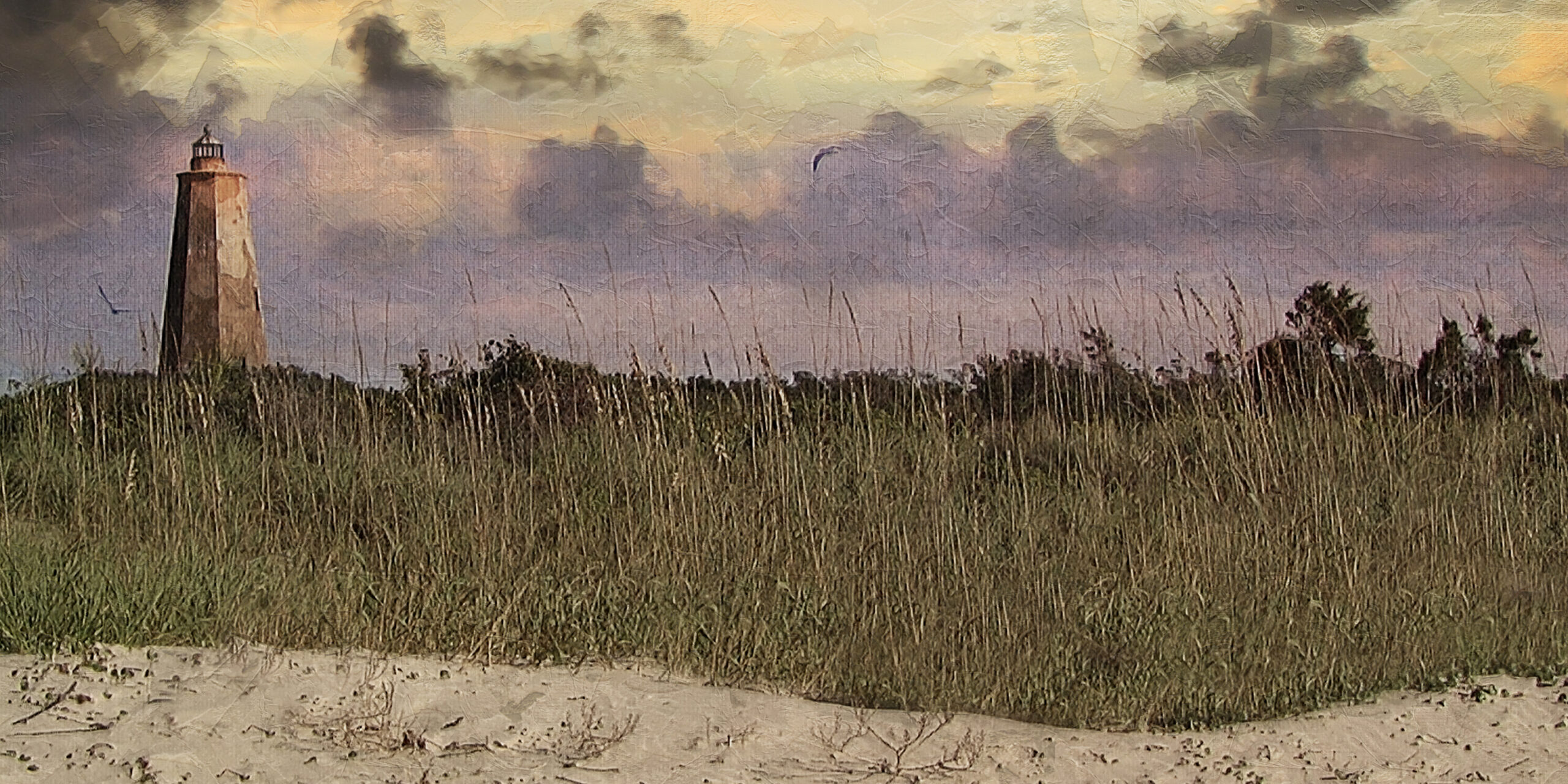
Artistically captured in Valentine’s work, the forms and tones echo the transition from vulnerability to permanence — a symbolic testament to human adaptation and ingenuity.
1817 — The Birth of Old Baldy
In 1817, master builder Daniel S. Way erected what would become known as Old Baldy Lighthouse, a 110‑foot octagonal brick tower constructed partly from the salvaged bricks and lantern from its predecessor. Built atop higher, more stable ground, it embodied architectural resilience and strategic foresight.
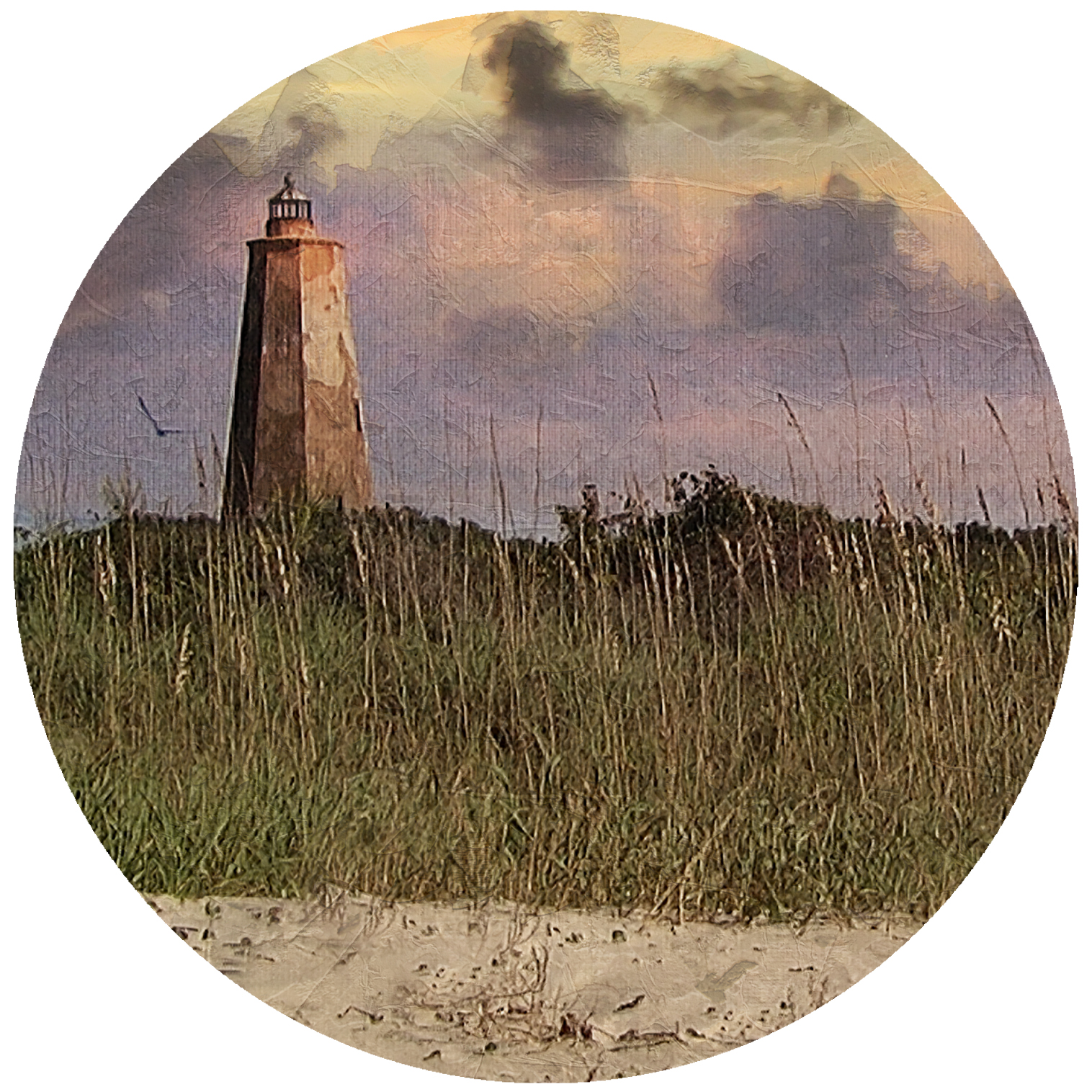
Visually, Valentine’s rendering mirrors this architectural gravitas — the sloping octagonal shaft reaching skyward with measured poise, as if bracing against both wind and time.
Navigational Life and Challenges
Old Baldy’s life as a working lighthouse was not without controversy: sailors often complained its light was too weak or poorly positioned to warn of nearby hazards like the Frying Pan Shoals. Improvements were made over decades, including a Fresnel lens to enhance brightness, yet evolving channels and shorelines continually tested its utility.
In the art context, the lighthouse becomes an emblem of imperfection and endurance — its mottled stucco exterior recalling the scars of countless storms and repairs, each patch a chapter in its story.
War and Resilience
During the American Civil War, coastal beacons like Old Baldy were extinguished to confound Union blockades. Earthworks like Fort Holmes rose beside it, reinforcing its symbolic stature not just as a guide to mariners, but as silent witness to conflict and strategy.
An art piece focusing on Old Baldy can subtly evoke this dichotomy of light and shadow — the gentle curves of its tower contrasted with the dark silhouette of wartime fortifications.
Twentieth Century Transformation and Preservation
Old Baldy served its official function until 1935, later acting as a Coast Guard radio beacon in World War II, and was eventually relit in 1988 as a historic marker rather than an official navigational aid.
Today, it is North Carolina’s oldest standing lighthouse, listed on the National Register of Historic Places and preserved by the Old Baldy Foundation. Visitors climb its 108 steps to enjoy panoramic views, and a reconstructed keeper’s cottage offers museum interpretive exhibits.
Old Baldy in Fine Art — Symbolism & Aesthetic Presence
When integrated into a historical art collection:
-
Architectural Legacy: The octagonal form becomes a motif of strength and endurance.
-
Temporal Layers: The lighthouse’s patchwork stucco and weathered bricks suggest the passage of time and layered narratives.
-
Maritime Romanticism: Light, distance, and horizon evoke the poetry of coastal life.
-
Cultural Memory: The subject bridges utilitarian history and contemporary nostalgia, inviting viewers to pause and reflect.
Collectors seeking emotional depth and historical resonance will find in Old Baldy not just a landscape subject, but a storied sentinel of American coastal heritage — captured in compelling brushstrokes and evocative composition.