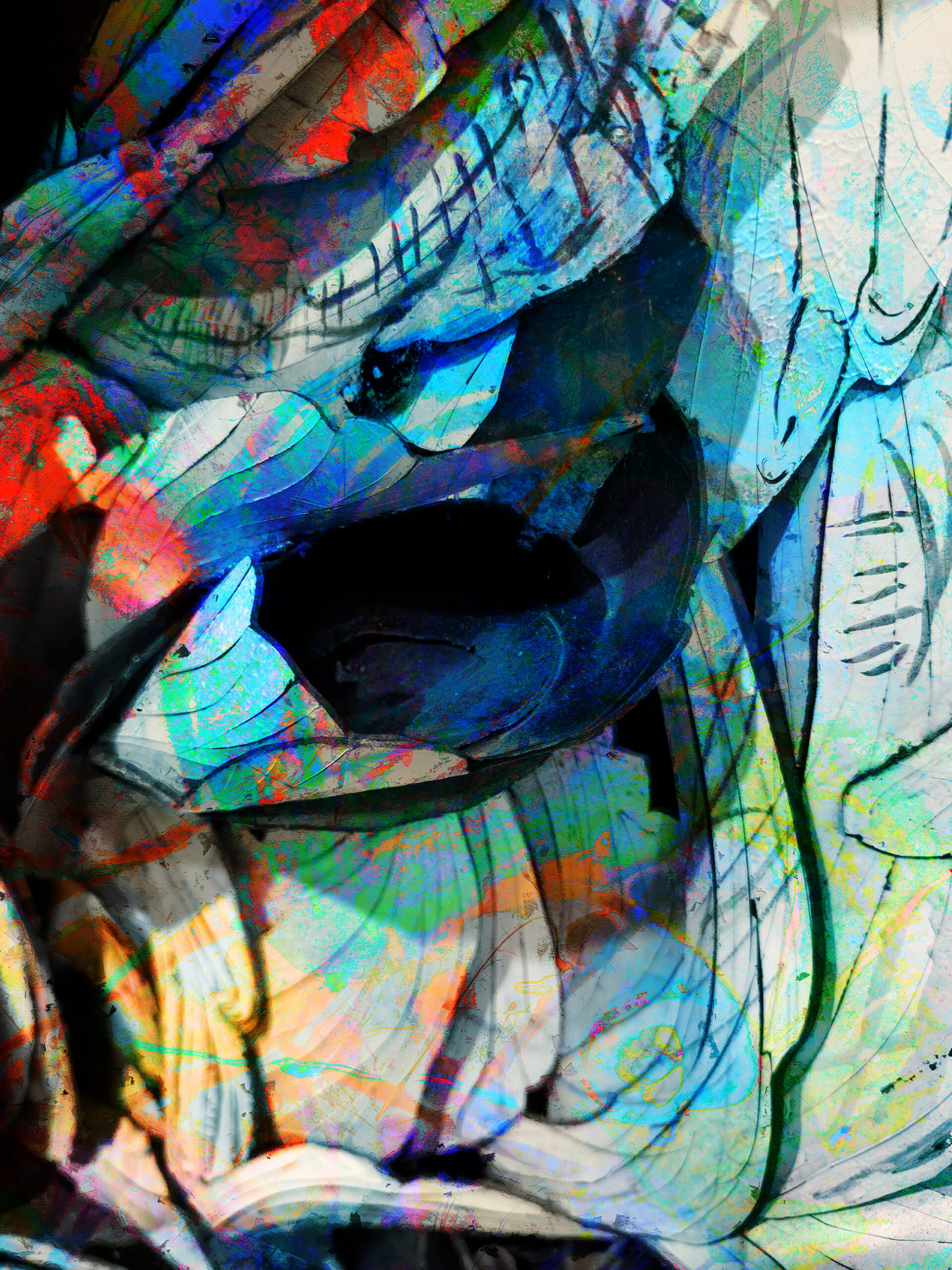
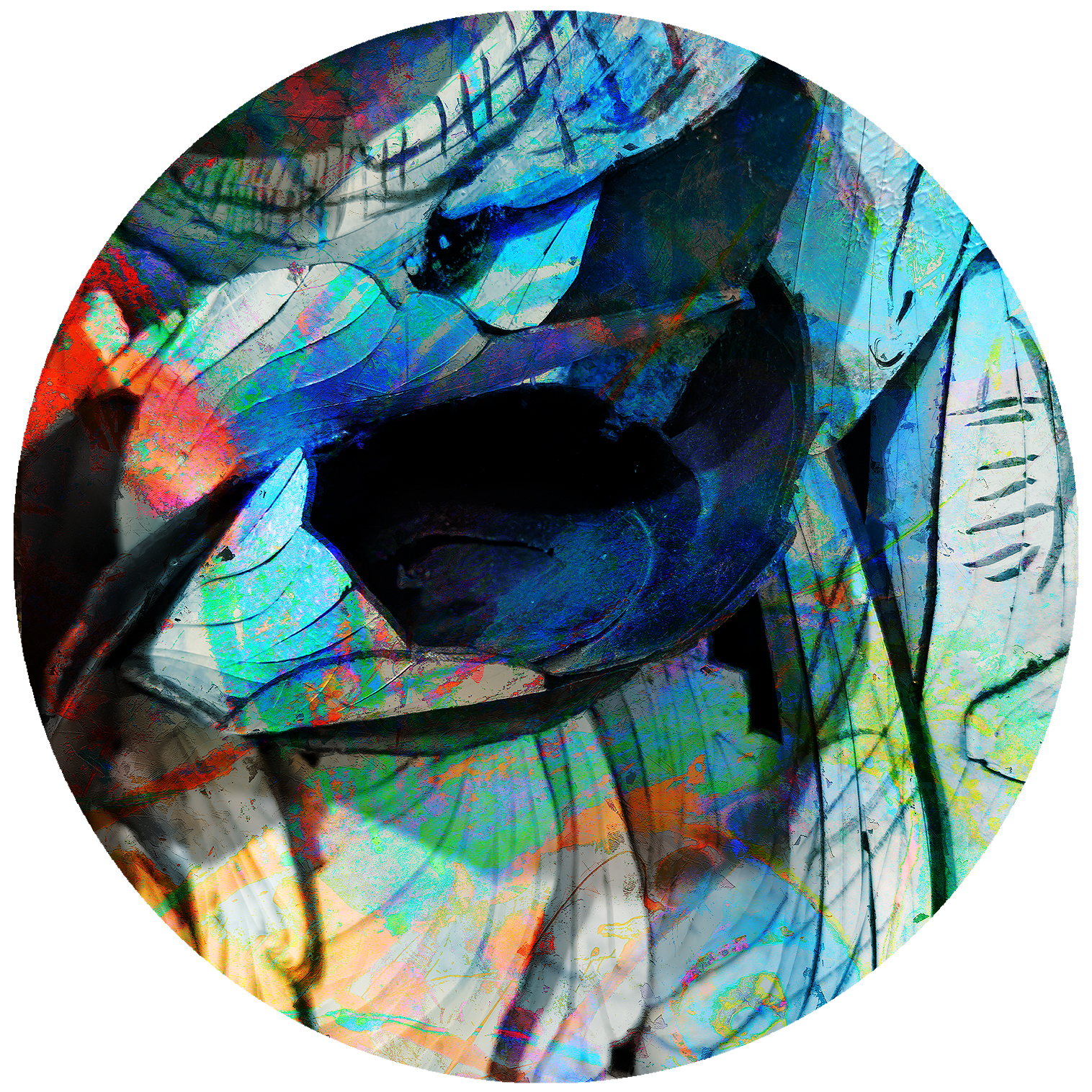
“Ghost Current is the moment the fault line stops being geography and becomes memory—where what is broken does not disappear, it circulates.” — Michael John Valentine
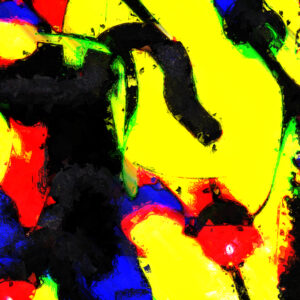
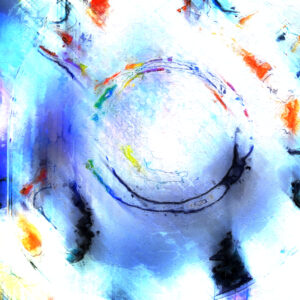
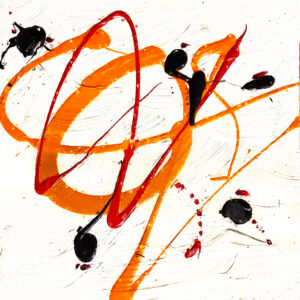
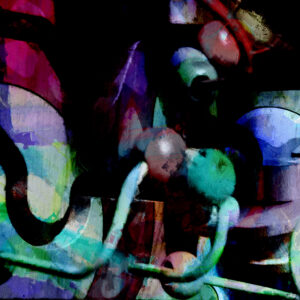
With Ghost Current, the Faultlines Series reaches its final and most distilled emotional register. This concluding work does not arrive as an ending in the conventional sense, but as a lingering atmospheric condition—an afterfield of all that has come before it. Where earlier works in the series explored rupture, collision, distortion, and the visible drama of fracture, Ghost Current turns inward toward what remains unseen: the invisible movement beneath consequence, the quiet circulation of memory through damaged terrain, and the spectral continuity that persists even after collapse.
This final piece is less an image than a state of becoming. It exists in the space between disappearance and persistence, where form is no longer stable but still undeniably present. The “current” in Ghost Current suggests motion without origin, energy without containment, and presence without fixed identity. It is the emotional physics of aftermath—what continues to move through us after the moment of impact has already passed.
Within the broader language of the Faultlines Series, this work completes a long arc of visual and conceptual inquiry. The series has always been rooted in the idea that fracture is not an ending but a revelation. The earth does not simply break; it reveals its internal logic. Similarly, the human experience within these works is never defined solely by rupture, but by what fracture exposes: layered histories, submerged narratives, and the tension between what is held together and what inevitably separates.
In Ghost Current, those ideas arrive at their most refined articulation. The composition feels as though it has been stripped of excess, leaving only essential movement. It is not minimalism for its own sake, but reduction as revelation. The surface carries the residue of earlier visual intensity, yet now it is quieter, more controlled, as if the storm has passed and what remains is its atmospheric memory still vibrating through space.
This is where the work becomes deeply psychological. The “ghost” is not a figure, but a condition—an echo of lived experience embedded in matter itself. The “current” is not water alone, nor electricity alone, but the unseen exchange between states of being. It suggests that nothing truly resolves; instead, everything continues in altered form. Emotion, memory, impact, and history do not vanish. They migrate.
The Faultlines Series has always engaged with the idea that beneath every surface lies an unstable architecture. Ghost Current does not abandon that idea—it completes it by asking what happens after instability is recognized and accepted. The answer is not resolution, but flow. Not closure, but continuation. The work acknowledges that even silence has momentum.
From a collector’s perspective, this piece carries the weight of culmination. It is not simply the final work in a series, but the moment where the entire conceptual framework folds inward on itself. Earlier works may be read as chapters in a visual geology—layers of pressure, compression, and emergence. Ghost Current is the moment those layers stop being distinct and begin to move as one field of memory.
The emotional tone is restrained yet profound. There is a sense of distance, but not detachment. Instead, it feels like standing at the edge of something vast that has already happened, watching its aftereffects ripple outward in slow, imperceptible waves. The viewer is not asked to interpret so much as to remain present within the resonance of what cannot be fully named.
Technically and conceptually, the work embodies the idea of threshold space. It exists between disciplines: painting and environmental psychology, abstraction and narrative residue, material presence and immaterial suggestion. It resists singular reading because it is built on multiplicity—the understanding that any fault line contains not one truth, but countless intersecting pressures that never fully settle.
As the final entry in the series, Ghost Current also reflects a kind of artistic reckoning. It acknowledges that all systems of creation eventually encounter their own limits, and within those limits, something quieter and more truthful often emerges. This is not about exhaustion, but refinement. Not about conclusion, but distillation.
There is also an underlying sense of intimacy within the work. Despite its conceptual scale, it feels personal—like standing inside the aftermath of one’s own thought. The “ghost” is not external; it is internalized history. The “current” is the ongoing negotiation between what has been experienced and what continues to shape perception long after the original moment has dissolved.
In this way, Ghost Current becomes less a visual object and more a philosophical environment. It invites the viewer to inhabit uncertainty without needing to resolve it. It suggests that meaning is not fixed at the point of creation, but continuously generated through reflection, distance, and time.
As the final work in the Faultlines Series, it holds a particular kind of gravity. It does not seek to summarize what has come before, nor does it attempt to exceed it. Instead, it allows the entire body of work to echo through it one last time, as if all prior fractures, tensions, and distortions have been absorbed into a single field of quiet motion.
Ultimately, Ghost Current is about what remains when everything else has shifted. It is about the unseen continuity that persists beneath disruption. It is about the recognition that even after rupture, something always continues—subtly, invisibly, and without permission.
And in that continuation, the series finds its final truth: nothing is ever fully broken, only redistributed through time, memory, and the enduring currents that bind experience together long after form has dissolved.
The Exhibition Canvas comes in 3 sizes and goes through several steps that include overpainting with acrylics, signing with acrylics on the front and a final glazing to protect the canvas before being rolled in a sealed tube then a box ( shipping is free in the USA )
The Matted Prints come in 3 sizes and are shipped in a box. ( shipping and handling is free in the US)
The Glossy Poster Print measures 16 x 24 and arrives in a sealed tube that is placed in a box. ( shipping is free in the US )
The 4 Inch Round Peel And Stick Decal is perfect for many applications beyond cars and comes in a sealed envelope ( shipped for free )