Silent Score
“Music is the mediator between the spiritual and the sensual life.” — Ludwig van Beethoven (attributed)
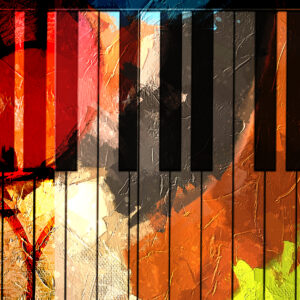
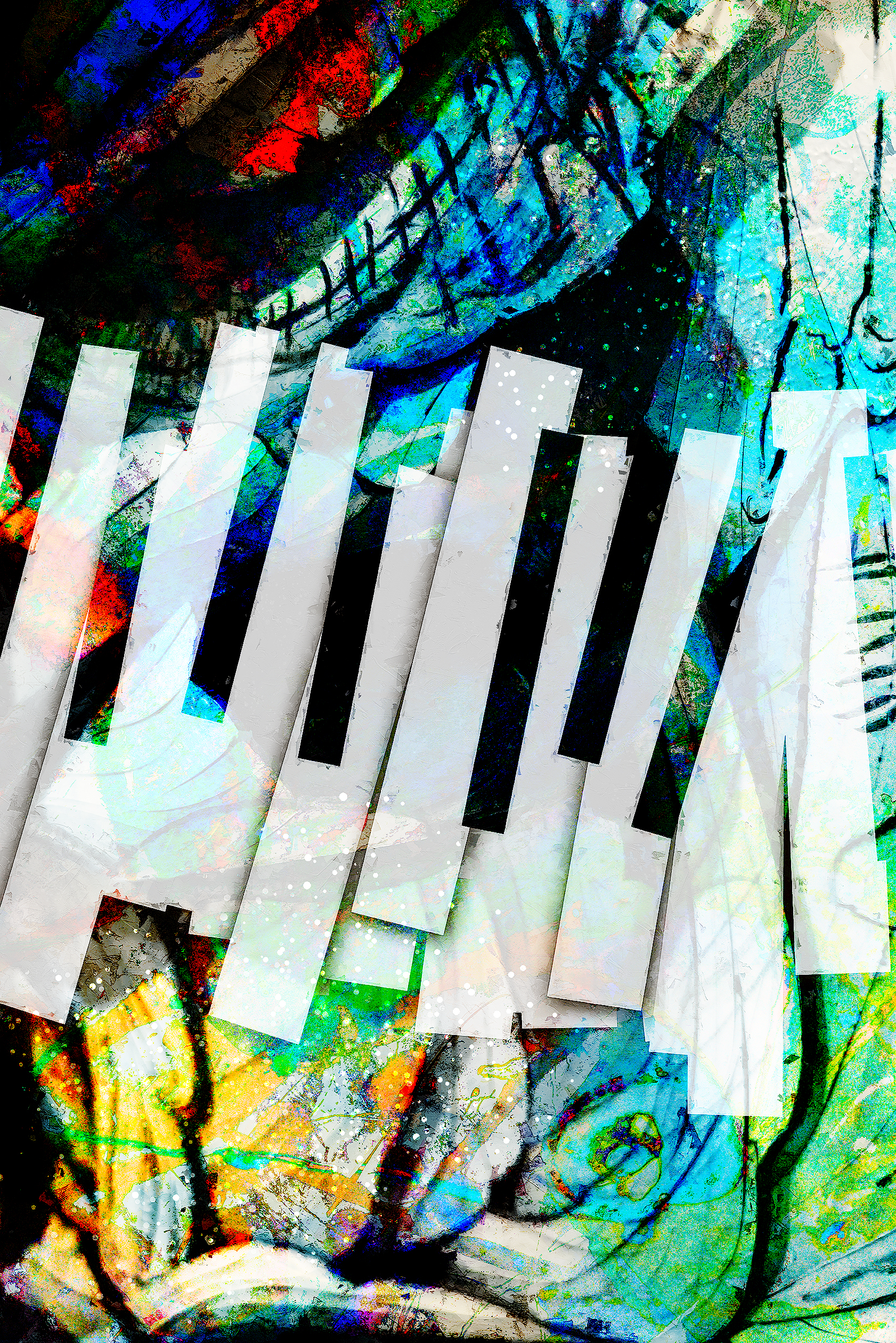
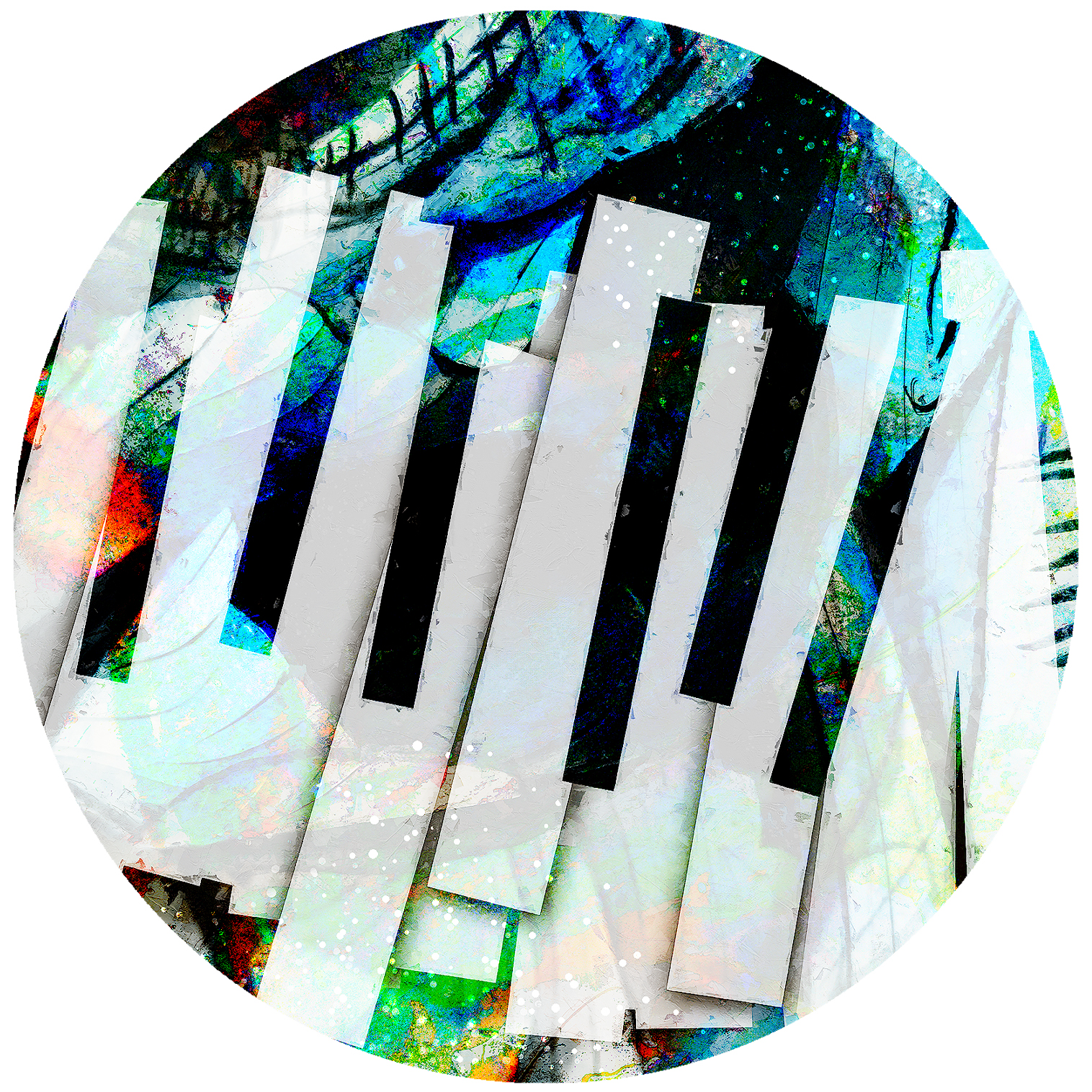
In the absence of sound, structure becomes audible. Rhythm becomes visible. Emotion is no longer carried by vibration in air, but by tension, restraint, and resonance across surface. This is where the idea of a silent score emerges—not as music written for silence, but as painting composed like music that has chosen not to be heard, only felt.
In this body of work, silence is not emptiness. It is orchestration.
Each canvas functions as a score in which gesture replaces notation, layering replaces harmony, and material memory becomes the equivalent of sustained notes. The viewer does not “hear” the work—they read it instinctively, the way one feels timing in a pause before a conductor lifts their hand.
There is a deliberate economy in this approach. Just as Beethoven pushed music beyond ornament into structural inevitability, the silent score seeks to remove excess until only intention remains. What is left is not reduction, but clarity sharpened through restraint.
The Studio as Instrument
The studio environment is not a backdrop—it is part of the composition itself. There are multiple working zones within your practice: the primary painting studio, the gallery-facing presentation space, and the production-oriented area where works move from experimentation into refinement. Each space holds a different tempo.
One space is improvisational, where canvases begin in urgency—raw, physical, unedited. Another is contemplative, where works are assessed at distance, rotated, reconsidered, and re-entered. The gallery space, by contrast, is final articulation: where silence becomes presentation, and the work must stand fully self-contained, without explanation.
These studios function like sections of an orchestra. One provides percussion—fast, instinctive marks. Another provides strings—layered, sustained tonal development. The final space is wind-like in its restraint: controlled, measured, and intentional.
Overpainting as Memory and Revision
Central to the silent score is the practice of overpainting, which operates less like correction and more like musical variation.
Each surface carries its own history—previous gestures, color fields, and structural decisions that are never fully erased. Instead, they are absorbed. A mark is not deleted; it is folded into the next passage. This creates a density that is not visual clutter, but temporal depth.
Overpainting becomes a form of visual memory. Earlier decisions remain present under subsequent layers, like faint musical themes reappearing in altered key. What the viewer sees is not a single moment, but a sequence of decisions compressed into one field.
This process also creates tension between control and surrender. Some areas are carefully constructed, while others are allowed to resist resolution. That resistance is essential—it is where the painting retains breath.
In this sense, overpainting is not revision in the conventional sense. It is accumulation with discipline. Each layer must justify its existence by either advancing or deepening the composition. Nothing is added casually. Everything is negotiated.
Education as Structural Foundation
This educational foundation informs this discipline—not as constraint, but as underlying architecture. Formal training in visual language provides the grammar through which experimentation can remain legible, even when pushed into abstraction. Composition, tonal balance, spatial tension, and material behavior are not abandoned; they are deliberately bent, stretched, and reinterpreted.
Equally important is the continued self-directed education that follows formal study. The studio becomes a laboratory where historical influence, contemporary practice, and personal intuition are constantly cross-referenced. This creates a practice that is not static in method, but evolving in vocabulary.
In this way, the silent score is not naïve abstraction. It is constructed abstraction—aware of tradition, but unwilling to remain inside it.
The Language of Restraint
What defines the silent score most clearly is its commitment to restraint as an active force. Negative space is not empty—it is structural. Silence is not absence—it is pacing. A muted passage carries as much weight as a dense one, sometimes more, because it requires the viewer to complete it internally.
This is where the connection to Beethoven becomes conceptually precise. His late works, in particular, often move between stark simplicity and overwhelming complexity, as if he were compressing entire emotional landscapes into minimal gestures. The silent score operates in a similar field of tension: between what is said and what is withheld.
The painting does not insist. It suggests. It allows gravity to do part of the work.
The Collector’s Encounter
For the collector, these works are not consumed in a single glance. They unfold over time. At first, the surface appears restrained, almost quiet to the point of withholding. Then, gradually, the underlying structure reveals itself: interrupted rhythms, buried gestures, and layered decisions that begin to surface like submerged architecture.
This is intentional. The work is designed to resist instant resolution. It rewards proximity, patience, and repeated viewing. It is not decorative in the conventional sense—it is experiential.
Each piece becomes a private space of interpretation. The absence of explicit narrative allows the viewer to project their own emotional architecture onto the work. What is collected is not only the object, but the duration of engagement it demands.
Conclusion: Composition Without Sound
The silent score exists at the intersection of painting and music, where one discipline borrows the logic of the other without imitation. It is not about translating sound into image, but about adopting musical thinking—structure, rhythm, silence, repetition—and allowing it to become visual language.
In this space, Beethoven’s philosophical framing of music feels especially resonant. His understanding of music as something that transcends the audible aligns with the ambition of this body of work: to create compositions that do not rely on sound, narrative, or explanation, but instead operate through presence alone.
What remains is surface, time, and restraint—composed, layered, and held in balance.
A silent score that is never heard, but fully experienced.