“Abstract art enables the artist to perceive beyond the tangible, to extract the infinite from the finite.” — Wassily Kandinsky
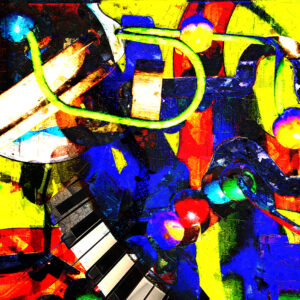
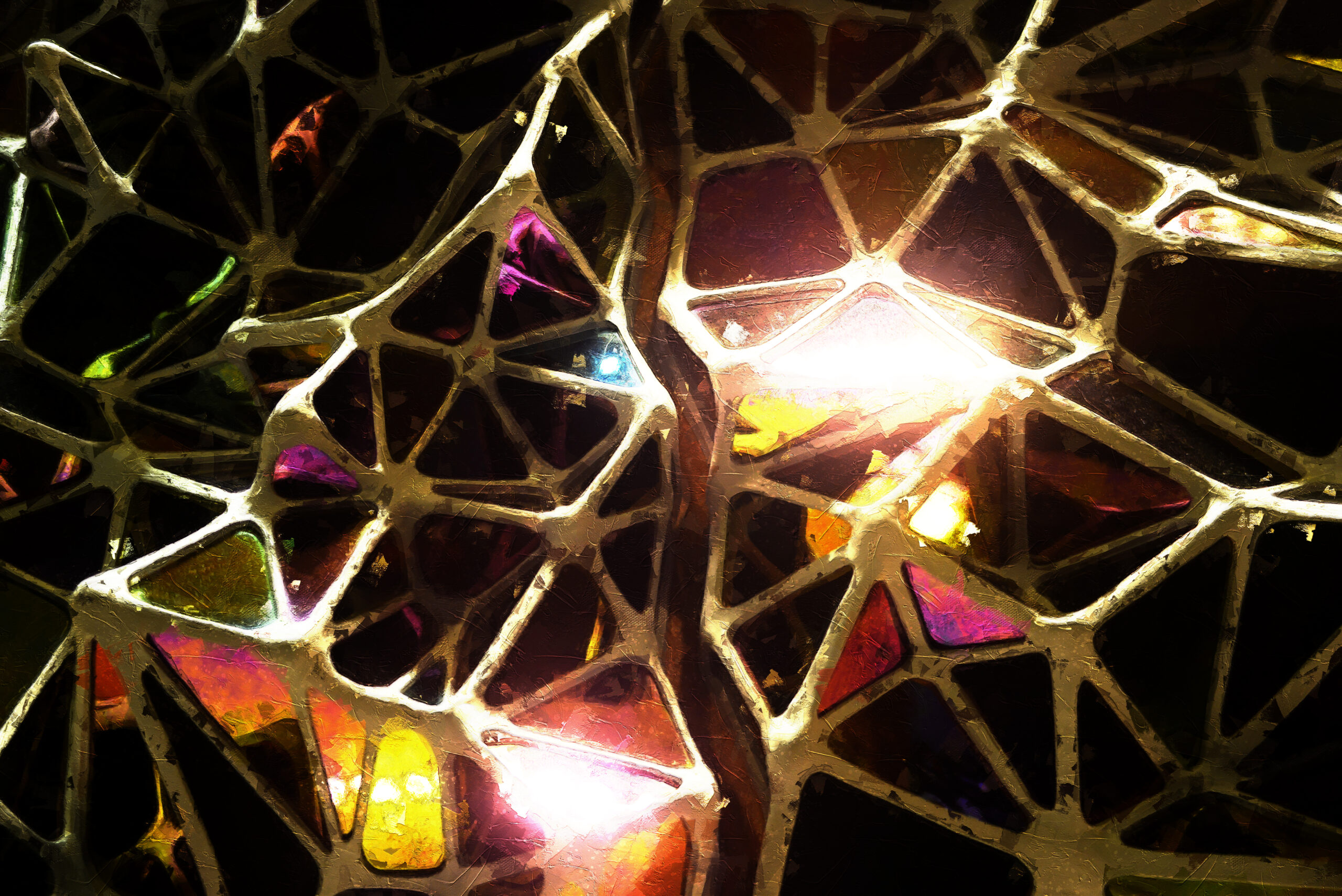
In the world of contemporary art, where visual language is continually expanding and reconfiguring itself, Abstract Modern Art Original Painting on Canvas titled “Reproduction” by Michael John Valentine stands as an evocative testament to the enduring power and expressive potential of abstract form. It is a work that does not simply adorn a space but transforms it: commanding attention, inviting contemplation, and drawing the viewer into a dynamic interplay between perception and emotion. Like Kandinsky’s prophetic insight on abstraction — that it allows the artist to reach toward the immeasurable within the measurable — this piece functions both as a mirror of emotional complexity and as a gateway to personal interpretation.
At its core, Reproduction is a celebration of freedom in artistic expression — a liberation from literal representation and a journey into expressive abstraction. The work embraces the defining characteristic of abstract art: the elevation of color, line, and texture as carriers of meaning in their own right, independent of figurative anchors. This liberated visual dialogue invites each viewer to become an active participant, dynamically engaging with the composition rather than passively observing it. In this sense, the painting becomes a living conversation between creator and viewer, a space where emotion, intuition, and memory converge.
The title, “Reproduction,” paradoxically underscores the singularity of the creation — reminding us that in true abstract art, replication is not about duplication of form, but about interpreting essence. Here, reproduction is not mimicry; it is transmutation — the artist’s rendering of internal experience into visual code. The piece rejects flat duplication and embraces transformation: each layer of pigment, each brush gesture, and each infused nuance of tone is uniquely calibrated to evoke sensation rather than describe imagery. In doing so, Valentine’s work aligns with the deepest aspirations of abstraction — to transcend surface and invite introspection.
The visual architecture of Reproduction reflects a sophisticated mastery of compositional balance and chromatic resonance. Through the interplay of color gradients, tonal contrasts, and layered texture, Valentine constructs a visual rhythm that oscillates between tension and harmony. The acrylic medium — enhanced with selective overpainting and sealed with a glossy protectant — yields a surface that is both luminous and tactile. While the glossy finish protects the work for generations, it also amplifies the visual richness: depth becomes palpable, and light actively participates in the viewing experience, shifting with the viewer’s perspective.
This material richness is a defining hallmark of the work’s collector appeal. Unlike giclée reproductions — which excel in faithful color reproduction but can never replicate the tactile presence of layered paint — Valentine’s original canvases exist as singular objects of aesthetic and emotional resonance. Their surfaces bear the imprint of the artist’s hand: the subtle flux of brushstrokes, the delicate modulation of pigment densities, and the intuitive decisions that only decades of practice can yield. These qualities transform each piece from an image into a living artifact — one that accrues value not only as an object of visual delight but as a cultural and emotional touchstone.
The technique behind Reproduction merges intentionality with improvisation. Valentine begins with a foundational application of pigment, allowing the inherent spontaneity of the medium to guide early movement across the canvas. From there, careful overpainting introduces depth and contrast, ultimately creating a surface that feels almost sculptural in its complexity and nuance. This meticulous process reflects a lifetime of disciplined artistic practice — a synthesis of technical acuity and intuitive expression that elevates the piece above decorative art into the realm of fine art worthy of serious collection.
Yet what makes Reproduction truly compelling is the emotional terrain it evokes. Without recognizable subject matter, the painting becomes a vessel for projection: each viewer brings their own psychological landscape to it, imbuing the forms with personal resonance. Some may find in its currents a sense of chaotic energy; others may perceive quietude within the layered planes of color. The absence of fixed narrative is not an absence of meaning but an invitation to generate it — a hallmark of powerful abstract work that transcends direct interpretation.
In an era defined by rapid visual consumption, the painting demands slow looking. It asks the viewer to inhabit its space, allowing sensory experience to unfold in real time rather than being captured in a glance. This temporal depth — the sense that the painting reveals more of itself with each sustained encounter — is a rare and valuable quality in contemporary art. It is what distinguishes mere decoration from profound artistry and what transforms an object into an ongoing dialogue between viewer, creator, and context.
The collectible nature of Reproduction is further affirmed by its Certificate of Authenticity, a document that guarantees provenance and assures both aesthetic and investment value. In a market where authenticity is paramount, this certification positions the work not merely as an item of possession but as a documented moment in an evolving artistic journey. Ownership of such a piece is a testament to discerning taste — a declaration that the collector values not only beauty but the depth of artistic heritage and the enduring power of original creation.
Ultimately, Abstract Modern Art Original Painting on Canvas – Titled “Reproduction” is more than a visual composition — it is an experiential landscape. It embodies the philosophical essence of abstraction: to evoke rather than depict, to commune rather than illustrate, and to resonate rather than explain. In aligning with Kandinsky’s belief in the transcendental potential of abstract art, it stands as both a personal expression of creative vision and a universal invitation to explore the emotional cosmos that lies beyond the surface of appearance.
Whether displayed in a private collection, a curated gallery space, or an architectural interior, the painting asserts itself not as an object but as a presence — one that speaks of craftsmanship, emotional depth, and the eternal dialogue between artist and viewer.