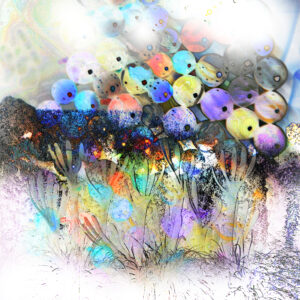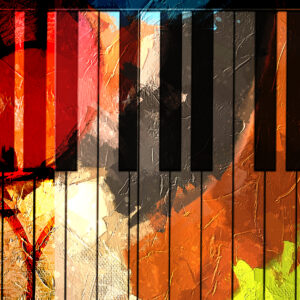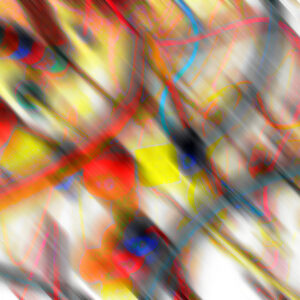
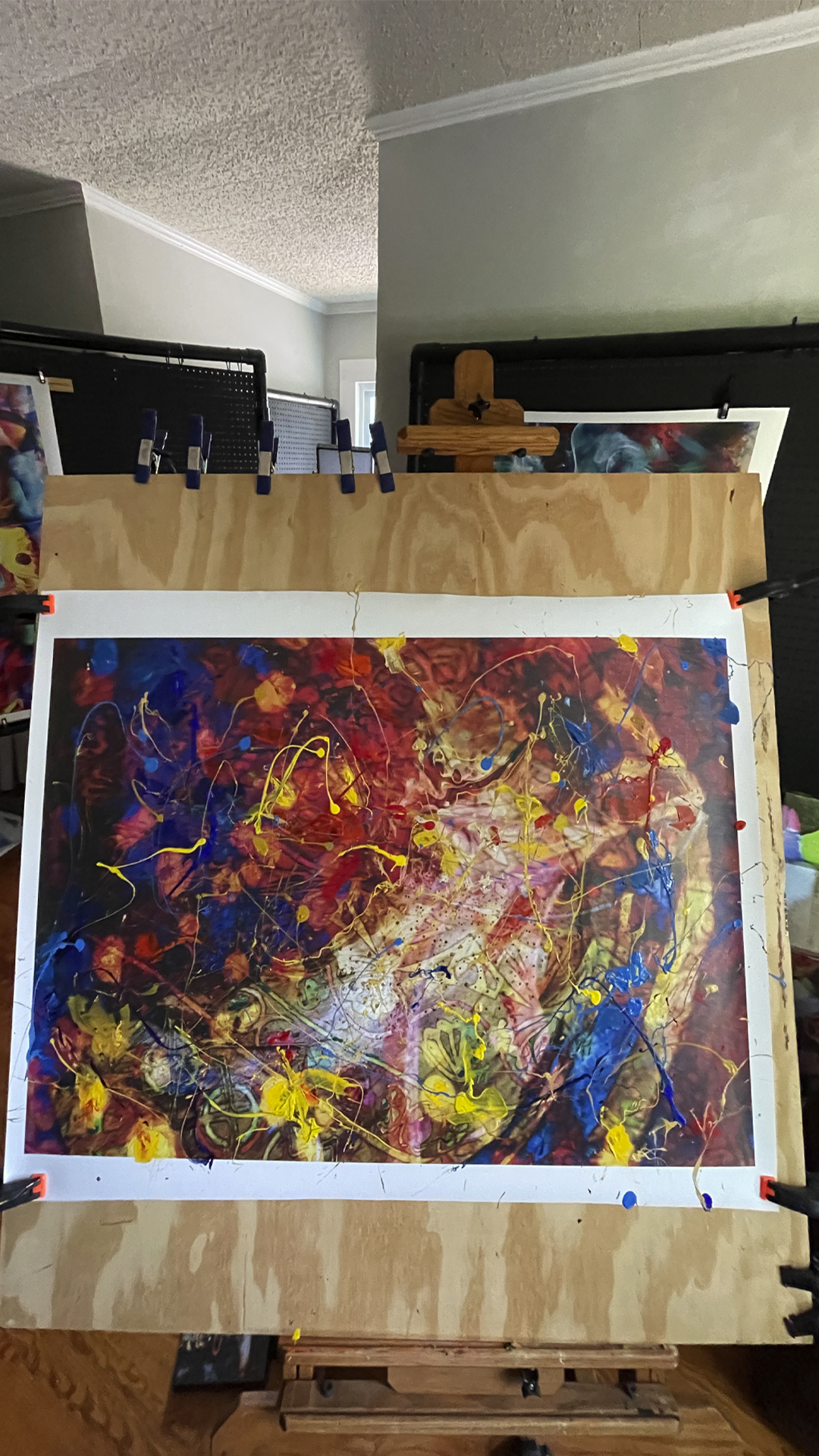


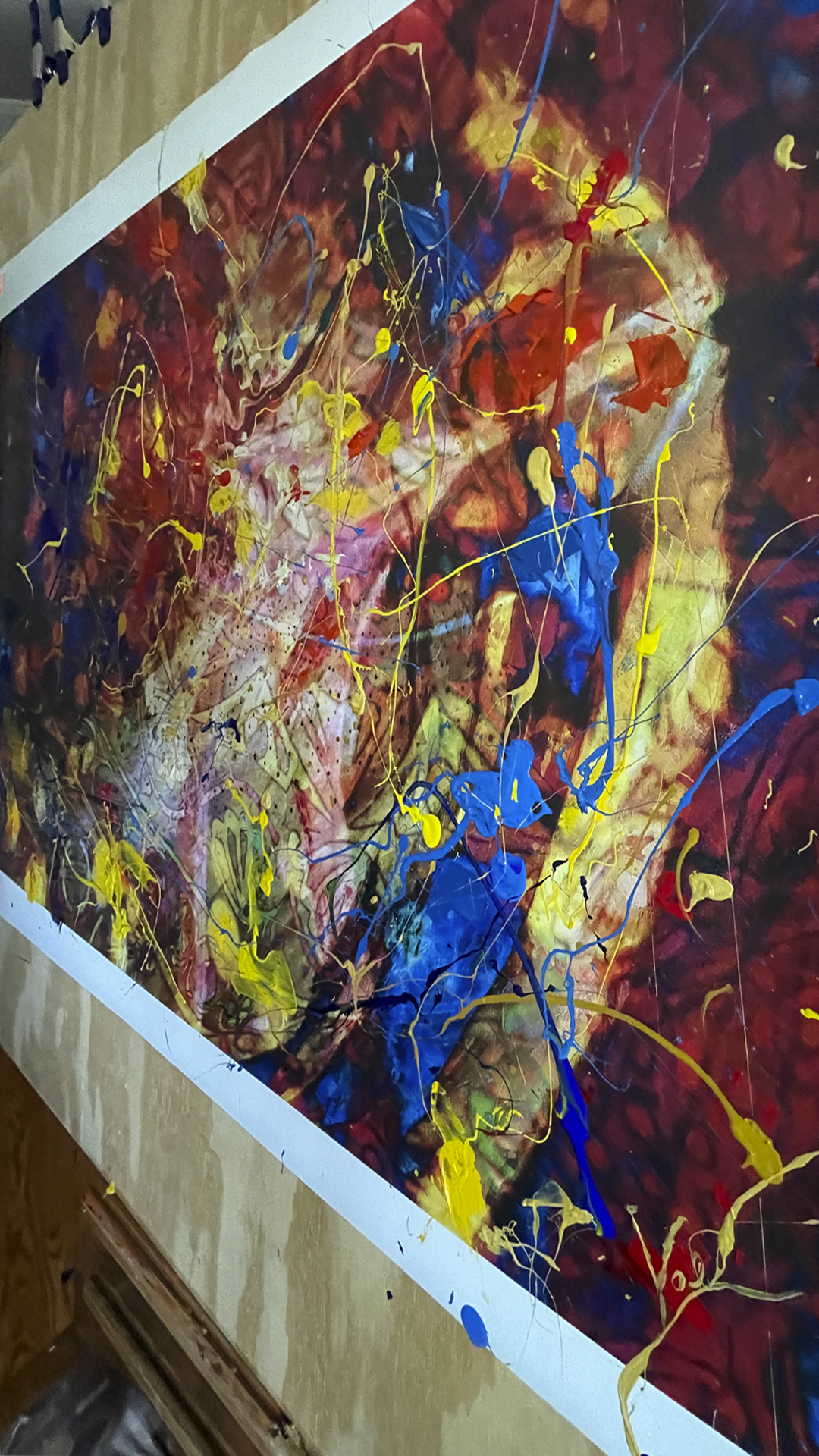


Abstract acrylics on canvas painting titled Siente El Amor 28 x 42 in studio
This painting features overpainting in select areas by artist Michael John Valentine and is sealed with a glossy protectant.
The painting is unstretched and comes to you rolled in a sealed plastic sleeve with a heavy duty tube. This assures you that the shipment will arrive in great shape. The addition of brush strokes and sealant creates a unique one of a kind look to every painting. Once you receive the painting take it to your framing shop and get it stretched or framed.
Hello My name is Michael John Valentine and I have been involved making art for over 55 years. I started off at 10 years old at an art institute in Ohio and completed my education at Kent State University with a Bachelors of Fine and Professional Arts Degree.
I have always beed fascinated by photography and spent a great deal of time doing things in the old school dark rooms.
I love the way acrylic paints set up vs the long dry time of oils. Canvas is my go to mixed media surface since it lets me gallery wrap or send out my work in a tube.
I have an actual studio in Huntersville North Carolina just outside Lake Norman. I work part time creating digital at my home and finish things off by going to my studio to paint and finish the creation process.
Lately this new series features plenty of palette knifes of all sizes and colors that jump off the canvas. Splatter technique is one way to categorize this newer collection. Mixed Media suggests that photography, canvas and acrylics all meet up for original abstract works of art.
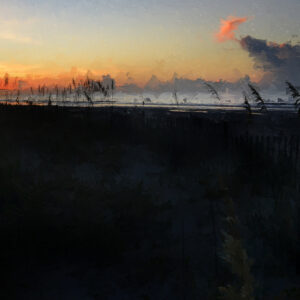
It’s not uncommon for me to blend 3-8 photos together of places I have traveled with my cameras. The work you are seeing always starts with my original photography. I have had numerous awards and magazines publish my work. My website uses this catch phrase ” Imaginative Photography to Abstract Modern Art”.
Just one original priced at $3795 and two sizes of prints that I render on canvas and sign the back. Every artist I have ever met digitizes his or her work at some point to allow prints or giclee paintings. You have a choice but I only offer one original.
I print in house on a commercial canvas printer and control the entire process from beginning to end. You can expect this print to be on the same exhibition quality canvas as the original. It will be signed on the front in a giclee/print manner and I will also sign the back.
If we talk I can also add acrylics over top the print in select areas making your print one of a kind at the same cost.
Once the painting is complete the canvas is glazed with a subtle sheen to protect the painting so that it lasts a lifetime.
It is not framed because it goes in a protective glassine sleeve and ships in a heavy duty tube. This process assures you that it arrives undamaged . By shipping this way you can take it to a framing shop and have it mounted and framed to your liking. A certificate of authenticity accompanies this acrylic painting.
Please e-mail [email protected]