
One To Beat Abstract- One of One
-
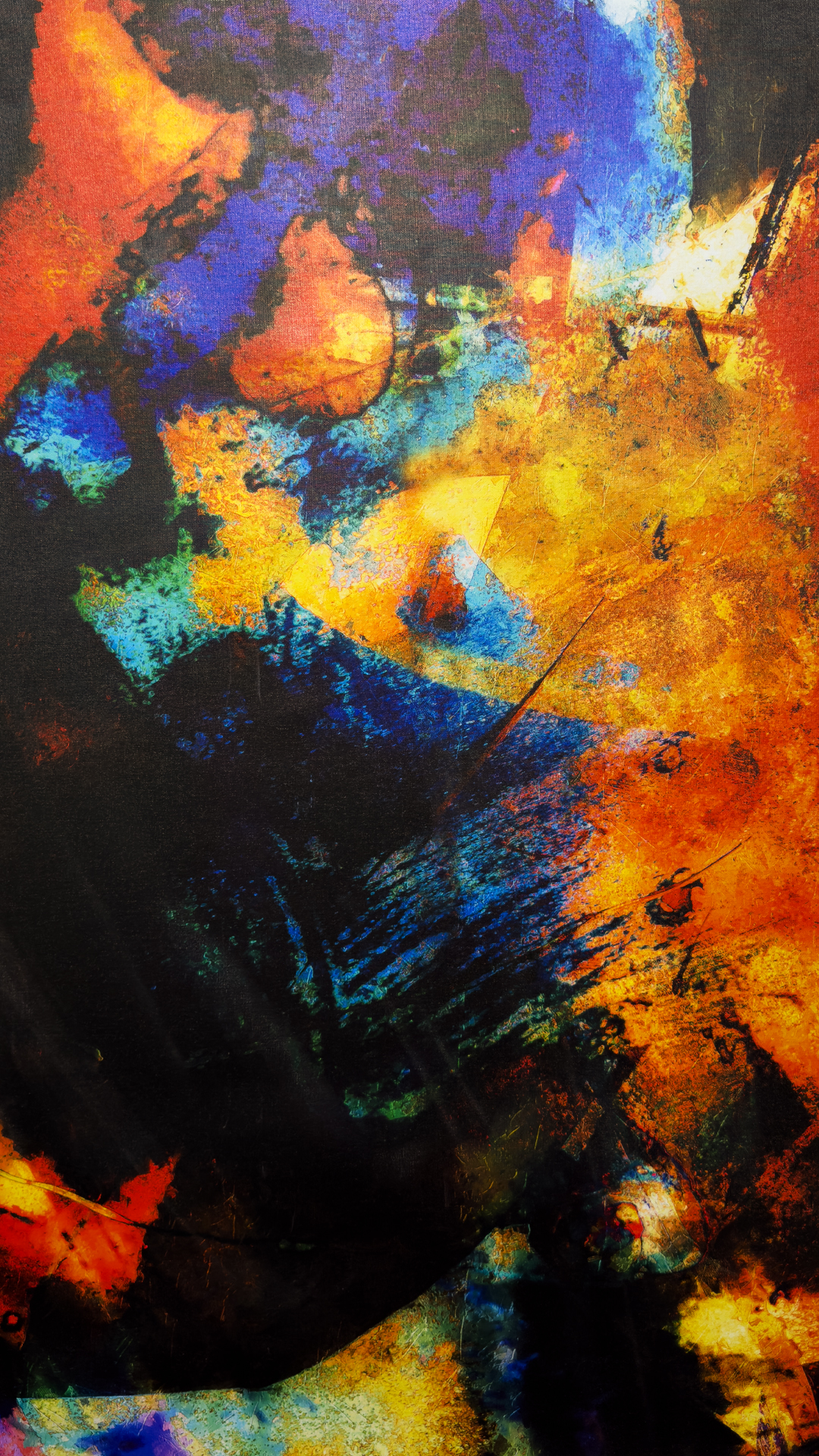
Chromatic narrative: At first glance, One To Beat unfolds as an orchestration of layered tones — luminous teal and jade undulate beneath swathes of molten amber, whispering in coral and salmon hues. Deep indigo shadows and charcoal-graphite arcs weave through the composition, grounding the warmth with depth and tension. Subtle metallic or pearlescent glazes may catch the light, causing the surface to shimmer softly as you shift perspective — suggesting oceanic depths or cosmic turbulence depending on the viewer’s vantage point.
-
Texture & surface presence: This is not a flat print. The painting is built with acrylics on canvas — applied with a variety of tools: palette knives, broad brushes, perhaps even splatter techniques — resulting in a tactile, sculptural surface. As the artist describes, the “addition of brush strokes and sealant creates a unique one-of-a-kind look.” The paint layers rise and fall; ridges and valleys of pigment catch light differently, giving subtle relief and a sense of movement even when still. A final glaze seals the surface with a soft sheen, both enhancing richness and preserving its longevity.
-
Emotional resonance: The turmoil of color and form evokes the clash of wills, the pulse of ambition — perhaps the rise and fall within a challenge, the rhythm of striving. The title “One To Beat” feels prophetic: this is at once the contender and the standard. The textured surface and layered hues invite contemplation, rewarding close inspection with changing moods and sensations.
-
Collector’s object: Delivered rolled in a sealed sleeve and heavy-duty tube, the canvas arrives raw — a blank frame of possibility. The piece comes with a certificate of authenticity; once framed and mounted, it becomes a singular, gallery-ready .
For the Discerning Collector
If you value tactile depth, nuance, and uniqueness — the rich interplay of pigment and light, the subtle imperfections that speak of a living, breathing hand — the overpainted original canvas version of One To Beat is clearly the match. It’s a statement piece, a conversation starter, and a potential centerpiece for a high-end collection or gallery wall.
If, instead, you prefer something more accessible, affordable, and reproducible — a piece that evokes the mood and composition but doesn’t carry the weight, price, or responsibility of an original — a giclée print offers excellent color fidelity and archival quality, ideal for décor, secondary spaces, or as an entry point into the work of Michael John Valentine.
Please e-mail fineartbyval@gmail.com