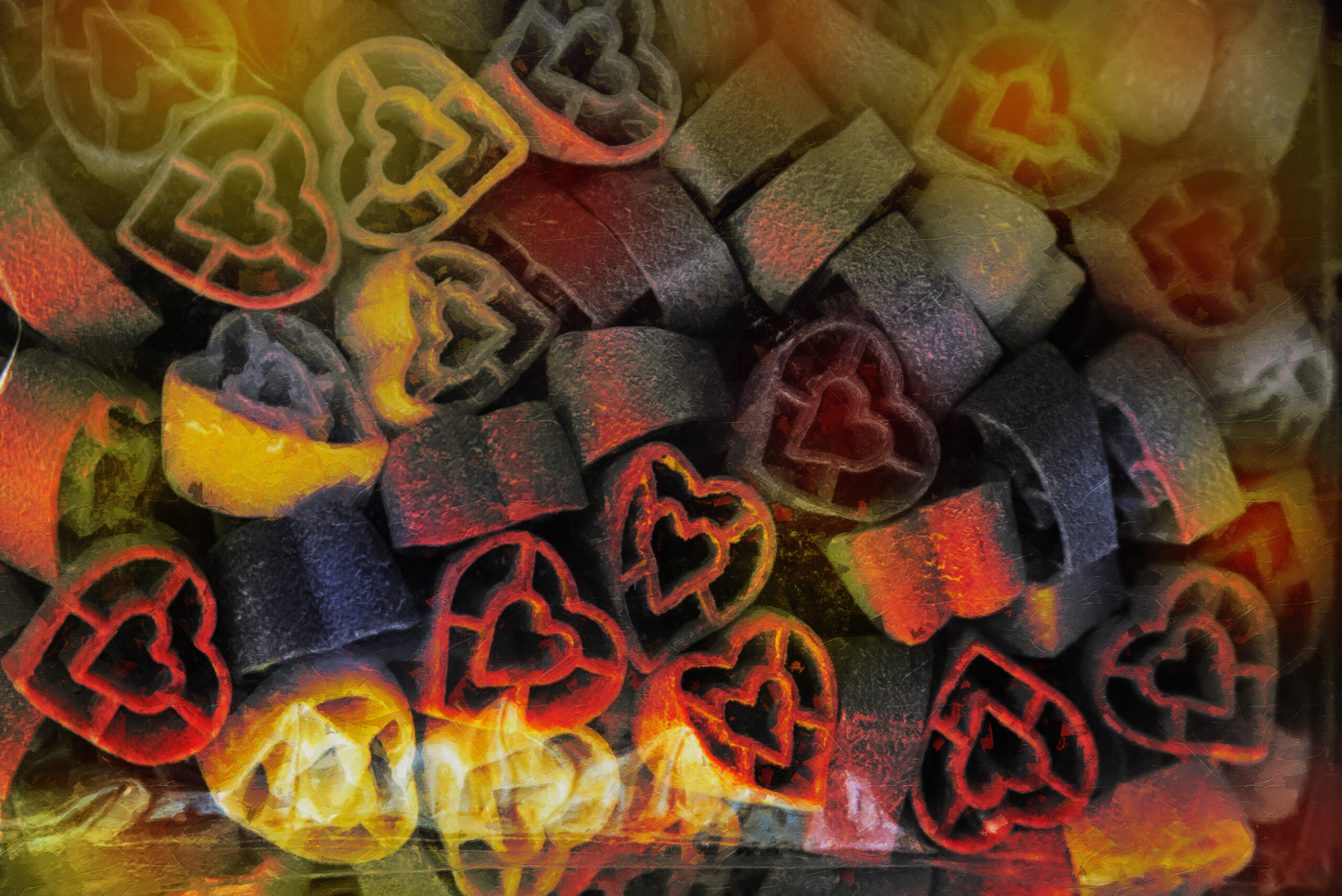

COA & Authenticity — A Collectors’ Assurance
-
The piece comes with a Certificate of Authenticity (COA) signed by Michael John Valentine, documenting its status as an original, hand-painted artwork — not a print or reproduction.
-
Each “Pasta Lovsu” painting is unique: after the initial composition, Valentine applies select overpainting (brush or palette-knife) in areas, making every piece singular and individual in texture and expression.
-
The canvas is sold unstretched (rolled and shipped in a protective tube), giving the collector the freedom to choose framing or stretching to suit their space — a hallmark of fine-art acquisition rather than mass-produced decor.
This provenance and presentation align with a collector-focused mindset: tangible authenticity, potential for tailored framing, and a one-of-a-kind tactile surface.
Texture & Color — The Visual & Tactile Signature
-
The painting exhibits layered acrylic overpainting, with visible brushstrokes and perhaps palette-knife work in select zones. These create raised, tactile ridges that catch light and cast subtle shadows, offering more than just color — a physical depth.
-
A final glossy protective sealant preserves the surface, adding a subtle sheen that enhances richness, protects the pigment, and ensures the texture endures over time.
-
While the website doesn’t specify an exact palette for “Pasta Lovsu,” given the title and the artist’s broader work (which often merges vibrant color with abstract, food- or restaurant-themed references), you can expect warm, inviting tones— potentially evoking the golden-hued warmth of pasta, the rustic warmth of Italian dining, or abstract suggestions of kitchen energy.
The result is a painting that isn’t just viewed — it’s felt: its surface, color transitions, and shine all contribute to a sensory, atmospheric presence.
Local Art & Artist’s Background — Rooted in Place
-
Michael John Valentine operates a studio/gallery near Lake Norman / Huntersville, North Carolina, making this piece genuinely local to your region.
-
His practice spans decades and blends photography + mixed-media acrylic painting: many of his works begin as photographic composites (often from his travels), transformed through layered painting, glazing, overpainting, and finishing.
-
That background means owning “Pasta Lovsu” is not just acquiring a pretty kitchen print — it’s investing in a living local artist’s legacy, a direct connection to a regional studio with a proven history of craftsmanship and evolving creative dialogue.
For a homeowner in or around Huntersville / Lake Norman, that local provenance adds emotional and community value — a small anchor between your home and the local art ecosystem.
The Overpainting Process — Why It Matters
-
The process begins with a base canvas (likely primed), then the artist applies initial acrylic layers; but what distinguishes this piece is the “overpainting in select areas” — deliberate additional strokes or palette-knife applications that add depth, variation, and unpredictability.
-
After the painting is complete, a protective glaze or sealant is applied. This not only preserves the pigment over time (especially important in a kitchen environment with possible humidity or steam) but also elevates the work from flat decoration to a textured, dimensional object.
-
Because each overpainted stroke is hand-applied and unique, no two canvases are identical — even two paintings titled “Pasta Lovsu” will differ slightly in texture, flow, and presence. That one-of-a-kind quality aligns with the collector’s ideal: owning something singular that cannot be duplicated.
In short: the overpainting transforms a canvas from a static image into a living, evolving surface — one that interacts with light, shadow, and viewing angle in subtle, changing ways.
Where & How to Place It — Embodying Kitchen & Dining Atmosphere
Given its style, provenance, and materials, “Pasta Lovsu” is especially suited to kitchen, dining, or restaurant-style spaces in a home. Here are some placement ideas (in line with interior-art best practices):
-
Above a dining table or kitchen banquette: Hang at roughly eye level for seated viewers — center about 48–54 inches from the floor if your guests will be seated.
-
Above a buffet, sideboard, or console: Let the canvas span around two-thirds the width of the furniture below. This proportion balances presence without overpowering.
-
On a blank wall near the cooking/dining area but away from direct heat or steam (not above stove or sink): Canvas materials are sensitive to humidity and grease — give it space from splash zones for longevity.
-
Leaning or on a shelf/ledge: If framing or stretching isn’t immediate, you could lean the rolled canvas (once mounted) on a shelf or accent ledge — though for best effect a proper frame or gallery wrap helps.
Because “Pasta Lovsu” combines abstract energy with a gastronomic reference (pasta/restaurant vibe), it works particularly well in kitchens designed for entertaining, dining rooms styled like bistros, or open-concept spaces where cooking and socializing merge. It becomes more than decoration — it’s a mood setter, a conversation starter.
My Reflective View — How “Pasta Lovsu” Resonates in a Home Kitchen Setting
For you — given your taste for “luxury, collector-focused” presentation — “Pasta Lovsu” offers a perfect blend of intimacy and sophistication. Its handcrafted texture, overpainted depth, and genuine COA transform it from mere wall decor into a curated, inheritable object. In a kitchen or dining room, it doesn’t just hang on the wall — it anchors the space, evokes warmth, and subtly references conviviality and the art of dining. Placed thoughtfully (above a dining table or buffet), it would become a signature piece — the kind of art that evokes conversation, nostalgia, and an elevated sense of home.