“Abstract art is not the creation of another reality but the true vision of reality.” — Piet Mondrian
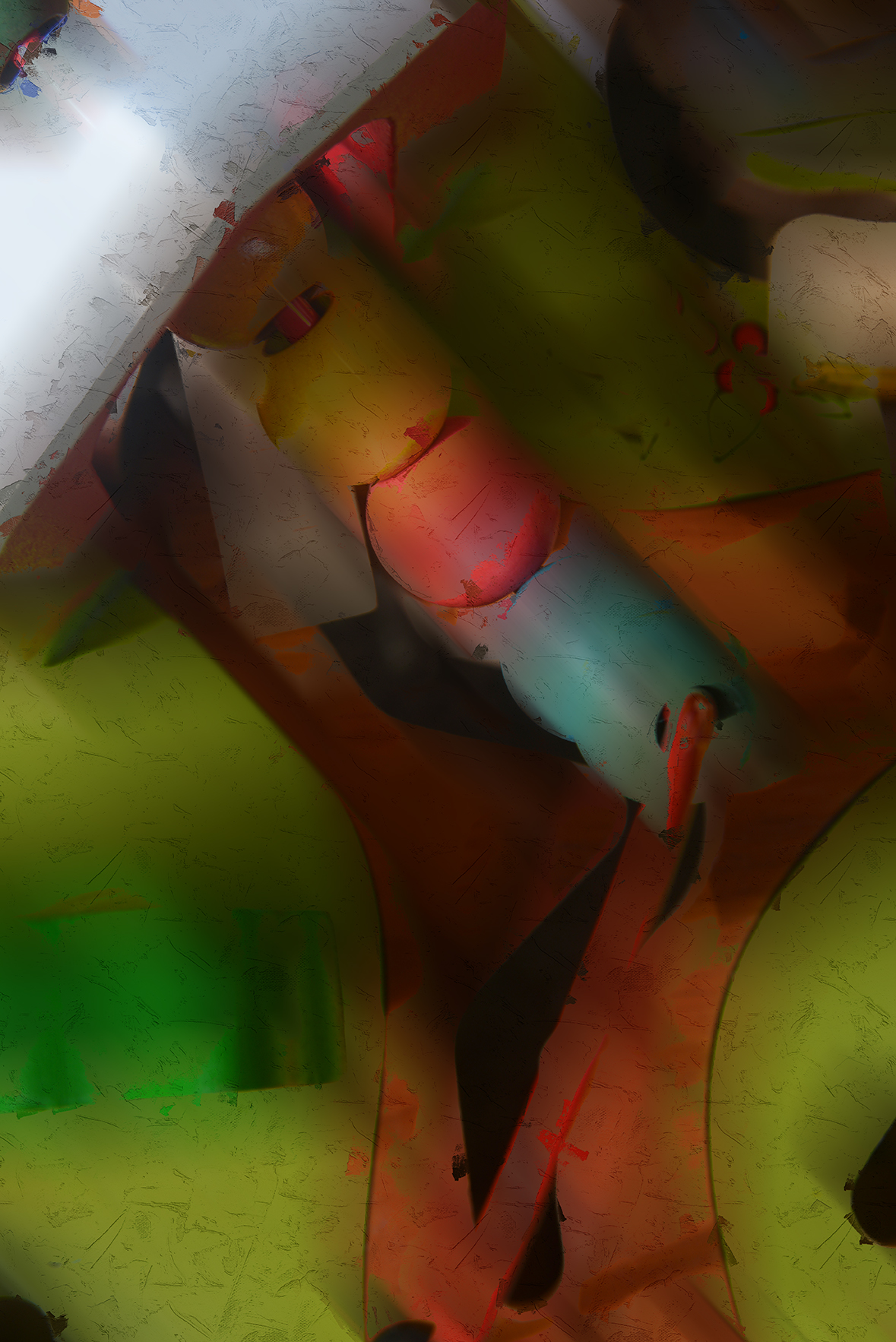
This quote captures the essence of what Michael John Valentine seeks in Running Free: not a mere depiction or illustration of the visible world, but the distilled pulse of experience, emotion, and visual energy that resides beneath and beyond the familiar.
Running Free — A Manifesto of Motion, Freedom, and Inner Truth
At first encounter, Running Free delivers a visual rhythm that feels lived‑in, as though the painting itself is in motion — stretching out, unfolding, and inviting the viewer to step into its world rather than simply observe it. What you’re drawn to is not a scene or recognizable form, but a vivid interplay of shapes, color, and gesture that feels alive, unscripted, and deeply personal. In the modern canon of abstract art, this is the space Piet Mondrian alluded to when he described abstraction not as a departure from reality but as its true expression — a reality not of objects, but of perception and experience itself.
1. Abstract Art as a Vision of Reality
Unlike figurative painting that aims to mirror the physical world, abstract art engages with the essence of perception. It is a language of form, color, and surface that communicates beyond words — a language akin to music or poetry in its capacity to evoke feeling without narrative. Michael John Valentine’s Running Free inhabits this language fully. Its strokes, rhythms, and spatial dynamics do not depict a subject. They invite the viewer into a world shaped by color’s expressive force and the painter’s intuitive gesture.
At its core, abstraction resonates because it mirrors how we feel and think — in impulses, impressions, and associations — not only in fixed images. In a world dense with visual surfaces and commodified imagery, works like Running Free reclaim the primacy of introspection, inviting pause, contemplation, and personal response.
2. The Artistic Gesture — Freedom Beyond Form
The title Running Free speaks to a fundamental ethos of abstract painting: liberation. Here, freedom is not chaos; it is the liberation of line, shape, and color from representational constraints. The oscillations of tone and movement across the canvas function like a visual refrain — they feel spontaneous yet considered, intuitive yet grounded in craft.
This oscillation is where the painting becomes compelling. The viewer’s eye does not settle once, it journeys, responding to the push and pull of contrasts, the subtle tension of layered pigments, and the reflective sheen of the protective glossy finish. Each color field and brush gesture enters into a dynamic conversation with one another, triggering a rhythm that feels both visceral and contemplative. In this way, Running Free is not static; it lives, layered with possibility and internal energy.
3. Technique, Intention, and the Collector’s Eye
Michael John Valentine’s practice — honed over decades of professional artistic engagement — fuses intuition with technique. His approach involves selective overpainting and layered application, creating surface depth and visual tension that can change with light and perspective. The glossy protectant finish not only preserves the work but amplifies its luminosity, enabling subtle shifts in tone and texture as the viewer moves around it.
This sophisticated handling of medium resonates particularly with collectors who appreciate artwork that evolves visually over time. The tension between freedom of gesture and calculated layering positions Running Free as a work that rewards repeat engagement — each viewing reveals nuances that were unnoticed before.
In the broader context of Valentine’s body of work — which includes abstract explorations of motion, universe, and emotion — Running Free weaves a narrative of continuity and experimentation. It is not merely a standalone piece but part of an ongoing dialogue that explores how abstraction can manifest personal and collective experience through form and color.
4. Emotional Resonance and Personal Interpretation
One of the most compelling qualities of abstract art is its capacity to resonate emotionally without prescribing meaning. Whereas figuration may guide the viewer toward a specific subject or narrative, abstraction opens a field of interpretive space. In engaging with Running Free, viewers project their own experiences, emotions, and memories — making the encounter deeply personal.
This openness is not emptiness or ambiguity for its own sake. It is a deliberate invitation — a recognition that meaning in art often resides not in fixed narratives but in the lived experience of those who engage with it. It echoes the power of music: its emotional impact is real, even without words.
5. A Collector’s Statement: Art Beyond Decoration
For collectors seeking work of depth, presence, and expressive force, Running Free stands as a meaningful investment — not only in aesthetic value but in emotional and conceptual resonance. Its layered brushwork, dynamic movement, and evocative color fields make it a centerpiece that animates any space while inviting reflection and dialogue.
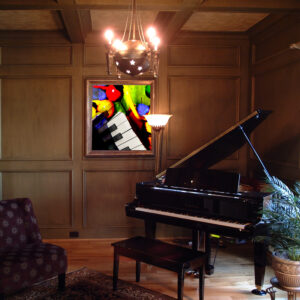
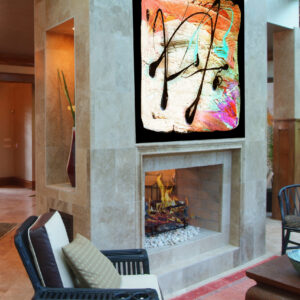
The piece’s availability across sizes — from intimate formats to commanding large canvases — allows it to be tailored to diverse environments while retaining its sensory power. Whether placed in a private collection, a curated gallery wall, or a contemplative interior space, Running Free becomes more than decoration; it becomes an active participant in the life of the space and the inner lives of its viewers.
6. The Legacy of Abstraction and Personal Vision
In the rich lineage of abstract art — from Kandinsky, Mondrian, and Rothko to the expressive innovations of contemporary practitioners — Running Free asserts its place by engaging with abstraction’s core promise: to transcend the visible and evoke the felt. In this work, Valentine bridges the historical momentum of abstraction with his own intuitive voice. The result is a painting that feels both grounded in art history and vibrantly alive in the present moment.
In the final reckoning, Running Free is less an image to be seen than an experience to be felt. It is a testament to abstraction’s power to reflect not what is, but what could be felt, thought, and imagined. For the discerning collector, this is where the true value lies: not merely in ownership, but in ongoing engagement with a work that continues to reveal itself over time.