“In abstraction we discover not what the world looks like, but what it feels like — an ocean of color and form where reality is only the first whisper.”
A Curated Exploration of Out Of Touch Abstract Art
by Michael John Valentine — A 1000‑Word Artful Interpretation
At first encounter, Out Of Touch Abstract Art is less a depiction than an experience: a rhetorical shift from visual representation to emotional resonance. This work — offered as a painting, signed canvas, glossy print, poster, or even a compact peel‑and‑stick decal — expresses an abstract visual language rooted in the sensibilities of modern art’s most profound explorations: color, texture, space, and intuitive gesture.
Abstract art, as a genre, is defined by its departure from literal representation. Instead of depicting the visible world, it evokes sensation, emotion, and thought through shape, color, line, and compositional rhythm. It invites — rather than tells — which makes it simultaneously intimate and universal.
Emotional and Visual Landscape
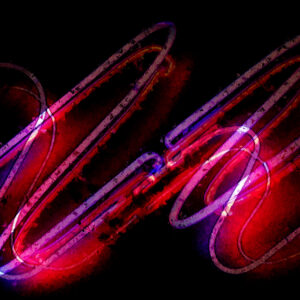
In Out Of Touch Abstract Art, Valentine orchestrates an interplay of energetic strokes and layered chromatic depth. Although the title suggests separation — being “out of touch” — the work does not retreat into isolation. Rather, it engages the viewer in a dynamic dialogue between sensory perception and emotional intuition.
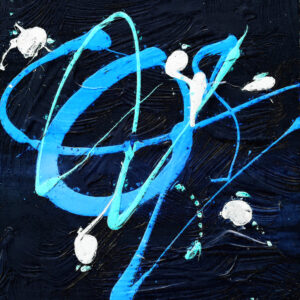
Each brushstroke carries the weight of intention and spontaneity alike. Thick, tactile applications of paint give way to smoother transitions, resulting in a surface that feels alive with motion. This contrast embodies the duality at the heart of abstraction: discipline versus impulse, known vs. unknown, inner life vs. outer form.
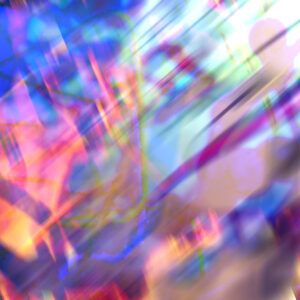
Color in this piece functions like a musical score — each hue a note that resonates with psychological depth. Warm tones create moments of tension or urgency; cool hues offer spaces of calm and reflection. Together, they form a visual symphony that urges the viewer toward introspection. In abstract art, color is not merely surface; it is emotive architecture.
The Language of Lines and Form
Though abstract, the work’s composition suggests movement rather than chaos. There is a directional flow — a rhythm that guides the eye across the canvas. This might manifest as curved gestures suggesting breath or continuity, or sharper intersections that arrest attention and create visual counterpoints. These formal decisions evoke something larger than the sum of their parts: a visual metaphor for the flux of thought and feeling.
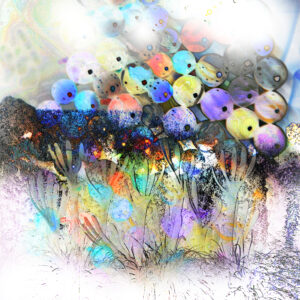
Valentine’s technique — overpainting on canvas with acrylic — contributes a palpable material presence. The layering of paint creates depth, allowing color fields to shift under changing light and perspective. This physicality bridges the conceptual and the perceptual, reminding the viewer that abstraction, at its best, is a lived encounter with surface and space.
What It Means to Be “Out of Touch”
The title itself — Out Of Touch — opens a conversation about connection, presence, and perception. Abstract art often exists precisely at the threshold of comprehension: it resists simple reading so that we may feel before we define. Far from suggesting absence, the phrase “out of touch” may instead evoke a moment of transformation — an invitation to detach from the literal and attune to inner experience.
What does it mean to be out of touch? Perhaps it is a state of unmooring from concrete references — a freeing of the mind to explore associations, memories, and emotions without constraint. In this sense, Out Of Touch Abstract Art doesn’t look away from reality; it reorients our relationship to it. It asks us to consider the intangible qualities of experience — the things we feel but cannot easily articulate.
Viewer Engagement and Interpretation
One of the hallmarks of abstract work is its openness to interpretation. Without a singular narrative to impose meaning, the viewer becomes an active participant — co‑creator of significance. Abstract art empowers the audience to bring their own experiences, memories, and emotional responses into communion with the artwork. There is no definitive reading, only a series of personal engagements.
Across cultures and creative traditions, deep abstraction shares a common goal: to evoke what cannot be “seen” in the conventional sense, but known in a psychological or emotional sense. This is why abstract art continues to be relevant and compelling; it emphasizes the subjective nature of reality and the multiplicity of human perception.
Context Within the Artist’s Oeuvre
While Out Of Touch Abstract Art stands on its own, it aligns with Michael John Valentine’s broader body of work — a practice rooted in experimental texture, layered media, and visual storytelling. His works often blur the boundaries between photography, mixed media, and painterly abstraction. Approaching his art with the knowledge of his deep involvement in both traditional and innovative techniques enriches the viewing experience.
Valentine’s art is typically handcrafted in his Cornelius, North Carolina studio — each piece signed and offered directly through his gallery. This commitment to authenticity and direct artistic lineage reinforces the collector’s sense of connection to the creator’s hand and mind.
Materiality and Experience
The material aspects of Out Of Touch Abstract Art deserve attention. Whether presented as a large overpainted canvas or a more intimate glossy print, the work carries material presence. It arrives unstretched (when canvases are shipped rolled), inviting collectors to frame or stretch according to their own aesthetic preferences. This physical interaction with the work — from unboxing to installation — becomes part of the ownership experience.
The tactile qualities — variations in sheen from glossy protective layers, the subtle relief of brushwork — invite closer inspection. Abstract art thrives in this tension between distance and proximity: the farther back one stands, the more the composition holds as a unified field; the closer one moves, the more nuanced and detailed the surfaces become.
Why Collect This Work
For collectors, Out Of Touch Abstract Art offers a compelling blend of emotional richness and aesthetic sophistication. Its non‑representational nature makes it versatile for diverse interior environments — from contemporary residential spaces to curated galleries. It sparks conversation without dictating exact meaning, enriching a space with both energy and contemplative stillness.
Owning such a piece is more than acquiring decoration; it is adding an encounter — a constant invitation to look, feel, reflect, and reinterpret. In a world saturated with imagery and instant interpretation, abstract art offers a rare space of openness and depth.
In Out Of Touch Abstract Art, Valentine does not merely create a visual artifact — he crafts a perceptual journey. One that asks, gently but insistently: what do you see when you look inward, when you release the need for certainty, and when you allow art to touch you in ways words cannot fully capture?
— A fitting meditation on abstract expression, experience, and the profound freedom found in art that communicates without boundaries.