“A good cigar closes the door on the vulgarities of the world.”
— Julian “Pappy” Van Winkle Sr.
There is a particular silence that settles in when a cigar is properly lit. It is not the absence of sound, but the removal of urgency. Cigars have always belonged to a slower language—one spoken in measured draws, drifting smoke, and moments allowed to fully unfold. This artwork, anchored by the presence of a Padron 1926 cigar, is devoted to that language. It is not about excess. It is about intention.
Pappy Van Winkle’s observation that “a good cigar closes the door on the vulgarities of the world” speaks directly to the role cigars have long played in the lives of discerning men. A fine cigar is not a distraction; it is a boundary. It separates the meaningful from the meaningless, the deliberate from the disposable. Lighting a cigar is a conscious act—a decision to pause, to disengage from noise, and to enter a more reflective state of mind.
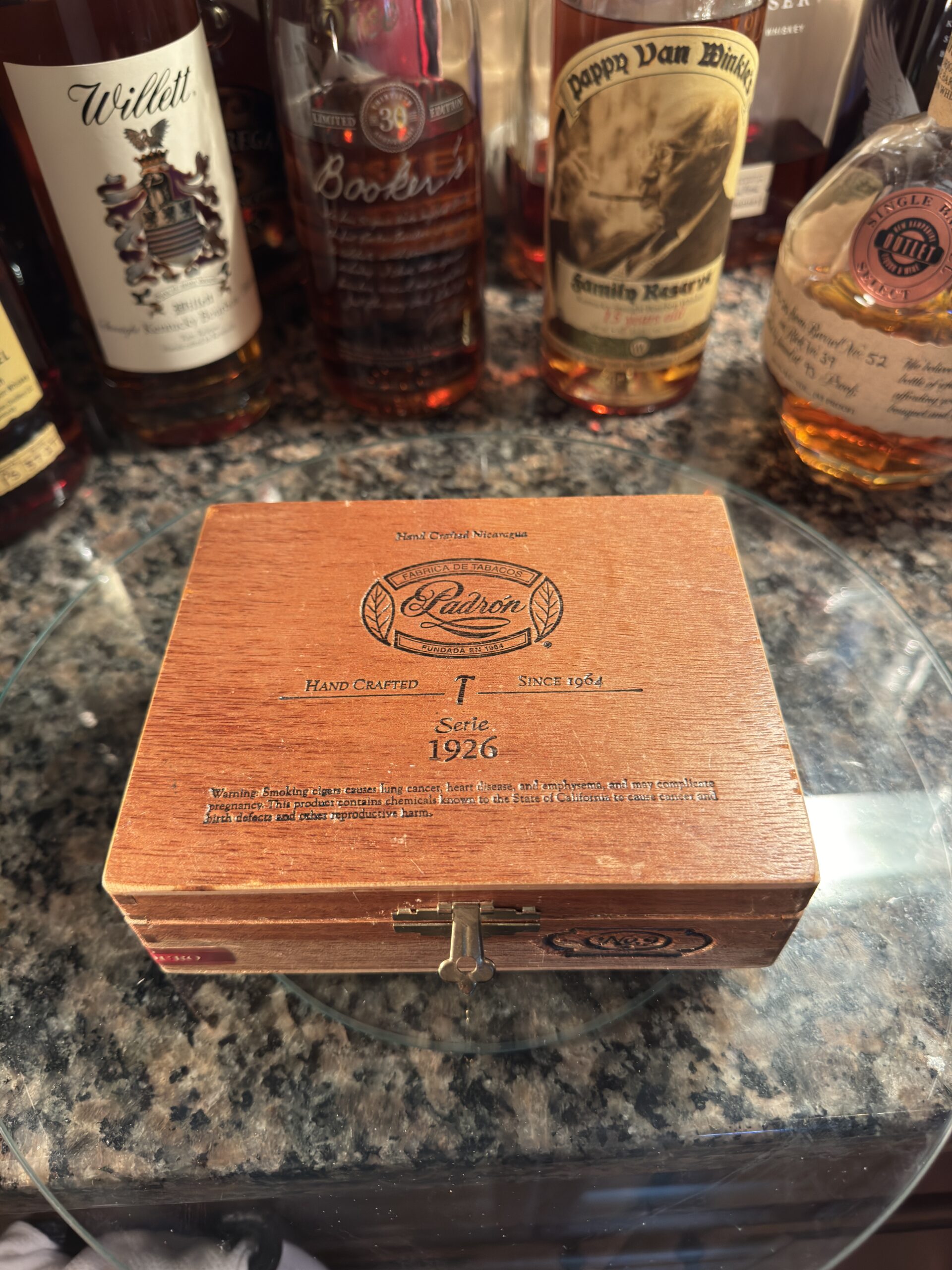
The Padron 1926 Series is built for precisely this purpose. Created to honor the legacy of José Orlando Padrón, the line represents decades of refinement in tobacco cultivation and cigar construction. Every leaf is aged patiently, every cigar assembled with uncompromising standards. From the moment it is held, the weight and texture signal seriousness. This is not a casual smoke. It is an experience that asks something of the smoker: time, attention, and respect.
Once lit, the cigar begins to tell its story. The opening draws offer deep earth, cocoa, and roasted coffee, grounded and confident. As the smoke progresses, layers of cedar, leather, and a restrained spice emerge, never harsh, never hurried. The evolution is gradual, rewarding those who allow the cigar to set the pace rather than imposing one upon it. This is craftsmanship expressed through restraint.
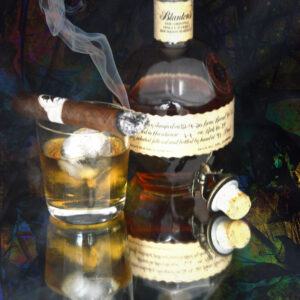
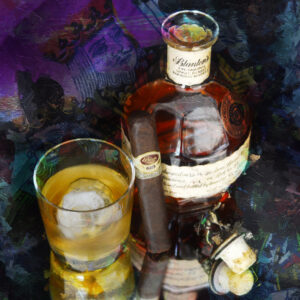
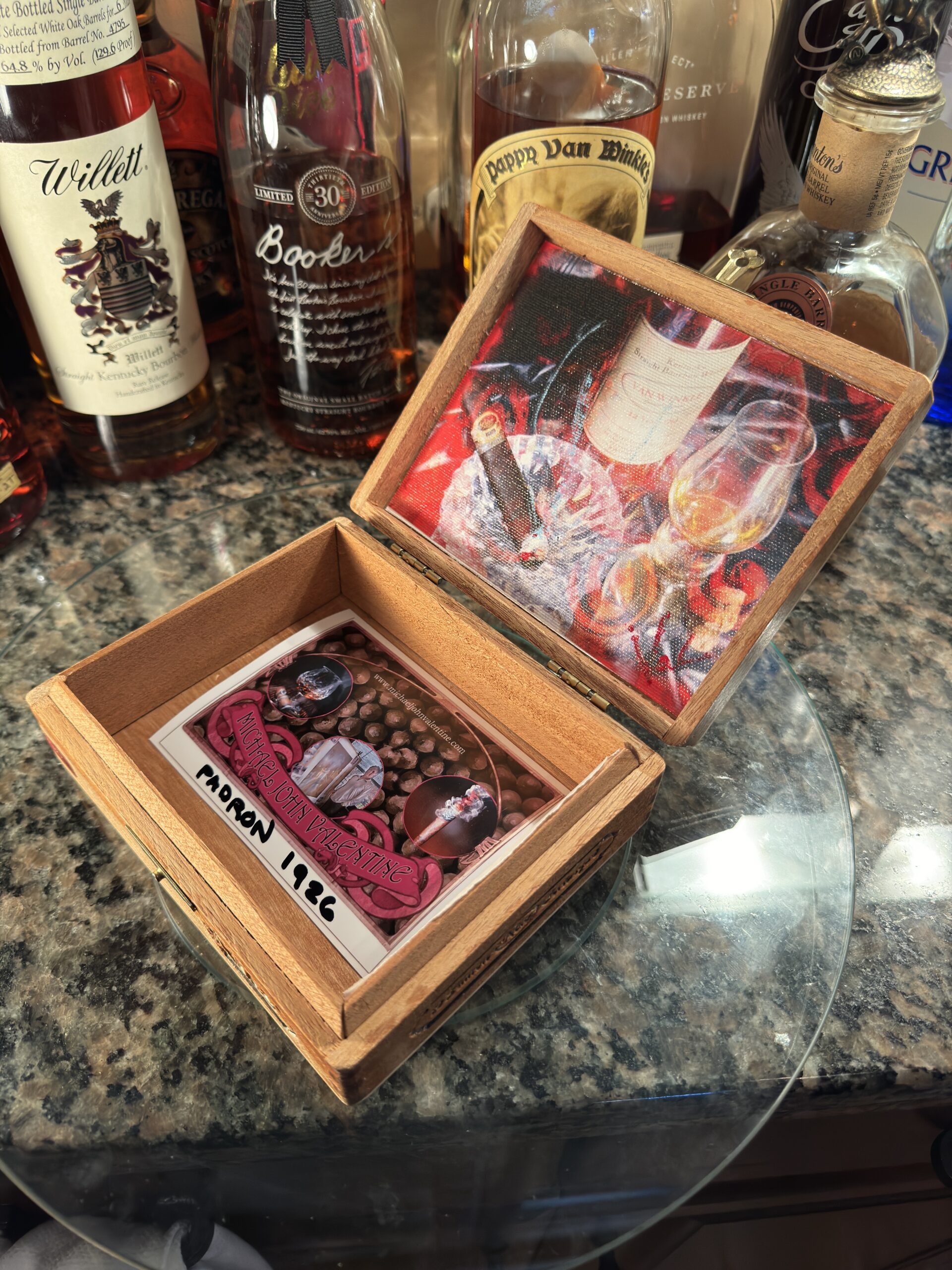
The artwork captures this moment of anticipation and reflection—the space before the first draw, the quiet between thoughts. The cigar is not depicted as an accessory but as the central character. Its presence commands stillness. It reminds the viewer that some pleasures are earned not through acquisition, but through patience.
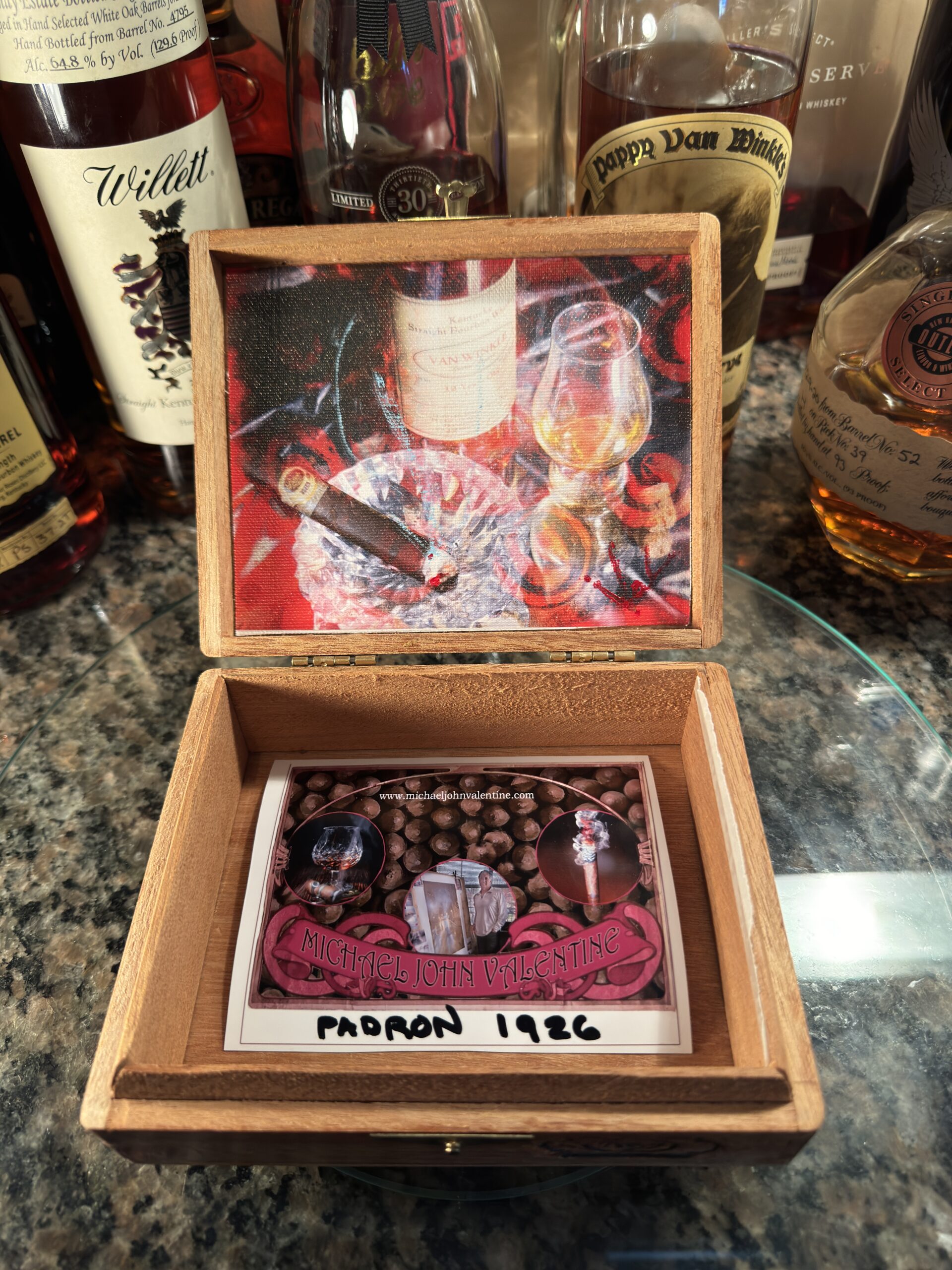
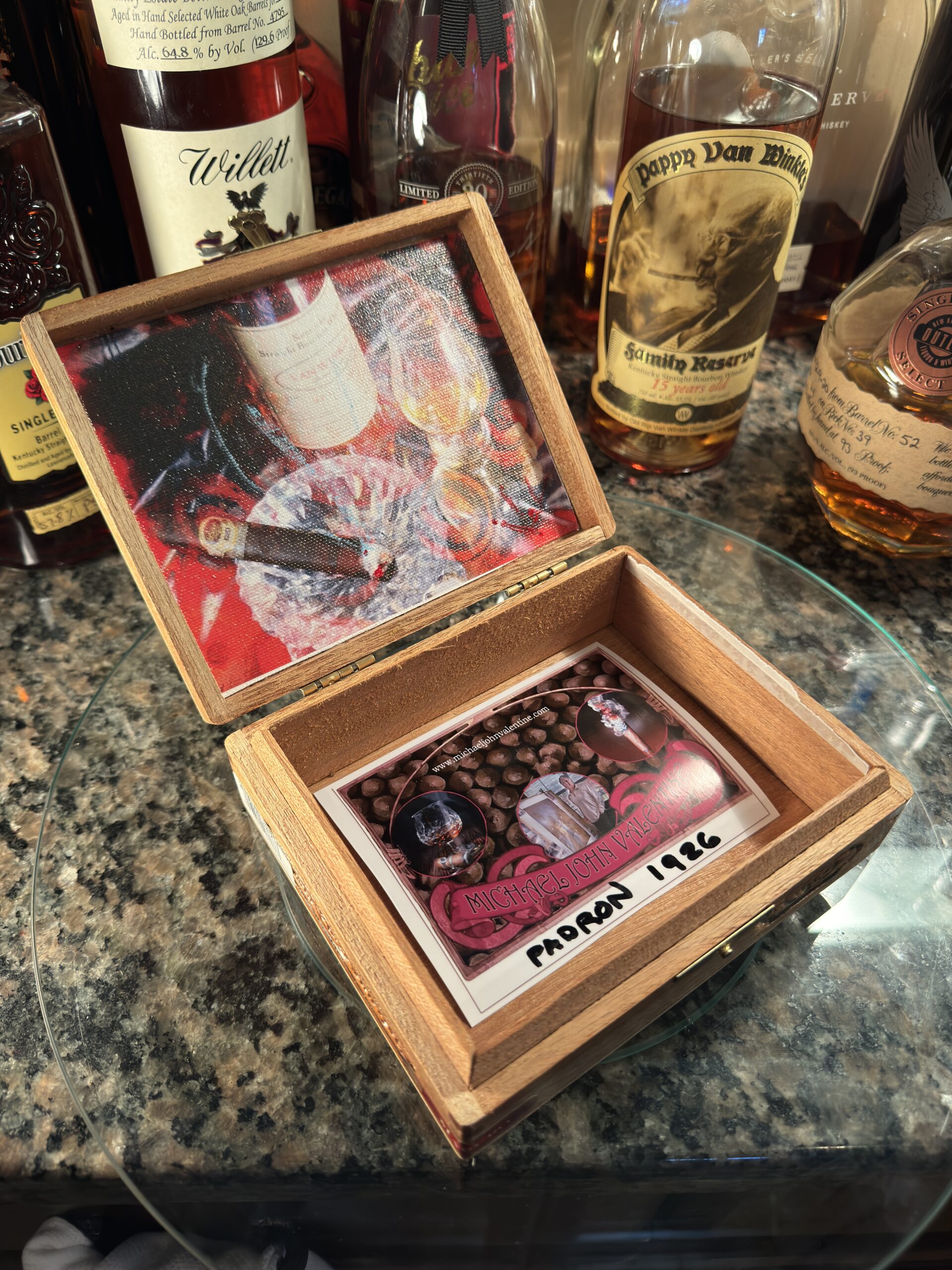
The box itself reinforces this philosophy. Compact and purposeful at 5.5 x 4.5 inches, it mirrors the disciplined elegance of the cigar it honors. This is not storage designed for clutter. It is a place for essentials—cigars selected for the right evening, a cutter, a lighter, or the personal items removed before settling into a chair and letting the world recede. Rings, keys, coins, and small objects find a temporary resting place here, just as the mind does during a good smoke.
This functional aspect transforms the artwork into something lived with rather than merely displayed. Each time the lid is lifted, it becomes part of a ritual. Objects placed inside are not discarded; they are intentionally set aside, much like distractions during a cigar. In this way, the piece quietly reinforces the discipline of slowing down.
The artistic process behind the work deepens its connection to cigar culture. Beginning with photography, the image is first grounded in reality—the exact light, the true texture of the cigar wrapper, the honest shadow cast across the surface. From there, overpainting introduces interpretation. Brushstrokes soften edges, deepen contrast, and add warmth where memory and mood outweigh precision.
This transition from photograph to painted surface parallels the cigar experience itself. Tobacco begins as agriculture and ends as ritual. What is practical becomes poetic. What is physical becomes emotional. The overpainting process honors that transformation, ensuring the final piece feels tactile, intimate, and human rather than static.
Cigars have always been associated with reflection, conversation, and solitude chosen rather than imposed. They mark milestones, close business deals, celebrate births, and accompany quiet evenings when nothing needs to be said. This artwork speaks to that lineage. It does not glamorize excess; it honors control. It does not chase trend; it respects tradition.
The inclusion of Pappy Van Winkle’s sentiment at the top is not incidental. While known for bourbon, Pappy understood cigars as symbols of civilized living—moments when one steps away from vulgarity, haste, and noise. That understanding resonates deeply here. The Padron 1926 is not about showing off; it is about showing restraint. It is about knowing when to sit still.
For collectors, this piece functions as both homage and utility. It belongs in spaces where cigars are treated as companions rather than commodities—studies, lounges, offices, or private corners where time is allowed to stretch. Over years, the box will carry marks of use, subtle wear that adds character rather than diminishes it, much like a well-seasoned humidor or favorite lighter.
Ultimately, this artwork is about choosing depth over distraction. It is about honoring a culture that values patience, craftsmanship, and presence. Like a great cigar, it does not demand attention—but it rewards those who give it.
In a world that rarely slows down, this piece stands quietly, doing what cigars have always done best: closing the door on the vulgarities of the world.