“When I see the mountains of North Carolina, I can’t help but look up and feel inspired.” — Katherine Anne Porter
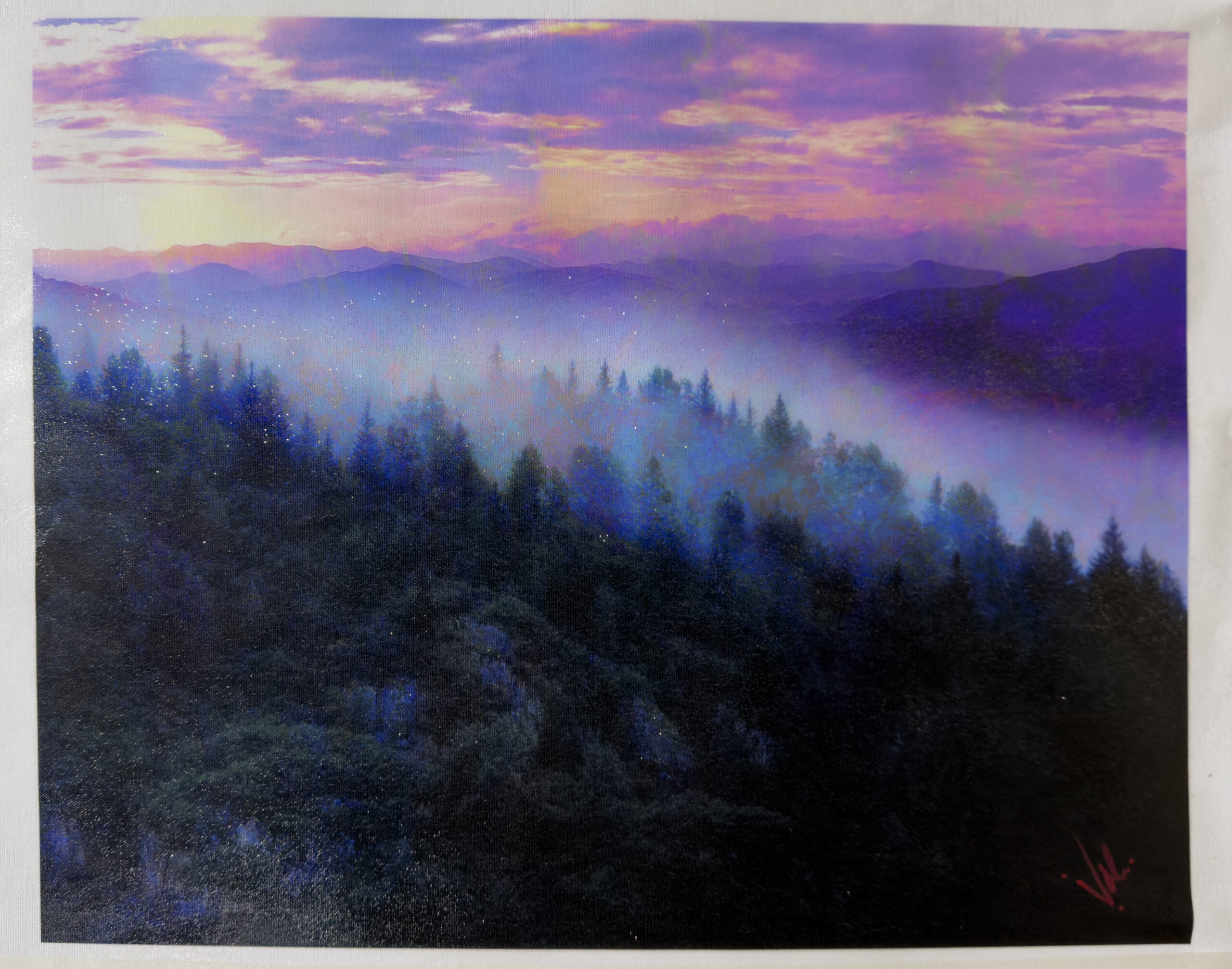
The mountains of North Carolina rise as an enduring presence of ancient time and quiet majesty, where the contours of land and sky converge in a language older than memory. Within the realm of the Appalachian Highlands and the sweeping ridgelines of the Blue Ridge Mountains, the landscape carries a sense of permanence shaped by erosion, weather, and geological patience. The peaks and valleys do not simply occupy space; they define atmosphere, light, and emotion. In The Majestic North Carolina Mountains, that presence becomes more than observation—it becomes distilled interpretation, where terrain transforms into visual poetry anchored in structure, tone, and atmosphere.
Across North Carolina’s mountain corridors, shifting weather patterns move with cinematic subtlety. Morning mist settles into hollows, diffusing light into soft gradients that blur the line between form and abstraction. By midday, elevated ridges sharpen into contrast, revealing layered blues, forest greens, and slate grays that recede into atmospheric depth. Evening introduces a final transformation, where fading sun ignites the edges of peaks before surrendering them to twilight silence. This constant metamorphosis becomes the foundation of the work, where no single moment defines the mountains, but rather the accumulation of transitions that shape their identity.
The overpainting process serves as the central language of construction within the piece. Beginning with a foundational base image capturing structural truth, subsequent layers are applied in a deliberate sequence of refinement and reinterpretation. Overpainting is not correction but evolution. Transparent glazes are introduced to adjust atmospheric depth, while opaque passages refine focal tension and spatial hierarchy. Selective texturing introduces dimensional complexity, allowing light to interact with surface in unpredictable but controlled ways. This layered methodology builds visual sediment, echoing the geological formation of the mountains themselves—strata upon strata, each phase influencing what follows. The result is not a replication of landscape but an accumulation of perception, memory, and emotional resonance embedded within pigment and surface.
Color discipline plays a critical role in maintaining cohesion throughout the overpainting stages. Subtle tonal shifts replicate natural atmospheric scattering found in the Appalachian region, where distance dissolves saturation into atmospheric blue and softened gray. Controlled chromatic restraint allows emotional weight to emerge from composition rather than intensity alone. The mountains are not rendered as static objects but as living systems of light and recession. Each layer of overpainting either reveals or conceals, echoing the way fog moves through valleys or how shadow reshapes terrain across hours rather than seconds.
The Certificate of Authenticity (COA) elevates the work beyond visual experience into the realm of documented provenance and collectible permanence. Each COA establishes a verifiable record of origin, affirming the artwork’s uniqueness, edition status, materials, and creation details. In a market where reproduction is effortless but authenticity is finite, the COA functions as both safeguard and legacy marker. It connects the physical artwork to its conceptual and archival identity, ensuring that ownership carries not only aesthetic value but documented legitimacy. Collectors engage with more than imagery; they engage with certified originality, a critical distinction in fine art investment and curation.
Within this framework, the COA becomes part of the artwork’s narrative structure. It reinforces the intentionality behind each overpainted layer and affirms that the piece is not a decorative reproduction but a singular artifact of artistic construction. Materials, archival standards, and signature verification are all recorded to preserve long-term value and institutional credibility. Over time, this documentation becomes as significant as the visual surface itself, particularly within private collections where provenance defines legacy and cultural relevance.
The Majestic North Carolina Mountains ultimately exists at the intersection of observation and transformation. It is shaped by terrain but defined through interpretation. The layered overpainting process mirrors the natural evolution of the mountains themselves, while the Certificate of Authenticity anchors the work in permanence and trust. Together, they establish a dialogue between impermanence and preservation—between the fleeting atmospheric moment and the enduring artifact. In this convergence, the mountains are not merely seen; they are collected, preserved, and re-experienced through the disciplined lens of fine art craftsmanship.
This artwork is a 18 x 24 Artist-Enhanced Original created through a Direct Digital-to-canvas process and individually hand-overpainted by the artist. This piece is a true One of One and cannot be identically recreated.
For additional size options use the link below