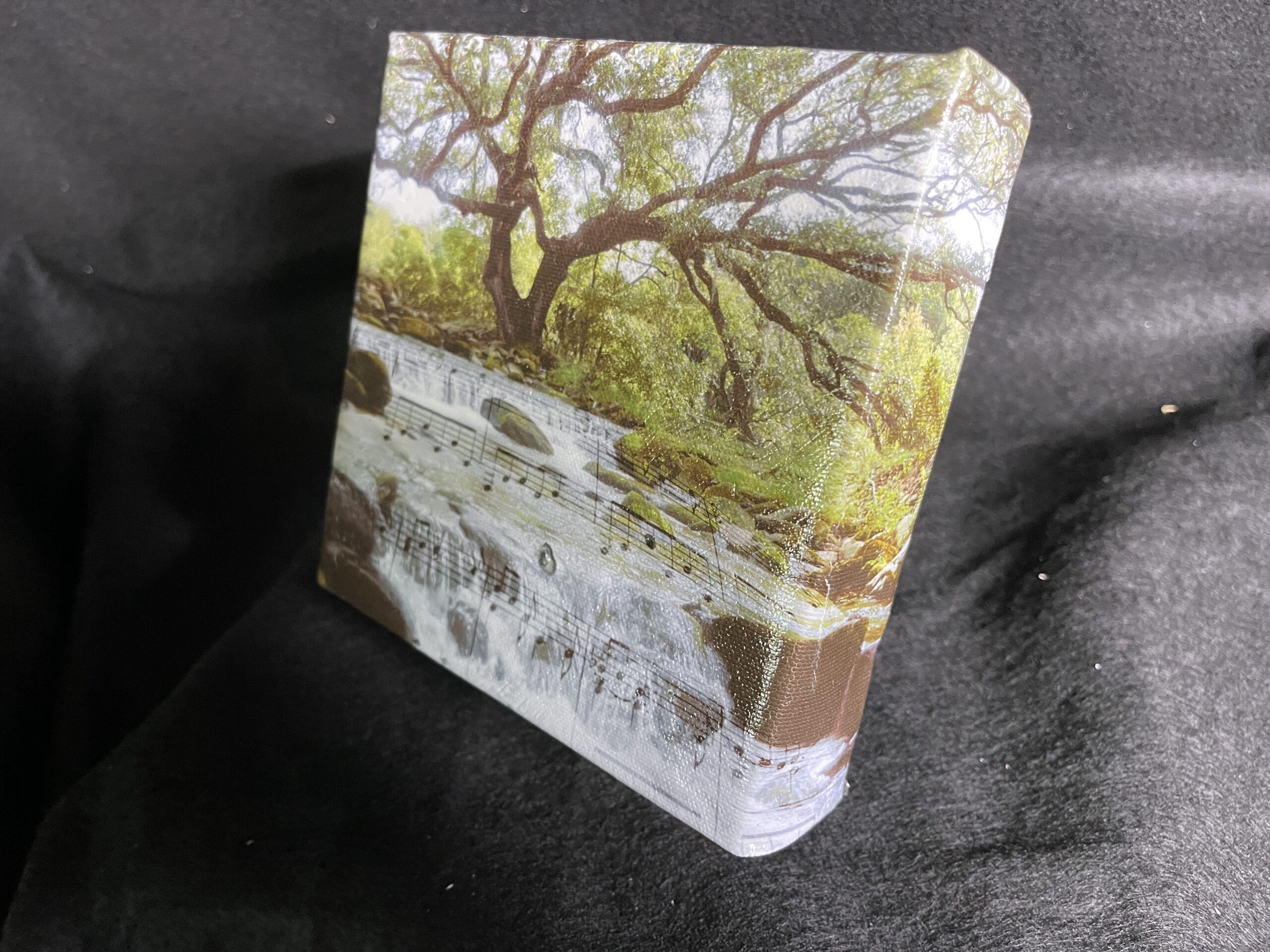

“Music is the hidden arithmetic of the soul, while water is its living echo.” — inspired by Plato and modern interpretations of natural harmony
When Water Makes Music —
There are moments in nature when sound ceases to be merely something we hear and becomes something we feel moving through us. Water is the purest expression of that transformation. It does not speak in words, yet it communicates in rhythm, resonance, and silence. It is both instrument and composer—an endless improvisation performed across rivers, rain, tides, and time itself. In When Water Makes Music, that invisible symphony becomes visible, captured in color, movement, and emotion on canvas.
This work exists at the intersection of elemental force and human perception. It asks a simple but profound question: what does water sound like when translated through color? And further still—what does music look like when it is shaped by water?
The painting becomes an answer not in explanation, but in experience.
Water has always been humanity’s most instinctive muse. Long before written language, before orchestras, before even the idea of structured melody, there was rhythm—waves breaking against stone, rain tapping on shelter, streams carving their paths through earth. These were the first compositions the world ever knew. They required no audience and no permission; they simply existed, constant and eternal. In this sense, water is not just a subject of art—it is the origin of it.
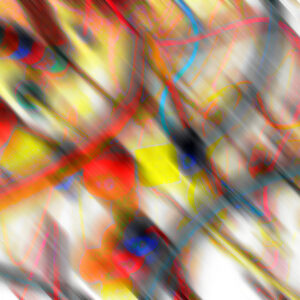
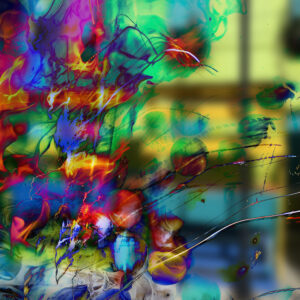
In When Water Makes Music, that origin is reimagined through abstraction. Rather than depicting water literally, the piece dissolves it into motion and emotion. Layers of pigment flow across the canvas like currents responding to unseen winds. Soft transitions suggest stillness interrupted by bursts of energy, like a calm surface suddenly disturbed by a falling drop. The composition resists rigidity. Instead, it breathes.
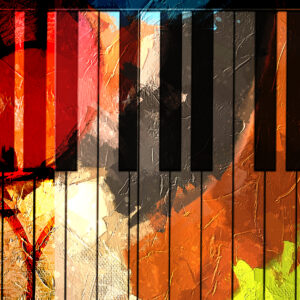
Color becomes sound. Deep blues echo like low cello notes. Luminous whites and foaming highlights resemble the shimmer of high piano keys. Subtle greens and silvers ripple like distant echoes carried across water at dusk. The painting does not imitate music—it translates it. It asks the viewer not to look at water, but to listen through sight.
This is where the philosophy of the work deepens. Water and music share a fundamental structure: both are waveforms. One is visible, the other audible, yet they obey the same principles of rhythm, amplitude, and flow. When water moves, it composes. When music plays, it flows. In this way, they are not separate languages, but variations of the same universal code. The painting draws attention to this hidden symmetry, revealing nature as a kind of silent orchestra perpetually performing without pause.
There is also an emotional dimension embedded within the work. Water is rarely still in meaning. It is associated with memory, change, reflection, and release. It holds the paradox of being both calming and powerful, gentle yet unstoppable. Music carries the same emotional duality—it can soothe or overwhelm, it can anchor us or carry us away. In When Water Makes Music, these emotional states merge into a single visual experience.
The viewer may notice areas where the composition feels like it is drifting, almost dissolving at the edges. This is intentional. It mirrors the way sound behaves in open space, fading, echoing, returning in altered form. Nothing in water or music remains fixed; everything is in motion, even in apparent stillness. The painting captures this instability and transforms it into elegance.
There is also a meditative quality to the work. It invites stillness in observation, yet suggests movement within that stillness. Much like standing beside a shoreline or a quiet riverbank, the viewer is encouraged to pause and absorb rather than analyze. Over time, details reveal themselves—the subtle layering beneath the surface, the interplay of light and depth, the suggestion of rhythm embedded within abstraction. The longer one looks, the more the painting seems to respond.
In this sense, When Water Makes Music is not static artwork. It behaves like a living system. It changes depending on how it is experienced—close or distant, in quiet or in thought. It is designed to feel immersive, as though one could step into it and be carried along by its current. That sensation is at the core of its intention: to dissolve the boundary between viewer and environment.
Philosophically, water has often been associated with transformation. It shifts form without losing essence—liquid, vapor, ice, rain. Music behaves similarly, existing only in moments, yet persisting in memory long after it fades. The painting draws strength from this shared impermanence. It celebrates the beauty of things that cannot be held, only experienced.
In contemporary life, where noise often replaces true listening, this work becomes a reminder of subtlety. Water does not demand attention; it earns it. Music does not need to be seen to be understood; it needs to be felt. Together, they form a language older than language itself—a dialogue between motion and emotion that transcends human constructs.
Ultimately, When Water Makes Music is not just about water, nor is it simply about sound. It is about resonance—the invisible thread connecting nature, perception, and memory. It is about the moment when external world and internal feeling align so completely that the boundary between them disappears.
The painting becomes a space where silence is not empty, but full. Where water is not just water, but rhythm. And where music is not just sound, but flow.
In that meeting point, something timeless emerges: a reminder that the world is always singing, and that we are always surrounded by its song—even when we forget how to listen.


When Water Makes Music is Landscape Abstract Gallery Wrapped Wall Art