“Inspiration does exist but it must find you working.” — Pablo Picasso
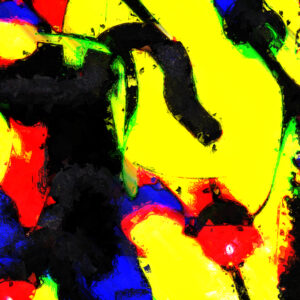
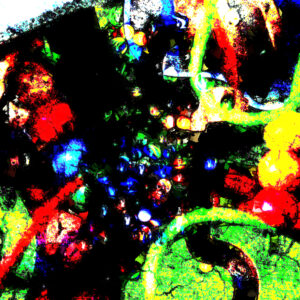
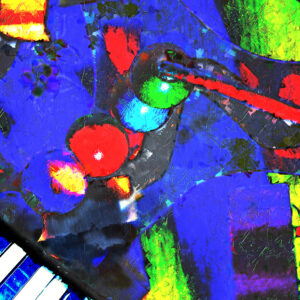
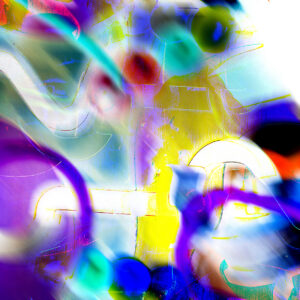
In the rarefied world of contemporary abstract art, Abstraction — the mixed media fine art canvas, poster print, or decal by Michael John Valentine — stands as a testament to both boundless imagination and painstaking craftsmanship. More than a decorative object, this work encapsulates a philosophy of artistic inquiry: that abstraction is not a retreat from reality but a deeper excavation of experience, emotion, and visual resonance. This piece invites viewers into an immersive dialogue with color, texture, and form, presenting a visual language both profoundly personal and universally evocative.
At first glance, Abstraction seduces with its expressive composition. Its mixed media foundation — rooted in layered acrylics on canvas — reveals a dynamic synthesis of painterly gestures and deliberate overpainting. This blending of techniques cultivates a surface that is harmonious yet charged, where layers of pigment converge and diverge with orchestral cadence, suggesting movement without literal representation. The artwork’s finished state, sealed with a glossy protectant, enhances this rich interplay of depth and sheen, underscoring Valentine’s meticulous pacing in the studio.
What distinguishes Abstraction is its versatility of form and presentation. Available as a 4-inch round peel-and-stick decal, glossy matted prints ranging from 5×7 to 11×14 inches, classic 16×24 poster prints, and overpainted signed canvases up to monumental 38×56 sizes, the piece adapts to many environments — from intimate living spaces to grand modern interiors. Whether you choose it as a bold canvas centerpiece or a subtle accent, the work maintains its visual potency and intellectual impact.
Valentine’s creative process echoes the spirit of Picasso’s imperative: he doesn’t wait for inspiration to strike; he summons it through dedication and disciplined labor. This is not accidental mark-making, but the result of decades of artistic exploration and mastery — over 55 years of fusing traditional painting techniques with a deep understanding of visual rhythm and aesthetic balance.
The fluidity in Abstraction speaks to an artist who has embraced the legacy of abstract expressionism while carving out his own path. Valentine’s compositions often layer photographic sensibilities with painted elements, creating a hybrid expression that defies conventional boundaries. The gentle tensions and harmonies in the piece reflect an intuitive grasp of space and movement — a quality that resonates with collectors seeking artwork that transcends mere surface decoration.
Collectors who invest in Valentine’s art are not simply acquiring an image; they are claiming a piece of lived experience, whether rendered in sweeping strokes or subtle tonal shifts. Each signed canvas comes rolled in a sealed sleeve with a heavy-duty tube, inviting the owner to choose the framing that best complements their space. This gesture honors the autonomy of the art lover, making the final presentation a collaborative extension of the artist’s vision.
Yet Abstraction is more than its physical manifestations — it is an embodiment of creative philosophy. The work reflects Valentine’s belief that art should ignite curiosity and provoke contemplation. Rather than depict literal scenes or narratives, it operates in the realm of sensation and emotion, urging viewers to pause, to reflect, and to feel. In this way, the work becomes a conduit for personal interpretation — a mirror for the viewer’s own inner landscapes.
Every brushstroke in Abstraction tells a story of intentionality: choices about color density, transitions between hues, and the calculated dance between transparency and opacity. These decisions demonstrate Valentine’s nuanced understanding of how abstract form can elicit visceral responses. The glossy finish, beyond its protective function, enhances the depth and luminosity of the surface, making the colors resonate with life under varying light conditions.
Importantly, the piece also represents Valentine’s commitment to authenticity. As with all works offered through his gallery, Abstraction is rendered without artificial intelligence or automated reproduction; each variant springs from his studio practice rooted in traditional methods and personal vision. This dedication to craft not only preserves the uniqueness of each printed or canvas iteration but also reinforces the integrity of the artwork for collectors who prize originality.
For the seasoned collector, Abstraction offers an opportunity to engage with a body of work that is at once grounded in art historical currents and distinctly individual. For the curatorial eye, it provides a piece whose textural richness and compositional balance can anchor a suite of contemporary design elements. And for the viewer encountering it for the first time, it presents a visual puzzle — one that rewards repeated contemplation with new discoveries embedded in its layered surfaces.
Ultimately, Abstraction exemplifies the transformative power of abstract art: it unites technique with emotion, precision with spontaneity, and thought with feeling. It stands as a tribute to the labor of creation — a living artifact of artistic dedication, much like Picasso’s own belief that inspiration arrives through work. In bringing this piece into a space, one does not merely decorate walls; one invites ongoing engagement with the infinite possibilities of visual imagination.
If you seek art that speaks to both the intellect and the senses, that bridges the personal with the universal, and that elevates spaces with sophistication and depth, Abstraction is a piece worthy of your collection. It is not merely a work of art; it is a living expression of what happens when inspiration finds the artist at work — and invites us all to do the same.