“Psychedelic Art is a mode of abstract art with a wild twist” Michael John Valentine
Moving Into View — A Visionary Voyage in Psychedelic Perception
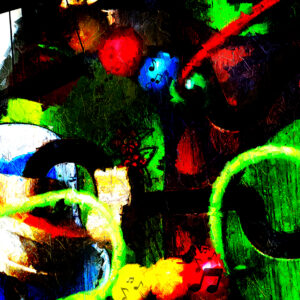
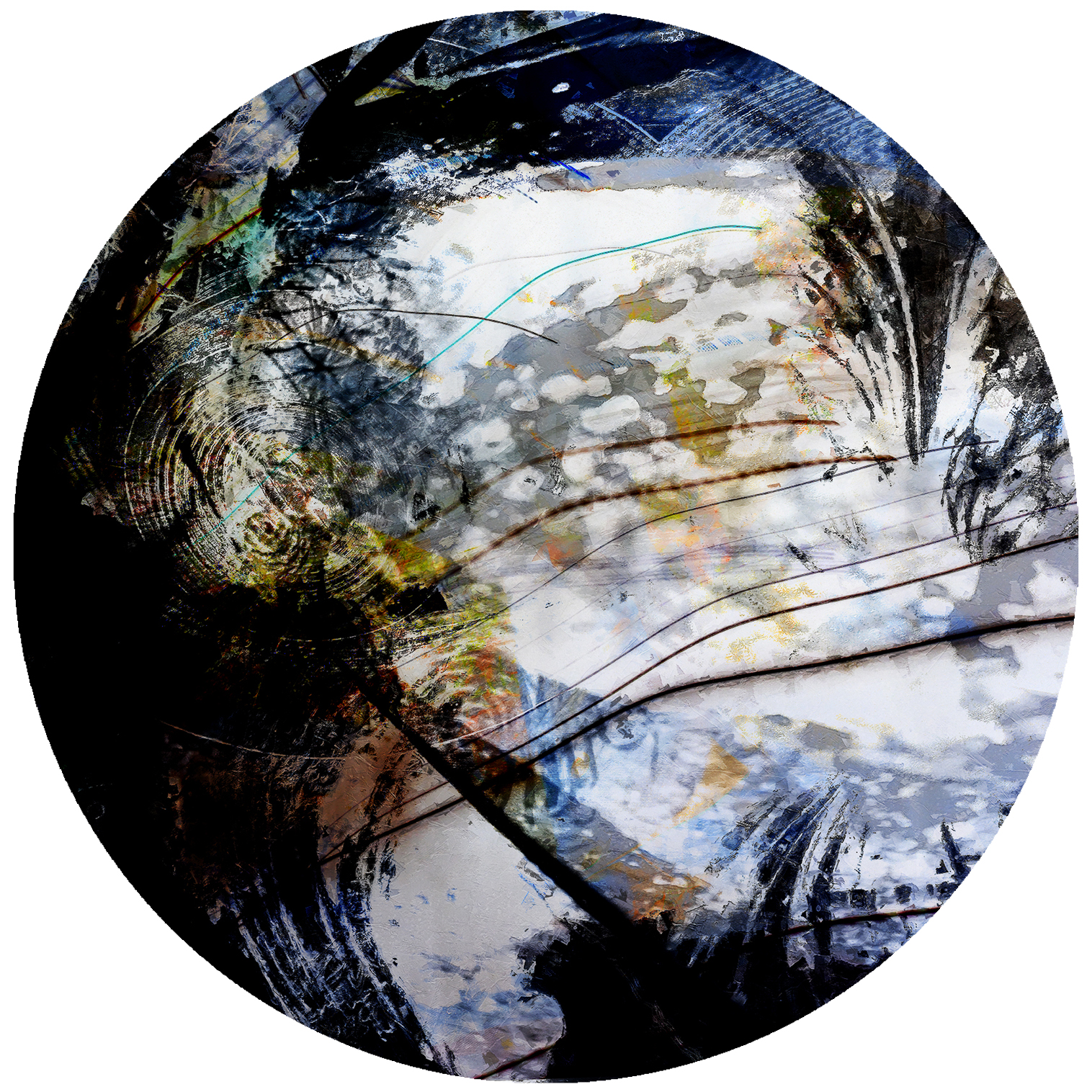
In Psychedelic Trippy Art‑ Titled Moving Into View, Michael John Valentine presents more than a composition — he unveils a state of consciousness. This work exists in the liminal space between sensation and meaning, inviting the viewer to awaken into a vivid perceptual experience that is as much inward as it is outward. Through its bold interplay of color, pattern, and gesture, this piece embodies the very nature of psychedelic abstraction: movement not merely as visual effect, but as a living, breathing dimension of experience.
Moving Into View resists conventional categorization. It is not landscape, nor strictly abstract; it is a perceptual threshold — a moment when shapes and hues begin to breathe and vibrate, and the image begins to reveal itself not only to the eye, but to the psyche. The title itself — evocative and kinetic — suggests the emerging of forms from the realm of the unseen into presence, much like consciousness unfolds from the hidden depths of memory and sensation.
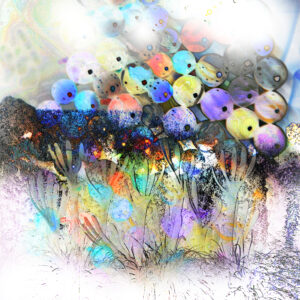
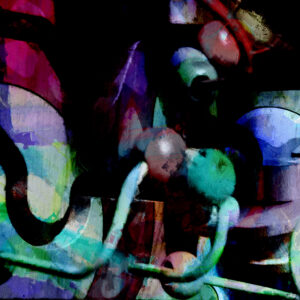
The first encounter with this work is striking. The viewer is greeted by a visual field alive with energy — colors that pulse and shift, lines that curve and dissolve, textures that suggest depth beyond the flat surface of the medium. Though this piece is available in multiple formats — from decals and glossy prints to overpainted signed canvases — the essence remains the same across all presentations: a dynamic invitation to see differently.
At its heart, Moving Into View is a meditation on motion as perception. The term “psychedelic” itself — derived from Greek meaning “mind manifesting” — signals a type of art that is not merely seen, but felt. This is art that engages not only the visual cortex but the deeper realms of imagination and emotion, dissolving boundaries between what we observe and what we intuit. In this work, Valentine harnesses the language of abstraction to evoke that very dissolution.
Color plays a primary role in this experiential journey. Rather than existing as isolated patches, hues in Moving Into View seem to flow and interact as if alive. They ripple with warmth and coolness, tension and release — a symphonic interplay of tonality that echoes the way light and emotion shift within our inner fields of awareness. A viewer might find their gaze drifting, caught between deliberate contrast and seamless blending, as though the color itself is guiding the eye into a deeper awareness of nuance and stratification.
But it’s not just color that animates the work — it’s the choreography of movement. Here, Valentine’s brushwork and layering techniques — his meticulous overpainting and glossy protective finish — give rise to surfaces that feel almost kinetic. The painting seems to breathe, to recede and advance in optical rhythm, mimicking the ebb and flow of thought and perception. Whether encountered on a printed surface or a substantial canvas, the sensation is evocative: the image is never static, but perpetually emerging into view.
In this way, Moving Into View can be understood as a meditation on the nature of perception itself. We do not simply look at this composition; we engage with it. The work challenges us to become conscious of our own act of seeing — to recognize how meaning arises in the interplay between surface and sight. It exemplifies how abstract art, and especially psychedelic abstraction, transcends representation to touch something visceral within us — a resonance that defies simple description yet feels unmistakably present.
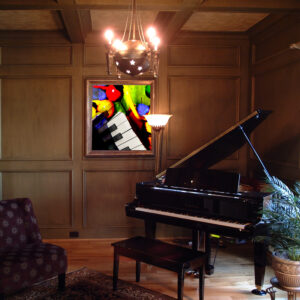
For the discerning collector, this piece is more than a decorative surface; it is a portal. Its layered complexity rewards contemplation. Each encounter uncovers fresh subtleties — color harmonics that shift with the room’s light, textured variations that appear differently upon repeated viewings, and formal resonances that seem to echo yet defy familiar patterns. The work is alive with possibility, constantly revealing itself anew as the viewer’s own perception evolves.
This quality — a perpetually unfolding presence — is what sets Moving Into View apart as a collector’s piece of significance. It does not conform to a single glance; it invites ongoing engagement. The artwork becomes a collaborator in visual exploration, a dynamic partner in the act of seeing. Whether placed in a private salon, a minimalist gallery space, or a contemplative study, it carries a presence that elevates the environment — infusing it with both vibrancy and introspective depth.
From a craftsmanship perspective, the piece reflects Valentine’s commitment to authentic, non‑AI creation, rooted in decades of artistic practice. Each overpainted canvas, each signed print or decal carries the marks of deliberate human touch — a testament to the artist’s mastery of materials and intuitive understanding of visual rhythm. This commitment to authenticity imbues every variant with a tangible sense of presence and provenance.
Moreover, the accessibility of this work across multiple formats — from small decals to large overpainted canvases — speaks to its versatility as both an intimate object of personal reflection and a commanding visual centerpiece. Each format offers its own dialogue with space: a decal may punctuate a personal nook with vibrant energy; a larger canvas can transform an entire wall into a horizon of perceptual engagement.
Yet across all formats, Moving Into View remains true to its conceptual core: an exploration of emergence, motion, and the unfolding of visual consciousness. This is art that moves with the viewer — not merely into sight, but into thought and feeling. It is a celebration of the mind’s capacity to find harmony in complexity, meaning in abstraction, and presence in the ever‑shifting tides of visual experience.
In an era saturated with images, Moving Into View stands out as a reminder that true art transcends adornment. It challenges us to see not only the surface but the depth beneath it — encouraging us, in the words of its own refracted logic, to move into view ourselves.