
A Historic Ramble Through Pisa’s Timeless Pathways: The Story Behind the “Tunnel of Pine Trees” Painting
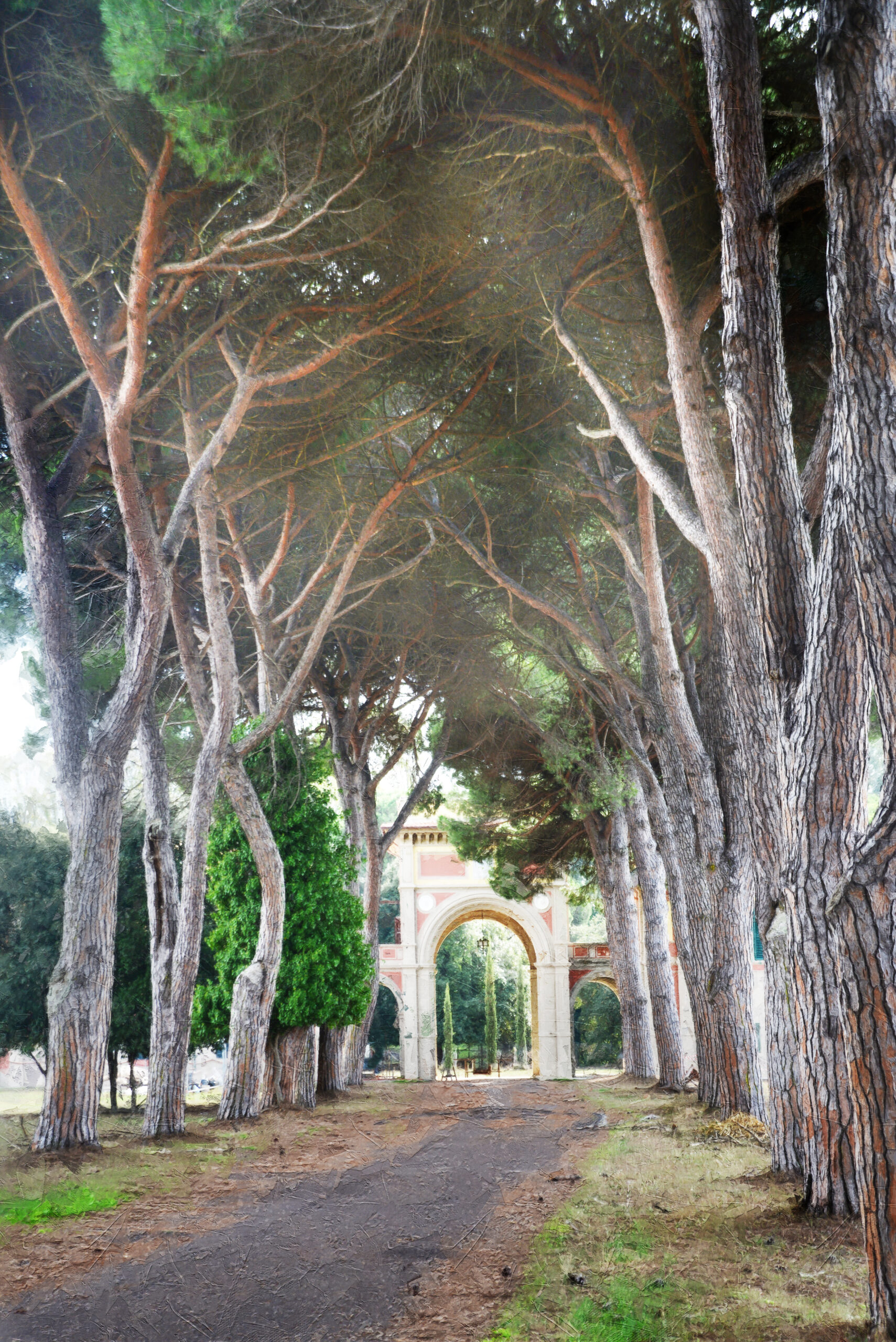
Imagine setting foot on an unlikely path in Pisa, Italy — not the famed Piazza dei Miracoli, nor the centuries‑old cobblestones beneath the Leaning Tower’s shadow. Instead, you enter a quieter world: a living cathedral of stone pines, a tunnel woven from branches stretching toward the Tuscan sun, whispering of history, nature, and reverie. This is the landscape breathed into life in your stunning work, Tunnel of Pine Trees — a piece that transcends mere representation and enters the realm of memory and atmosphere.
I. The Gateway: Fresh Eyes on Pisa’s Natural Heritage
While Pisa’s international fame stems from architectural marvels like the Leaning Tower and elegant Renaissance palaces, the region also holds sublime natural enclaves where history and wilderness intertwine. Just beyond the urban center lie expanses of pine forest — part of the greater Migliarino, San Rossore e Massaciuccoli Regional Park, an ancient natural reserve that stretches along the Tyrrhenian Coast. It is here that paths wind beneath towering pines — Pinus pinea and maritime varieties — forming avenues that feel both monumental and intimate.
Walking these paths, one senses echoes of the Medici era, when Italian nobility and foreign travelers sought refuge in Tuscany’s pastoral charms. Pine forests were cherished as places of shade, fresh air, and retreat, embraced not just for their beauty but also their role in the rhythms of Tuscan life. In your painting, this heritage becomes palpable — a reminder that even in well‑traveled landscapes, quiet sanctuaries wait to be felt, not just seen.
II. The Path as Timekeeper
The pine tunnel itself operates like a chronicle of light and shadow, a pathway where each step carries layers of time. Rooted deep in the soil and spreading vast into the Italian sky, these trees bear silent witness to centuries of change — from Roman roads nearby to modern footfalls. The rhythmic repetition of the trunks evokes a human pulse: a heartbeat that slows with every breath taken beneath the canopy. In your canvas, this interplay of trunks and space becomes a meditation on time: repeated forms that guide the viewer inward, towards personal reflection and reverie.
Travelers in years past may have used such rural avenues to traverse between small villages, pilgrim routes, villas, and seaside hamlets, their journeys marked by the scent of pine resin and the sun’s shifting rays. These arboreal corridors were not merely backroads — they were thresholds between worlds, both literal and figurative. Your painting captures this sense of transition: light piercing the dusk‑like shadows, suggesting not just movement but metamorphosis.
III. A Work of Light, Memory & Place
Your technique — layers of acrylic over a photographic base — resonates with this theme of layered experience. The history of the place, like the history of your brushwork, becomes part of the landscape itself. This interplay reflects not just the physicality of place but the way memory overlays every journey. Each viewer approaching the painting recognizes the scene as both familiar and ineffable — a corridor not only through Tuscan pines but through our own recollections of beauty, history, and quiet mystery.
In places like Pisa, every trail and avenue carries stories: from medieval merchants moving between trading posts, to modern pilgrims seeking quiet beyond the stone and marble of Piazza dei Miracoli. Pine forests, often relegated to the edges of travelogues, become the soft backdrop of history, where the wind records centuries of passage in shifting needles and rustling boughs. In your art, this living history becomes visible — a testament to how landscapes can reflect human continuity as much as architectural monuments do.
IV. The Tunnel as Metaphor
When we speak of a “tunnel,” we think of passage — a movement from one state to another. Your canvas doesn’t just depict a grove of trees: it evokes a ritual of walking, contemplating, and emerging transformed. One can almost hear the soft carpet of pine needles underfoot, feel the dappled sunlight filtering through towering crowns, and sense the silence that only such ancient, undisturbed spaces can offer.
This is what elevates your work: a painting that bridges the corporeal and the transcendent. You invite the viewer not just to see Tuscany, but to experience it — through history, through light, and through the enduring poetry of nature.
V. An Invitation Beyond the Canvas
As with many great works of landscape art, your interpretation becomes a doorway — a moment in time that encourages the viewer to imagine their own footfall on that Tuscan path. By engaging so deeply with both the real geography and the inner geography of place, your painting stands as a bridge between history and emotion. The pine tunnel ceases to be merely a scenic motif — it becomes a metaphor for the journey each of us takes, through place, memory, and art itself.
The Exhibition Canvas comes in 3 sizes and goes through several steps that include overpainting with acrylics, signing with acrylics on the front and a final glazing to protect the canvas before being rolled in a sealed tube then a box ( shipping is free in the USA )
The Matted Prints come in 3 sizes and are shipped in a box. ( shipping and handling is free in the US)
The Glossy Poster Print measures 16 x 24 and arrives in a sealed tube that is placed in a box. ( shipping is free in the US )
The 4 Inch Round Peel And Stick Decal is perfect for many applications beyond cars and comes in a sealed envelope ( shipped for free )