Historical Overview: Relocating the Cape Hatteras Lighthouse
The Cape Hatteras Lighthouse on North Carolina’s Outer Banks is one of the most iconic maritime structures in the United States, guiding mariners since 1870 with its distinctive daymark pattern and vital light that once pierced fog and storms up to 22 miles out to sea.
Originally built a safe 1,500 feet from the Atlantic shoreline, the natural process of coastal erosion — driven by storm tides washing sand inland — gradually eroded the barrier island on which it stood. By the late 20th century, the shoreline had crept to within a few dozen feet of the lighthouse’s foundation, threatening its structural integrity and very existence.
After extensive study and debate, the National Park Service initiated what became known as the “Move of the Millennium.” In 1999, the entire Cape Hatteras Light Station — including the tower, keepers’ quarters, oil house, and other historic buildings — was lifted off its original foundation and transported 2,900 feet to a safer site inland.
Using a sophisticated system of hydraulic jacks, steel beams, tracks, and rollers, the engineers raised the 4,830‑ton masonry tower and inched it across prepared mats and rails — only a few feet at a time — over the course of 23 days during the summer of 1999.
This remarkable engineering achievement preserved the landmark and ensured it would stand an estimated another century removed from the whims of the sea.
Artist Feature: Abstract Cape Hatteras Lighthouse Wall Art Original Painting on Canvas
by Michael John Valentine
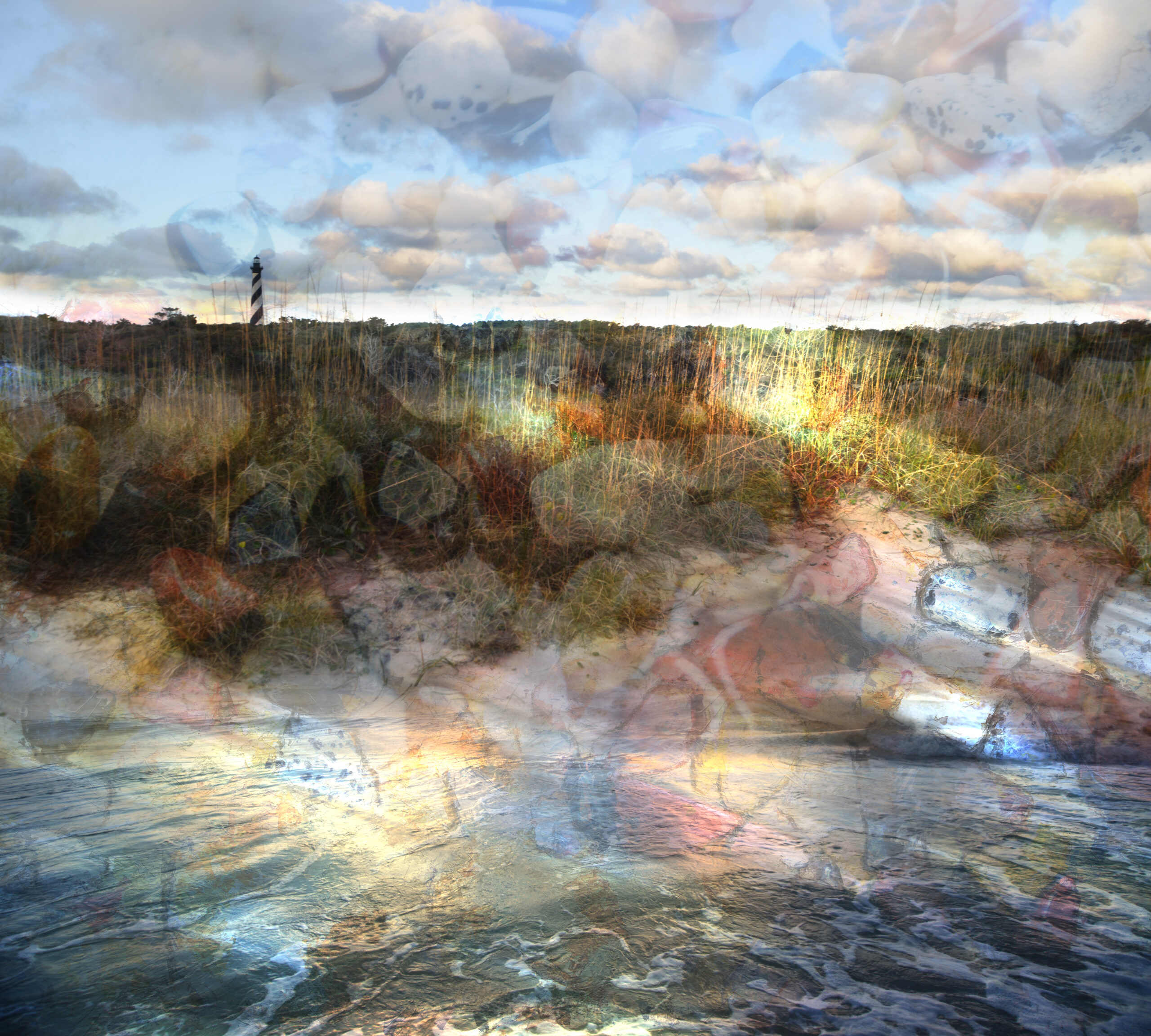
Abstract Cape Hatteras Lighthouse Wall Art Original Painting on Canvas is a singular celebration in paint — a contemporary homage to one of America’s most poignant coastal icons. This original work by artist Michael John Valentine transcends mere representation; it channels the lighthouse’s spirit of endurance, history, and motion into a compelling visual narrative that resonates with collectors, coastal lovers, and art connoisseurs alike.
Symbolism Reimagined
The Cape Hatteras Lighthouse is far more than brick and mortar — it is a sentinel of survival. Its history is rooted not just in navigation, but in adaptation. Built in the late 19th century to warn ships away from the treacherous Diamond Shoals, the structure has witnessed centuries of human determination against the capricious Atlantic.
In Valentine’s abstract interpretation, this legacy is not depicted literally, but emotionally. Bold strokes and layered hues evoke the dramatic meeting of land and sea — the ebb and flow of tides, the relentless winds, and the rhythmic dance of light against darkness. This piece captures more than a structure; it captures an ethos.
Craftsmanship & Technique
Valentine’s choice of overpainting and sealed gloss protectant gives the piece a texture and luminosity that simultaneously suggest strength and vulnerability — akin to the lighthouse itself. Each brushstroke holds intention, forming an interplay between gestural abstraction and architectural resonance.
The canvas surface becomes a stage where paint and light interact, drawing the viewer in and inviting close inspection. While the lighthouse’s iconic form anchors the composition, the abstraction encourages a dynamic viewing experience: angles, gradients, and layers shift with light and perspective.
Connection to History
What makes this artwork especially compelling is how it dialogues with the lighthouse’s extraordinary relocation. Valentine’s Bristol-like abstraction mirrors the engineering feat — an emblem of transition, resilience, and continuity. Just as the real Cape Hatteras Lighthouse was lifted from its foundation and carried inland to face the future, this painting evokes motion — not just physical, but temporal.
There’s a poetic symmetry in this: the lighthouse, symbolizing guidance for mariners of old, now guides the viewer’s imagination through contemporary artistic expression. Embedded in the work are whispers of shifting sands, of time carved by wind and wave, and of human ingenuity that preserves heritage while embracing change.
Exclusivity & Artistic Legacy
Owning this original painting is not just acquiring a piece of art; it is claiming a fragment of narrative — a bridge between past and present. Limited in number and rich in conceptual depth, this piece offers a rare opportunity for collectors who appreciate works with both emotional and historical resonance.
The certificate of authenticity further solidifies its pedigree, confirming that you are receiving a one‑of‑a‑kind creation by Michael John Valentine — a visionary in blending abstract sensibilities with iconic American imagery.
Visual Impact and Interior Presence
Whether displayed in a refined living space, a gallery wall, or a coastal residence, this painting commands attention. Its scale, vibrancy, and nuanced abstraction make it a conversation starter — a statement piece that enriches environments and evokes curiosity.
The aesthetic versatility of the composition means it pairs as well with traditional interiors as it does with modern minimalism. More than decoration, it is a presence — a visual anchor that complements and elevates its surroundings.
A Tribute to Coastal Narrative
Cape Hatteras is at once a place and a sentiment — a marker of human perseverance against elemental forces. This work doesn’t merely depict a lighthouse; it feels like a lighthouse — enduring, luminous, and profoundly present.
Michael John Valentine’s abstract masterpiece positions you not just as an observer, but as a participant in coastal lore — a steward of story, space, and artistic heritage.