

“Abstraction is the most direct way to create an emotional impact; it allows you to see with your mind what you cannot see with your eyes.” — Arshile Gorky
Feeling Better Now — A Collector’s Reflection on Michael John Valentine’s Abstract Modern Masterpiece
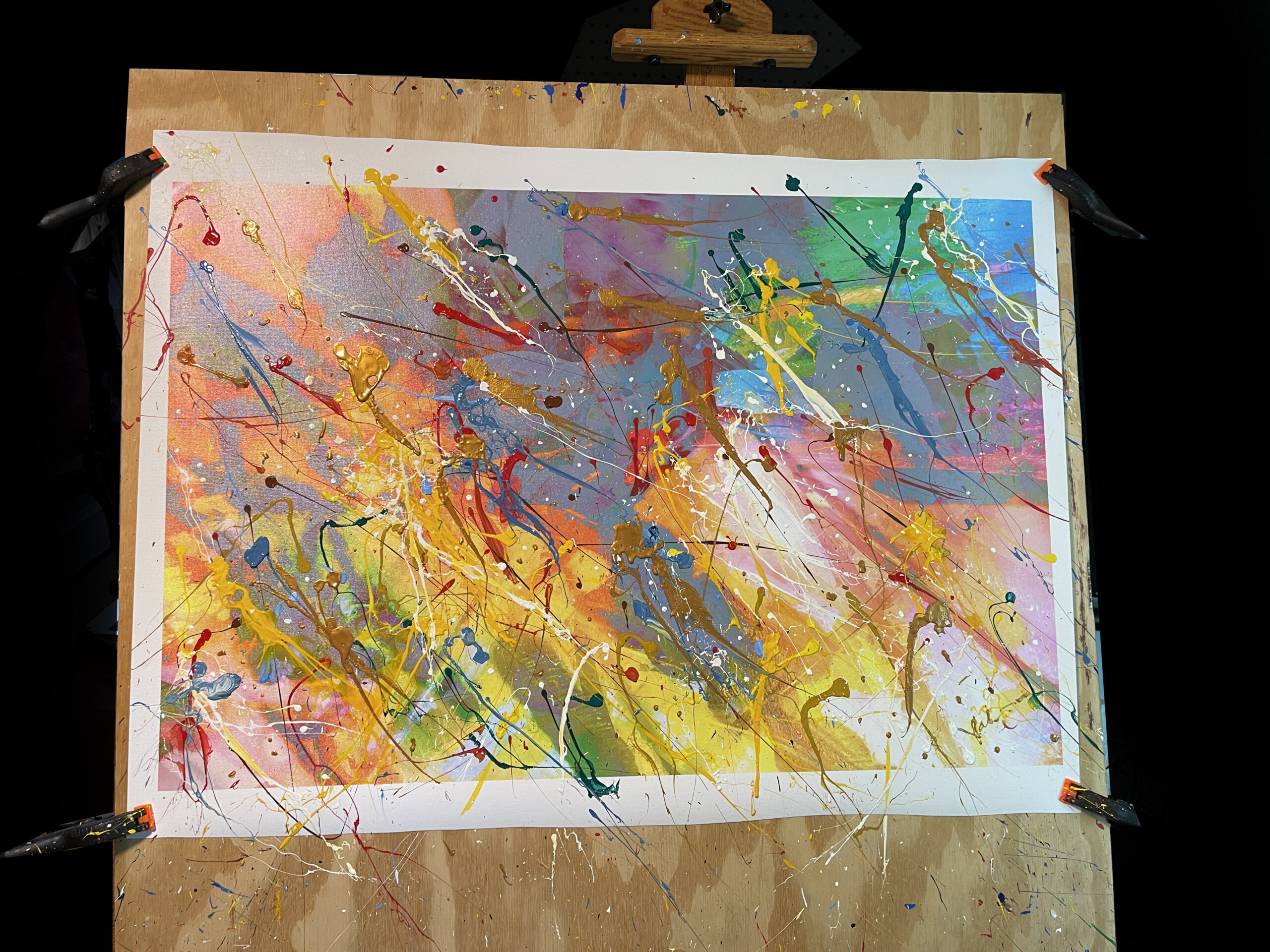
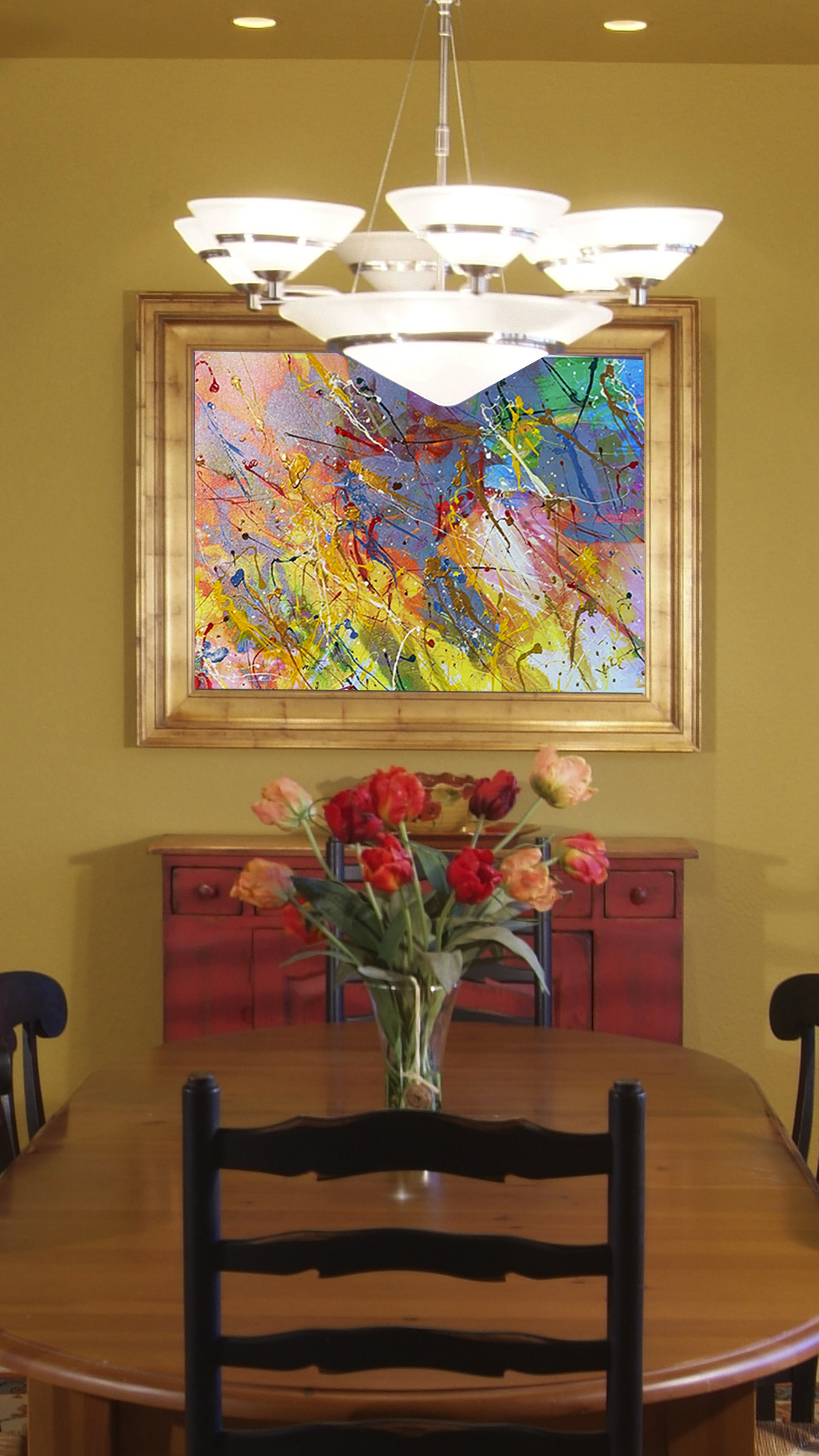
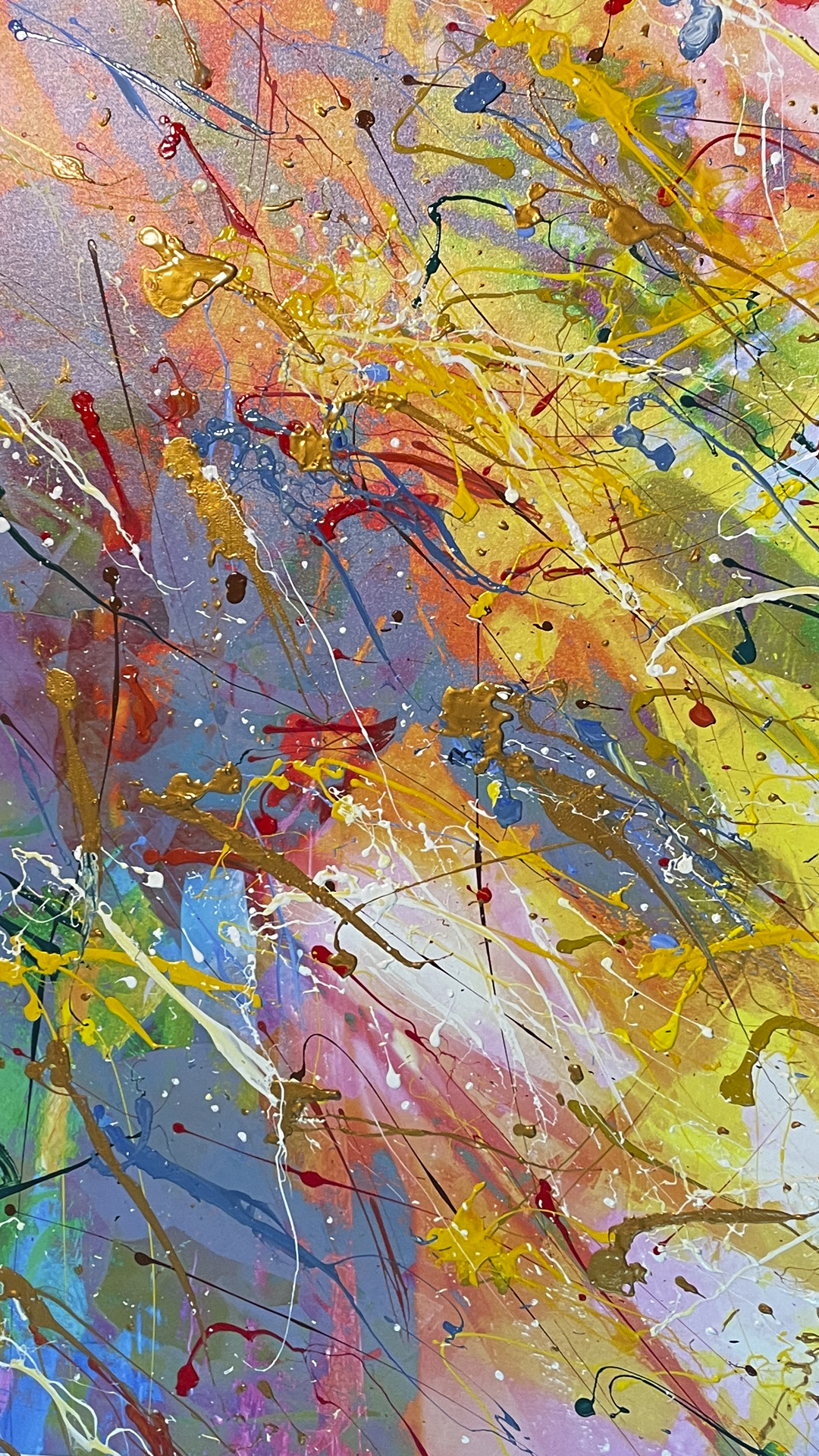
Abstract Modern Art – “Feeling Better Now” on Canvas, 28 × 42″ is a commanding statement in contemporary abstraction by Michael John Valentine, offered as a one‑of‑a‑kind original from his Cornelius, North Carolina studio. This acrylic and mixed‑media composition, signed and sealed with a protective glaze, arrives unstretched and rolled — ready for custom framing that complements both the work’s physical presence and emotional resonance.
I. The Poetics of Form and Feeling
In a world where art often courts literal representation, “Feeling Better Now” stands as a testament to the power of abstract language — an expressive dialect of gesture, pigment, and space. At 28 by 42 inches, the canvas is an arena where color and texture engage in dynamic interplay.
This work does not merely depict emotion; rather, it embodies a state of becoming, a transition from tension to release. Its title — at once declarative and ambiguous — evokes a universal desire for renewal and uplift. In an age where viewers seek resonance as much as aesthetic beauty, the emotional tenor of this abstract work situates it alongside the modern masters who saw art as a conduit for inner life, not just surface impression.
II. Painting as Emotional Architecture
Abstraction, as Gorky suggested, is a terrain of the psyche — a means to visualize the invisible. Valentine’s work honors this lineage: each stroke and field of color exists not as representation but as invitation. There is no prescribed narrative, no prescribed symbol; instead, the viewer is welcomed into a personal dialogue with the piece.
Where figurative art might articulate experience through recognizable forms, this canvas communicates through rhythm and tension. Shapes and brushmarks trace emotional touchpoints — fraught energies, brief calms, or sudden shifts in mood. The result is less a single message and more a perceptual journey. It resembles listening to music: motifs recur, build, fade, and resurface, eliciting mood shifts and abstract reflection.
The very act of abstract painting is inherently subjective. Jackson Pollock, another giant of the genre, famously described the canvas as an “arena in which to act,” framing painting as both event and revelation. Valentine’s piece participates in this view by highlighting the physicality of mark‑making — prioritizing gesture as emotional content rather than descriptive utility.
III. Material Presence and Collector Value
From a luxury and collectors’ perspective, “Feeling Better Now” reflects both aesthetic refinement and tactile sophistication. The artist’s choice to overpaint in strategic areas creates depth, while the protective glaze ensures longevity, guarding against the vagaries of time and environment.
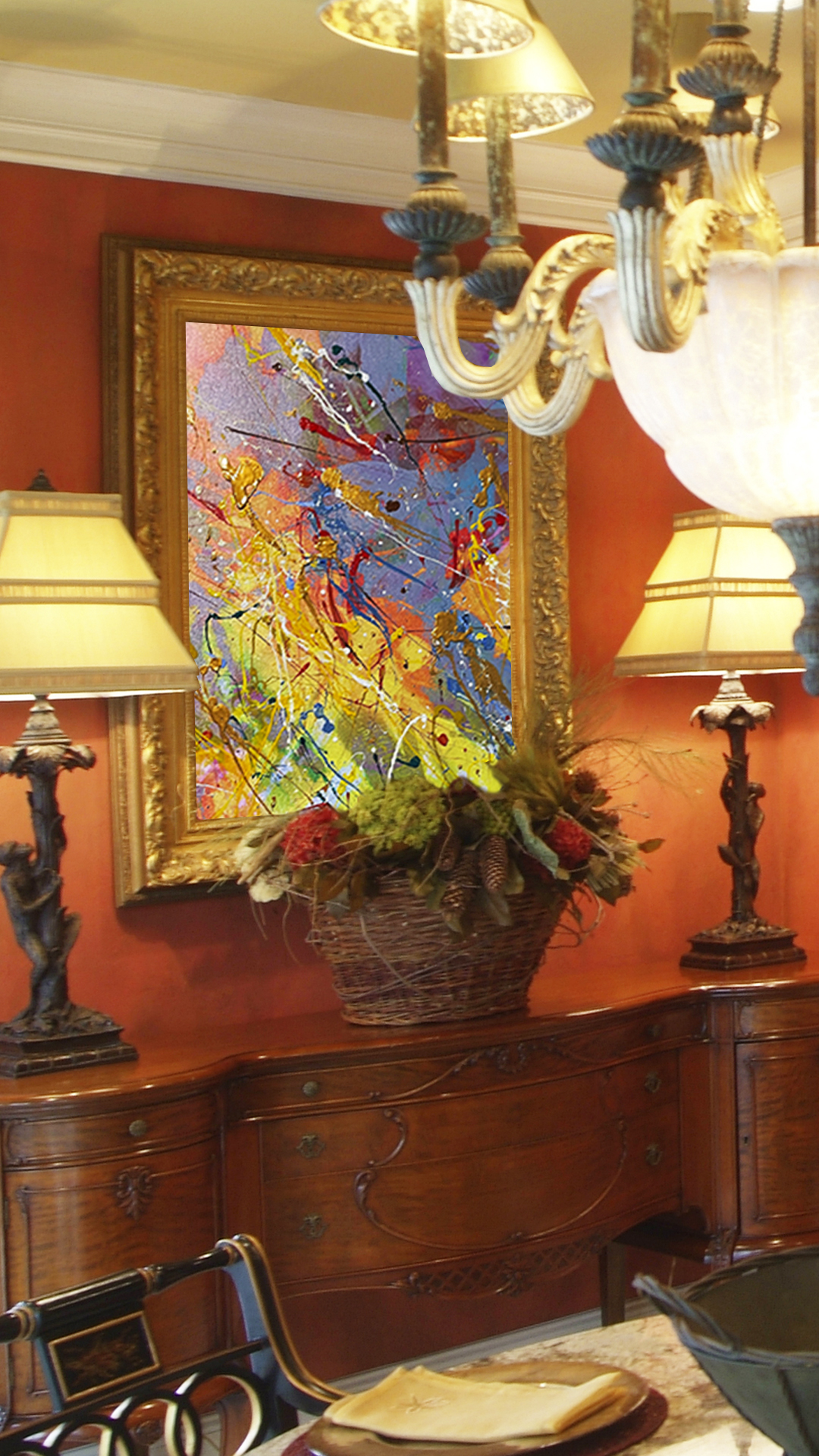
Delivered unstretched and rolled in a sturdy tube, the work grants its steward the privilege and responsibility of defining its final presentation. Whether mounted in a minimalist gallery‑wrap or framed with artisanal custom woodwork, the piece offers structural versatility that invites thoughtful curation. This flexibility enhances its appeal for interior environments ranging from refined residential salons to corporate executive spaces.
The original, signed nature of this canvas — one of a singular expression in the artist’s studio — situates it as a collectible object. The inherent rarity of one‑off abstract canvases adds to its cachet as both an aesthetic investment and a legacy asset within a private collection.
IV. The Legacy of Abstraction and Valentine’s Contribution
While the lineage of abstract art stretches back over a century — from Wassily Kandinsky’s belief in the spiritual resonance of color to the visceral gestures of postwar expressionists — contemporary makers like Valentine extend this tradition into new terrain.
Kandinsky compared colors to musical keys, suggesting that art, like music, speaks directly to the soul. Valentine’s work operates with a similar sensibility: harmonies of tone and texture weave emotional frequencies into the viewer’s perceptual field. This isn’t mere decoration — it’s expressive energy made visible.
Today, abstract painting remains vital not because it has exhausted its possibilities — but because it continues to challenge both creator and observer to find meaning beyond the visible world. In “Feeling Better Now,” Valentine contributes his own voice to that ongoing conversation, inviting us to linger in ambiguity and discover what truly resonates within.
V. A Closing Reflection
“Feeling Better Now” is more than a painting — it’s an emotional architecture, a space for reflection, and a testament to abstraction’s enduring power. It does not tell you what to feel, but rather opens a field in which feeling itself becomes visible.
For collectors who seek works that transcend mere ornamentation, this painting offers a bridge between feeling and idea. It is at once a personal experience and an invitation to shared interpretation — the hallmark of powerful contemporary art.
One in studio 28 x 42 Signed Canvas Feeling Better Now