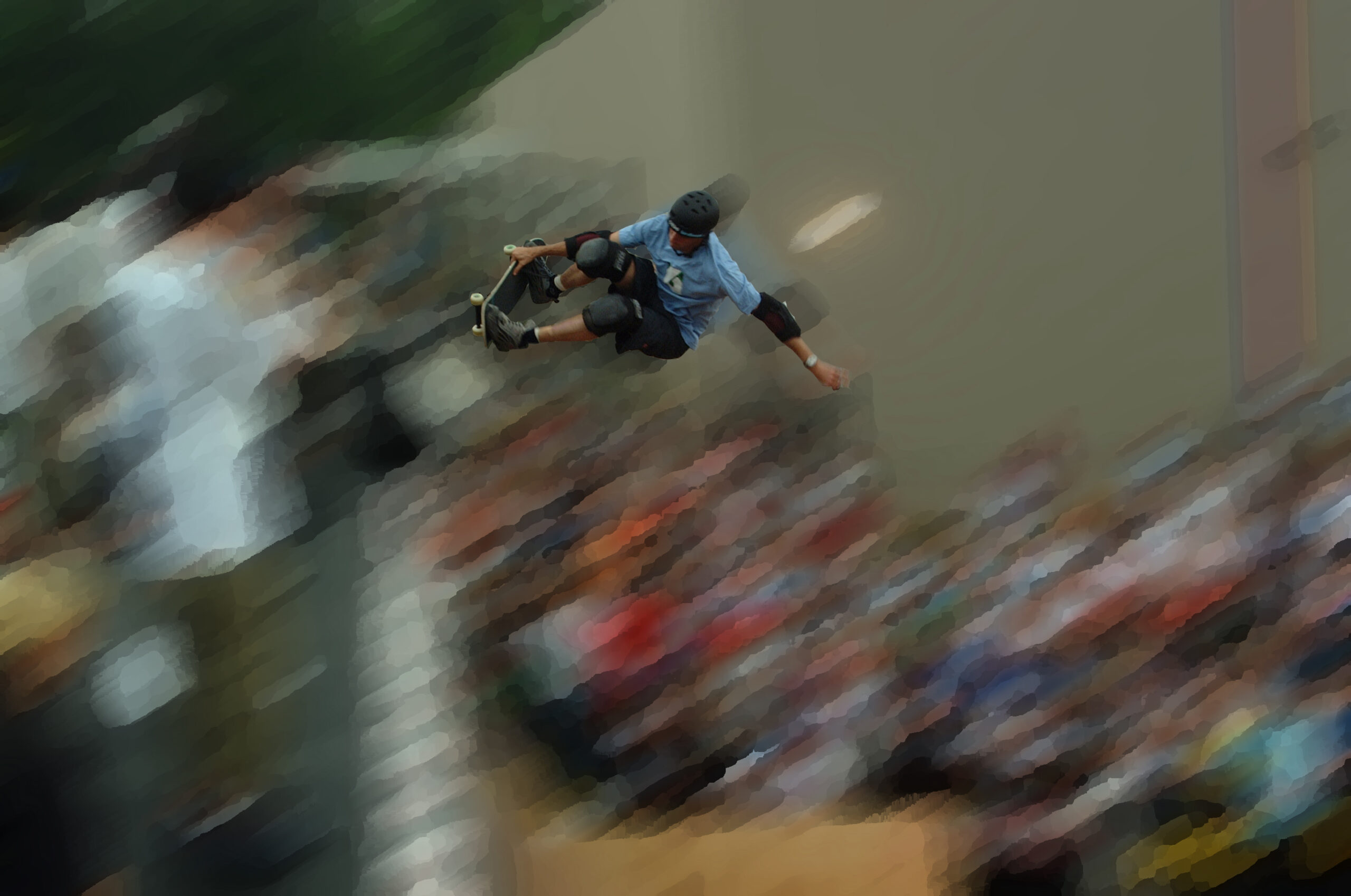
Tony Hawk – Skateboarding Legend and Cultural Icon
Anthony “Tony” Frank Hawk (born May 12, 1968, in San Diego, California) is an American professional skateboarder, entrepreneur, cultural ambassador, and philanthropist whose influence transcends sport. He is widely regarded as one of the most important figures in the history of skateboarding, a true pioneer who helped shift the perception of skateboarding from subculture fringe to global phenomenon.
Hawk picked up his first skateboard at age nine, a gift that ignited a lifelong passion. By age 12, he was winning amateur contests throughout California; by 14, he had turned pro—an unprecedented rise that made him one of the youngest professional skateboarders ever.
Throughout the 1980s and ’90s, Hawk dominated vertical (vert) skateboarding, racking up more than 70 competition wins and earning recognition as the world’s premier vert competitor. He invented an array of tricks and, perhaps most famously, became the first skateboarder to land the “900”—a 2.5‑turn aerial spin—during the 1999 X Games, an achievement that remains one of the most iconic moments in skate history.
Beyond competition, Hawk became a media and business force. He co‑founded Birdhouse Skateboards (with Per Welinder) in 1992, a company that produces decks, gear, and apparel beloved by skaters worldwide. He also partnered with Activision to launch the Tony Hawk’s Pro Skater video game franchise in 1999—one of gaming’s most successful and culturally impactful series.
Hawk’s influence extends far beyond skate parks. Through The Skatepark Project (formerly the Tony Hawk Foundation), he has helped build hundreds of public skateparks in underserved communities, making skateboarding more accessible to generations of youth.
Today, Tony Hawk is not just a skateboarder but a global icon—an innovator whose legacy is etched into sport, art, culture, and community.
Artist Statement & Deep Dive: Abstract Skateboarder Tony Hawk by Michael John Valentine
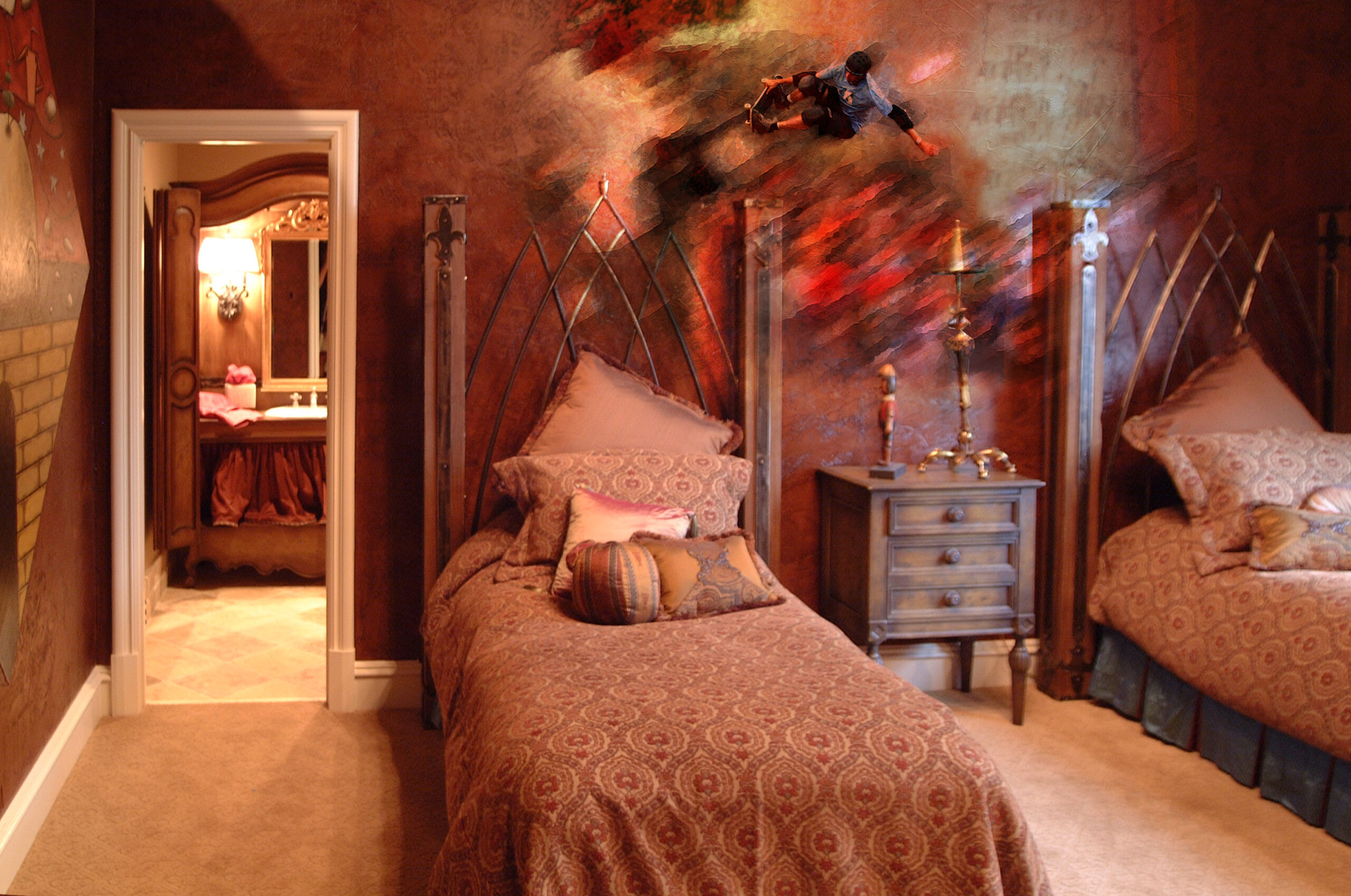
In the realm of contemporary art, there’s a rare intersection where athletic dynamism converges with abstract expressionism—an intersection that Michael John Valentine captures with compelling clarity in his Abstract Skateboarder Tony Hawk Wall Art Painting on Canvas. More than a visual homage to a cultural titan, this piece serves as a meditation on movement, spirit, and the transcendence of form.
A Tribute to Motion, Myth, and Momentum
At first glance, the work arrests the viewer with a kinetic force that suggests more than the outline of a skateboarder—it suggests motion itself. Hawk’s central figure, fragmented and reassembled through layered brushwork, is both present and eternal, embodying the very ethos of skateboarding: perpetual motion balanced on the edge of chaos and control.
Tony Hawk’s career epitomizes daring leaps and the relentless pursuit of mastery. Whether dominating vert competitions, revolutionizing trick vocabulary, or landing the iconic 900, Hawk’s life is defined by movement against resistance. Valentine’s painting mirrors this narrative, creating an abstract choreography where lines and colors undulate like wind on pavement, capturing the moment before lift‑off—the apex of a trick where time dilates, and possibility crystallizes.
Technique Meets Emotion: The Artistic Language
Valentine employs a multilayered approach that mirrors the complexity of Hawk’s legacy. The canvas is not merely a surface—it is an arena of emotional resonance.
-
Overpainting and Texture: Through selective areas of overpainting, the piece gains depth and nuance. These layers evoke the imprint of experience—like the accumulated memories etched into an athlete’s muscle memory or the scuffs on a well‑ridden board.
-
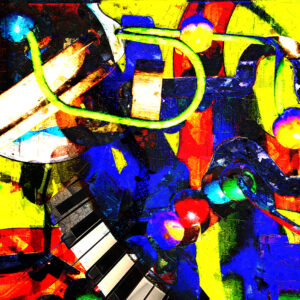
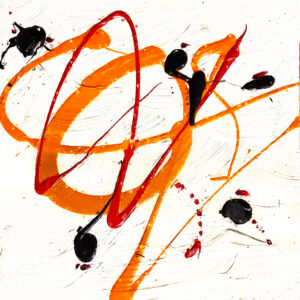
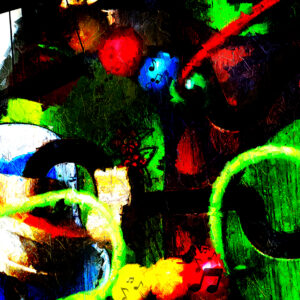
Color as Narrative: The palette oscillates between bursts of energy and contemplative restraint. Dynamic splashes of pigment suggest rapid motion and audacity, while subtler hues whisper of reflection and legacy. In this sense, color becomes narrative—the boldness of Hawk’s public triumphs balanced by the quiet moments of personal resilience.
-
Gloss Sealant & Presentation: Sealed under a glossy protectant, the surface invites the viewer to explore light interaction—much like how one anticipates every angle and transition in a skate run.
Cultural Resonance and Emotional Legacy
This painting does what great art must: it doesn’t simply depict—it converses with its audience. Those familiar with Hawk’s impact—whether through live events, video games, or skate parks built through his foundation—will recognize in Valentine’s abstraction a reflection of aspiration. The piece is not literal; it is felt.
For collectors and aficionados of both art and action sports culture, the piece resonates on multiple registers:
-
As an homage: It celebrates Tony Hawk’s indelible mark on skateboarding and popular culture.
-
As a study in motion: It captures the fleeting, exhilarating essence of athletic feats that defy inertia.
-
As a dialogue with legacy: It invites contemplation on how individuals—be they athletes or artists—inscribe meaning onto the canvas of cultural history.
Place, Presentation, and Presence
Shipped rolled and protected, this painting serves as a statement work for interiors that value bold inspiration and intellectual engagement. Once professionally stretched and framed, it becomes an anchor piece—capable of transforming a space into a locus of energy and creative tension.
Why This Artwork Matters
In a world saturated with representational art and predictable portraits, Valentine’s Abstract Skateboarder Tony Hawk stands apart for its courage and curiosity. It does not rest on familiarity; instead, it challenges the viewer to see beyond the surface and to feel the motion, the breath, and the rhythm of an icon’s legacy. Here, Tony Hawk is not just a name—he is a force, a movement, an archetype captured in pigment and passion.
In celebrating speed without chaos, strength without rigidity, and legacy without stagnation, Valentine’s piece aligns with Hawk’s own philosophy: that true mastery exists where risk meets authenticity. It’s a work that doesn’t just decorate a wall—it animates a space and invites its viewer to dwell at the threshold of art and performance, of memory and myth.