
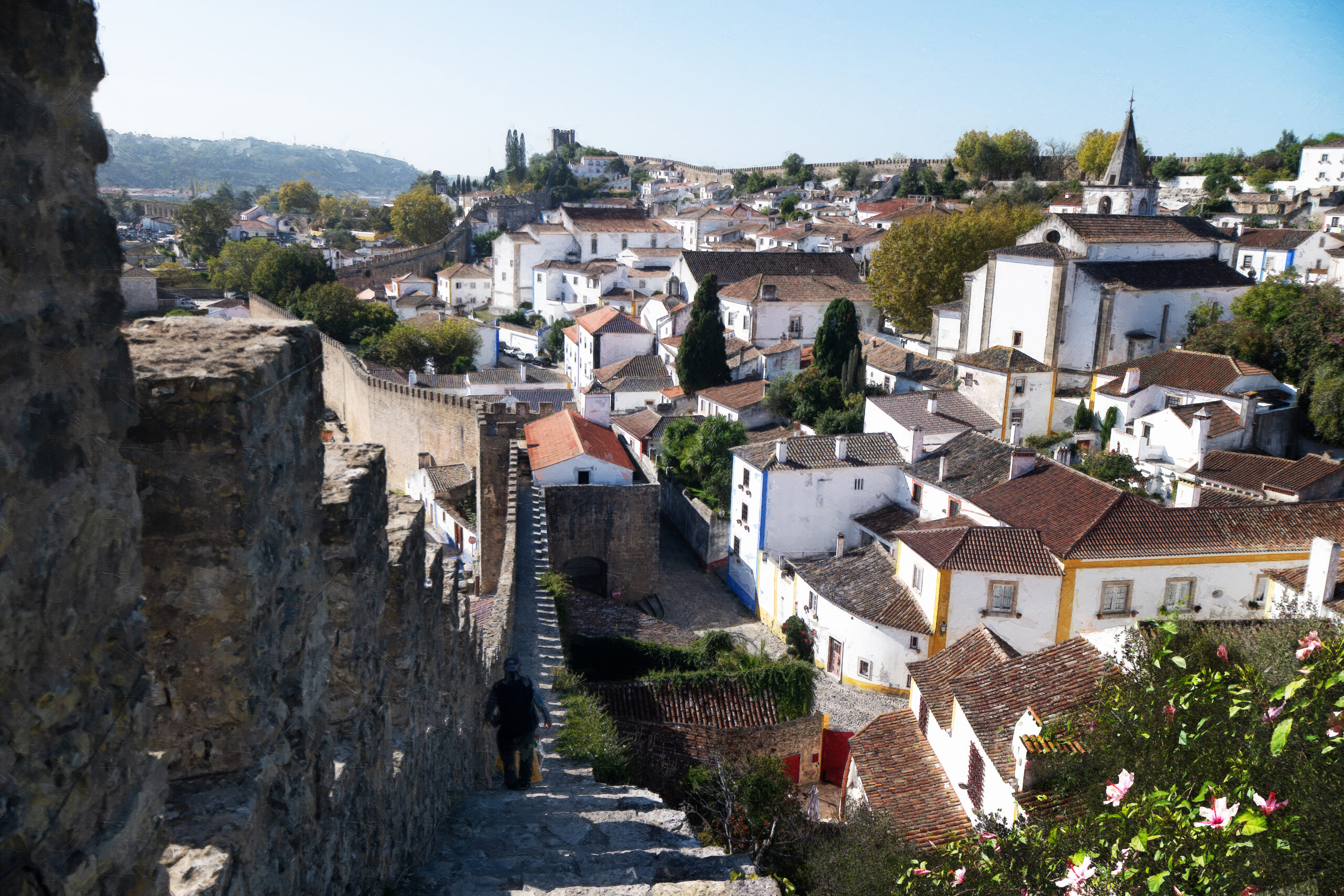
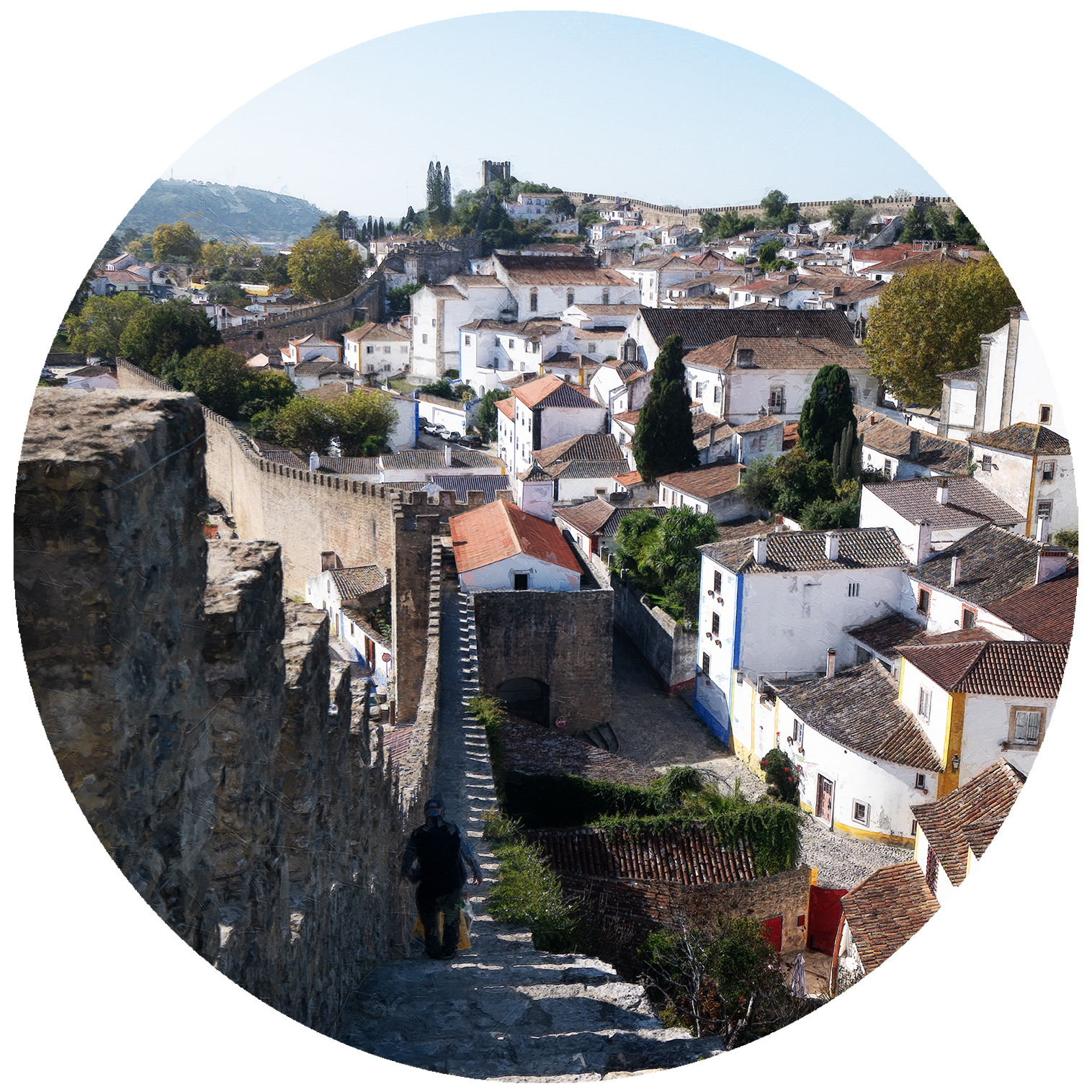
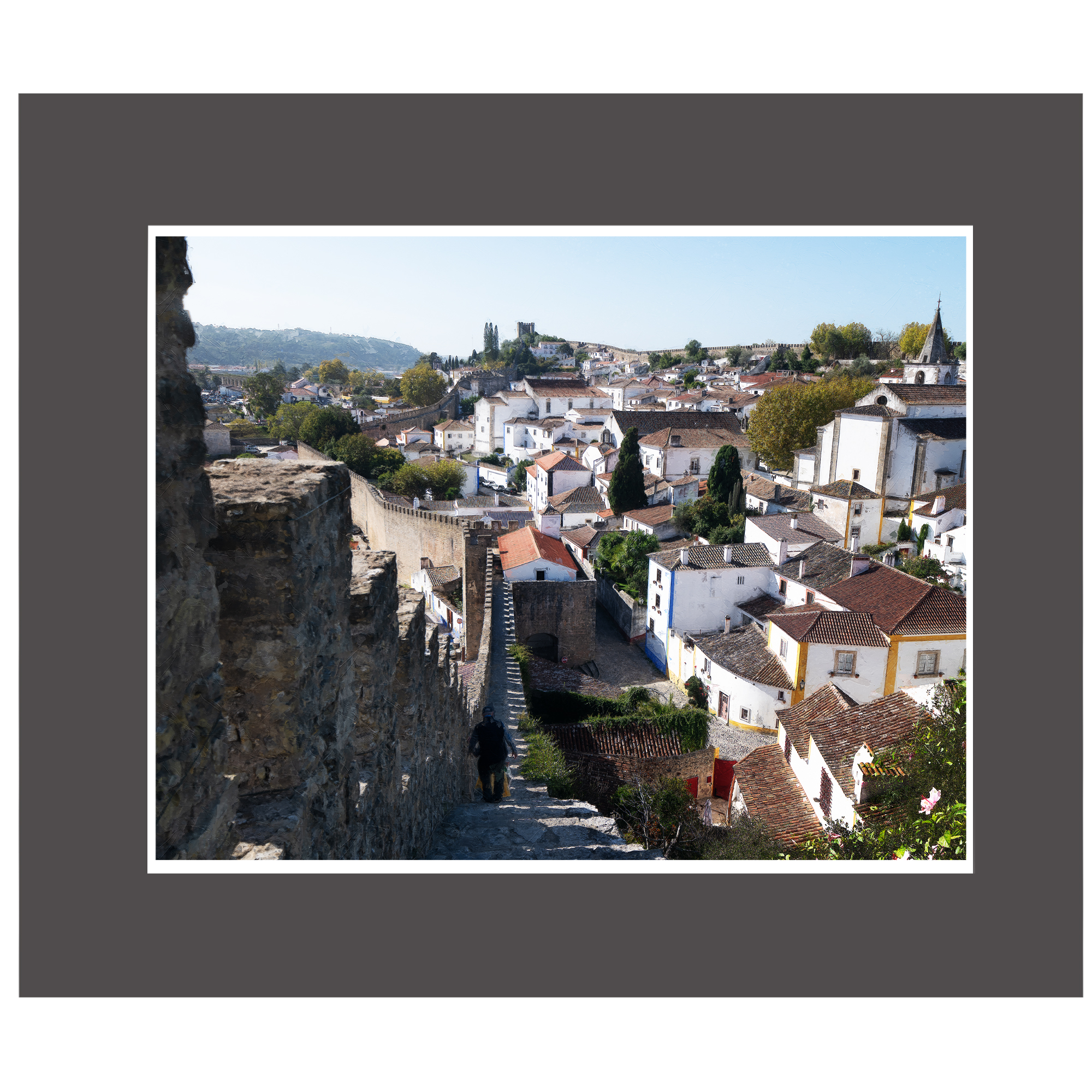
Echoes in Stone — Óbidos
An Original Work by Michael John Valentine
“I don’t paint to explain the world—I paint to remember how it feels.”
— Michael John Valentine
Where History Leaves Its Mark
There are places where history exists in books, preserved behind glass or recorded in the names of those who came before us. And then there are places where history remains physically present, embedded in the walls, passages, and surfaces that have endured long after the lives that shaped them. Óbidos, Portugal, is one of those rare places. Within its medieval fortifications, centuries of human experience seem to converge, leaving behind a visual language of stone, shadow, texture, and time.
Echoes in Stone — Óbidos is an original work inspired by this extraordinary historic setting. It reflects my interpretation of a place where the past is not simply remembered but continues to influence the way the present is experienced. The ancient walls are more than architectural remnants. They are witnesses to generations of change, protection, ambition, conflict, and everyday life. Their surfaces carry the character of endurance, while their imperfections reveal the beauty that only time can create.
My interest lies not merely in recording what stands before me, but in interpreting what it represents.
The History Within the Walls
Óbidos has a history reaching back well before the medieval town that visitors recognize today. Its strategic position made it important to successive inhabitants of the Iberian Peninsula, including Roman and later Muslim communities. The settlement eventually became part of the Portuguese kingdom during the Christian reconquest of the region in the twelfth century.
Over the centuries, its castle and defensive walls evolved into defining features of the town. They offered protection, established boundaries, and reflected the importance of Óbidos within the surrounding territory. The settlement developed within these fortifications, its narrow streets and closely grouped buildings adapting to the contours of the landscape and the practical realities of life inside a fortified town.
The walls that remain today represent far more than a single period of construction. They reflect layers of rebuilding, repair, adaptation, and preservation. Their continued presence offers a tangible connection to the people who walked these streets long before the modern world arrived.
Yet what makes Óbidos compelling is not simply the age of its architecture. It is the relationship between the monumental and the intimate. The fortifications establish an imposing presence, while the smaller streets reveal the rhythms of ordinary life. History unfolds not only in the grand structures but also in the weathered surfaces, changing light, worn edges, and subtle irregularities that might otherwise go unnoticed.
These are the details that invite interpretation.
Looking Beyond the Familiar View
When I encounter a historic place, I am interested in more than its recognizable landmarks. The conventional view often concentrates on the complete structure: the castle, the wall, the street, or the distant skyline. These views have their place, but they can sometimes conceal the visual character that makes a location distinctive.
In Óbidos, I found myself drawn to the relationship between the old world and the new. The transition can happen remarkably quickly. A surface that has endured for centuries may stand beside evidence of contemporary life, creating an unexpected contrast between permanence and change.
That contrast is especially revealing when the larger scene gives way to smaller details. Stonework becomes a study in pattern. Shadows divide a surface into unexpected shapes. Weathering creates tonal variations that resemble the gestures of a painter. Architectural fragments begin to function almost like abstract compositions, independent of their original purpose.
Echoes in Stone — Óbidos emerges from this way of seeing. Rather than treating the wall simply as a historical subject, I interpret it as a visual record of time. Its character resides in the accumulated evidence of existence: the irregularities, the softened edges, the interplay of light and dark, and the sense that something meaningful remains even as the world around it changes.
My intention is not to reproduce history literally. It is to respond to the feeling that history leaves behind.
My Interpretation: The Wall as a Living Record
For me, the wall represents a boundary between worlds, but also a connection between them. It once served practical purposes, defining a protected space and helping determine who could enter or leave. Today, it offers a different kind of access. It allows us to approach the past through something physical, something that has survived the passage of generations.
I see a parallel between the wall’s history and the process of creating art. A finished work carries the evidence of its own making. Layers, marks, variations, and imperfections contribute to its individuality. The final image becomes more than the sum of its individual elements because each detail participates in a larger expression.
The same is true of the ancient stonework. No single mark explains its entire story. Meaning develops through the accumulation of details and through the viewer’s willingness to look beyond the obvious.
This is where observation becomes interpretation. The wall is no longer simply a defensive structure. It becomes a metaphor for memory, resilience, and the passage of time. Its continued existence reminds us that the present is shaped by everything that preceded it, even when the origins of those influences are no longer immediately visible.
I find that idea especially compelling. We often measure progress by what replaces the old, yet there is another way to understand progress: by recognizing what endures beneath the changes. Óbidos offers an extraordinary opportunity to experience both realities at once.
The Enduring Character of Place
My work is influenced by color, texture, and style, but it is also driven by the emotional response a place can create. The strongest artistic experiences do not always come from the grandest views. Sometimes they emerge from an overlooked surface or an unexpected arrangement of forms that reveals itself only when we slow down and look carefully.
In Óbidos, the walls provide a powerful reminder that beauty does not depend on perfection. Their character comes from age, exposure, repair, and survival. They possess an authenticity that cannot be manufactured, because their visual language has developed over centuries.
Echoes in Stone — Óbidos is my personal response to that enduring character. It brings together the historical significance of the town and my interpretation of the visual and emotional qualities that make it memorable. The work invites a closer look at the relationship between history and abstraction, between the physical presence of the past and the feelings it awakens in the present.
Ultimately, the wall stands as both subject and symbol. It preserves the memory of a place while allowing each new observer to discover something different within it.
An Original Work for the Collector
Created from a personal encounter with one of Portugal’s most evocative historic settings, Echoes in Stone — Óbidoscelebrates the lasting relationship between place, memory, and artistic interpretation.
For the collector, its significance extends beyond a depiction of a medieval Portuguese town. It offers an opportunity to engage with the broader ideas of endurance, transformation, and the quiet power of surfaces shaped by time. Its subject belongs to history, but its interpretation remains open, allowing the work to acquire new meaning as it becomes part of a personal collection.
The walls of Óbidos have endured because they were built to last. Their deeper significance, however, lies in what they continue to communicate long after their original purpose has passed.
I see art in that same capacity: not simply as a record of what has been seen, but as a lasting expression of how a moment, a place, or an experience can be felt.
Echoes in Stone — Óbidos. A reflection on history preserved in stone, and on the enduring impressions that remain when time moves on.
Michael John Valentine
Original art inspired by history, texture, color, and the emotional character of place.


