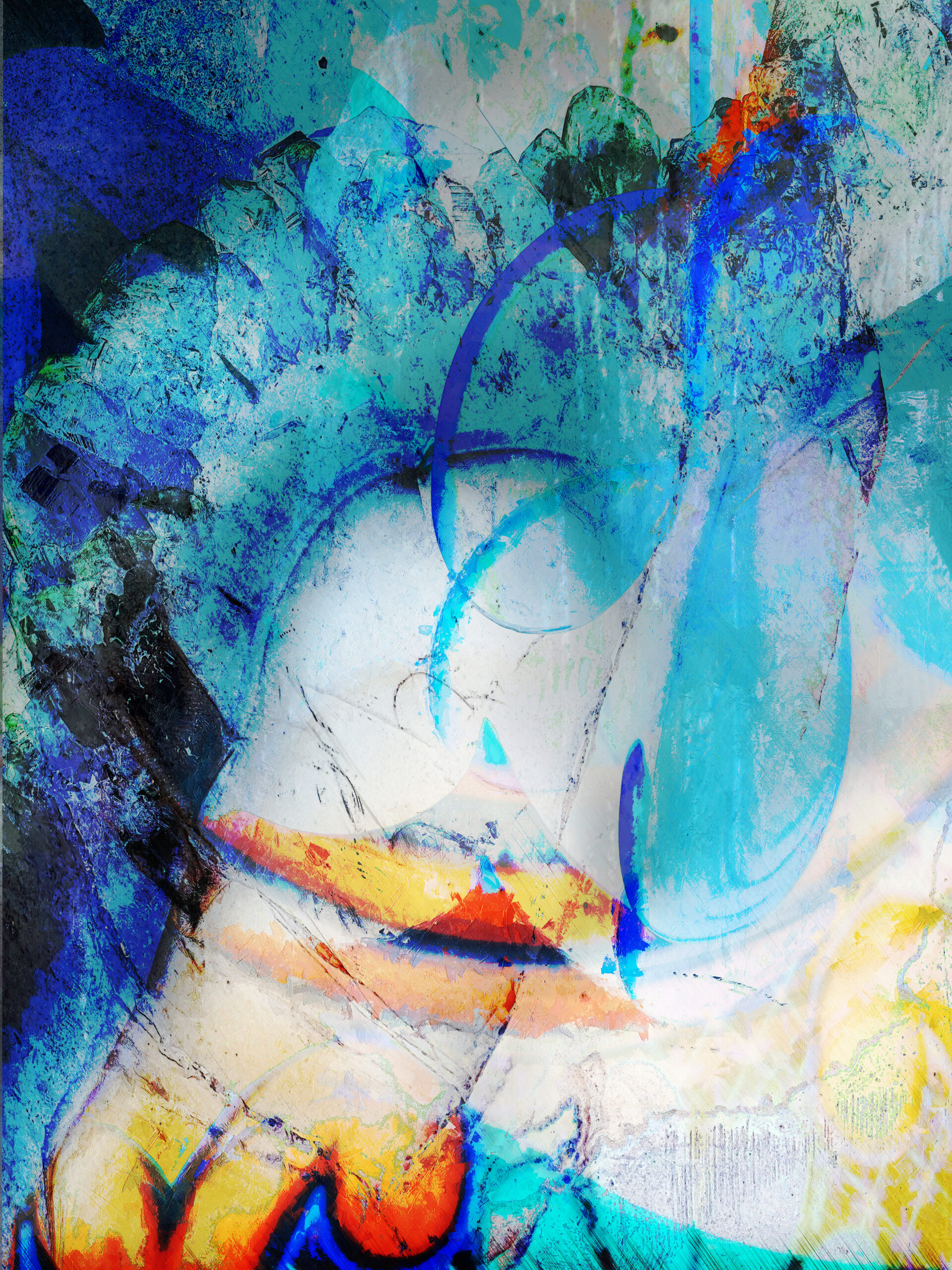
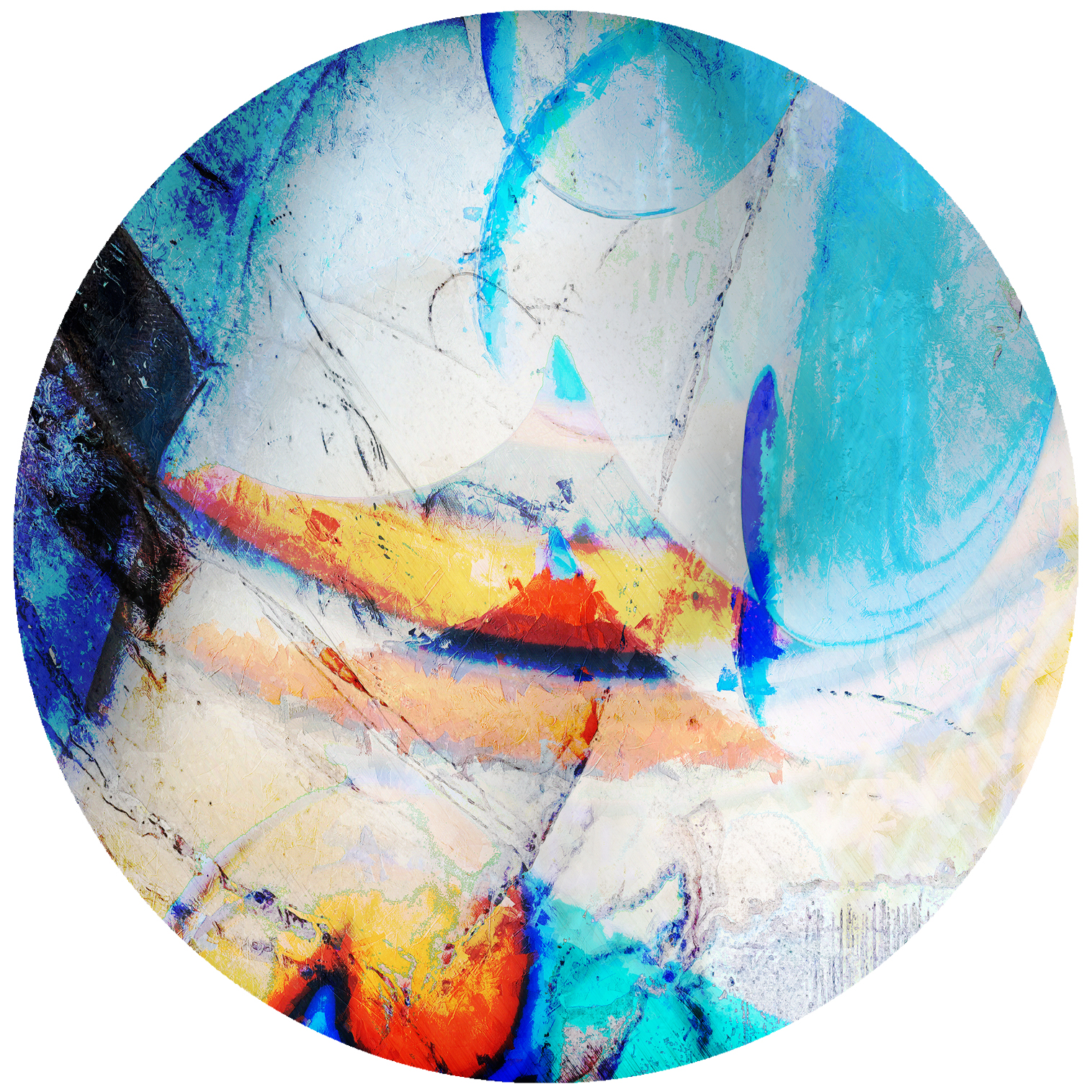
Geometry of the Soul
“Art is the elimination of the unnecessary.” — Pablo Picasso
Every remarkable abstract painting begins where literal representation ends. It asks the viewer to stop searching for recognizable objects and instead discover something far more personal—a reflection of emotion, memory, energy, and imagination. Geometry of the Soul was created from that philosophy. Rather than documenting what the eye sees, this work explores what the spirit remembers. It is an invitation to look beyond structure and discover the invisible architecture that shapes every human experience.
Throughout history, geometry has represented far more than mathematics. Ancient civilizations believed circles symbolized eternity, triangles represented balance and transformation, and intersecting lines reflected the unseen order of the universe. Long before abstraction became a celebrated movement, artists understood that simple forms could communicate truths that words never could. In this painting, geometry becomes emotional language. Every angle, every fractured plane, and every bold intersection is a visual conversation between order and instinct.
Although many collectors naturally recognize echoes of early twentieth-century Cubism, Geometry of the Soul is not an attempt to recreate the past. Instead, it pays respect to the revolutionary courage of artists who challenged conventional ways of seeing while continuing that spirit through my own artistic voice. The result is a contemporary abstract that celebrates innovation rather than imitation.
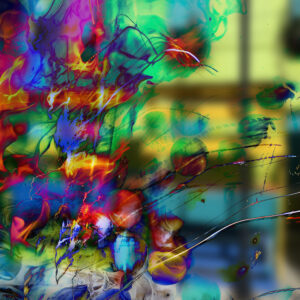
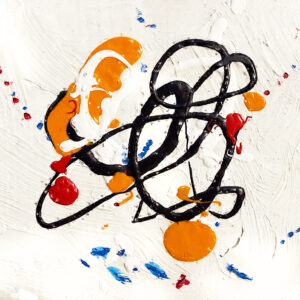
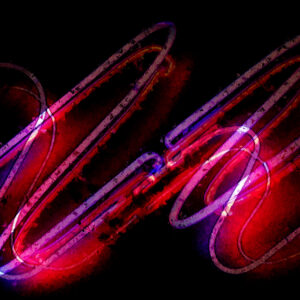
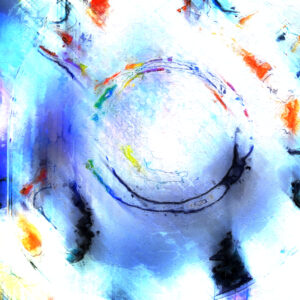
The composition moves with deliberate rhythm. Bold geometric forms appear to collide before settling into an unexpected harmony. Rich layers of color create depth that reveals itself slowly, encouraging the eye to wander across the canvas rather than arriving at a single destination. Each viewing uncovers subtle relationships between shape, light, and negative space that were invisible only moments before. Like a meaningful conversation, the painting becomes richer with time.
As I painted this work, I found myself thinking about how every person’s life is built from fragments. Our experiences are rarely linear. Memories overlap. Success and disappointment exist simultaneously. Love, ambition, loss, hope, and resilience become pieces of a larger design that only makes sense when viewed from a distance. We are all collections of moments assembled into something uniquely our own. That realization became the emotional foundation for this painting.
I believe every abstract painting should leave room for the collector to become its final collaborator. The most rewarding works are never completely explained because they continue evolving inside the imagination of the person who lives with them. One collector may see the skyline of a great city filled with ambition. Another may discover mountains rising through morning fog. Someone else may recognize a deeply personal memory that no one else could possibly understand. None of these interpretations are wrong. They are the very reason abstract art continues to inspire generation after generation.
This openness is one of abstraction’s greatest strengths. Unlike representational paintings that often provide immediate answers, abstract works ask better questions. They encourage curiosity instead of certainty. They remind us that beauty often exists in ambiguity and that the most meaningful discoveries come when we allow ourselves to simply observe without expectation.
Color plays an equally important role throughout Geometry of the Soul. Rather than serving as decoration, each hue functions like a musical note within a larger composition. Some passages create tension while others offer moments of calm. Warm and cool relationships establish movement across the surface, creating visual energy that continually shifts depending on changing light throughout the day. Morning sunlight may reveal one personality while evening illumination uncovers another entirely. This constant transformation allows the painting to remain alive within its environment.
Texture contributes another layer of experience. Whether viewed from across the room or examined from only inches away, subtle variations invite exploration. Brushwork, layered pigments, and deliberate transitions reveal the physical process behind the creation of the artwork. These details remind the viewer that every mark represents a decision, every layer records a moment, and every completed painting preserves a unique chapter in an artist’s journey.
For collectors of contemporary abstract art, Geometry of the Soul offers more than visual impact. It becomes an architectural element within sophisticated interiors. Modern homes, executive offices, luxury condominiums, galleries, and collector spaces all benefit from artwork capable of creating conversation without overwhelming its surroundings. The painting possesses enough confidence to anchor an entire room while remaining refined enough to complement carefully curated design.
As an artist with more than five decades devoted to painting, I have learned that technical ability alone never creates memorable work. The lasting power of art comes from honesty. Every painting carries a piece of the artist who created it, whether intentionally or not. Geometry of the Soul reflects my lifelong fascination with the relationship between structure and freedom, discipline and spontaneity, precision and emotion. Those seemingly opposite forces are not in conflict—they are partners in creation.
Ultimately, this painting celebrates the complexity of being human. Beneath our carefully organized lives exists an extraordinary landscape of dreams, memories, imagination, and possibility. The visible geometry becomes a metaphor for the invisible patterns that define our character. Every intersecting line represents a choice. Every fractured plane suggests transformation. Every balance between chaos and order reminds us that beauty often emerges from life’s most unexpected arrangements.
My hope is that Geometry of the Soul never reveals itself completely. The finest works of art continue speaking long after the first impression has faded. They grow alongside their collectors, offering new perspectives as life itself changes. If this painting encourages even one person to pause, reflect, and discover something previously unseen within themselves, then it has fulfilled its purpose.
— Michael John Valentine
“The soul has its own geometry. We spend our lives connecting the lines.”