“To play a wrong note is insignificant; to play without passion is inexcusable.”
— Ludwig van Beethoven
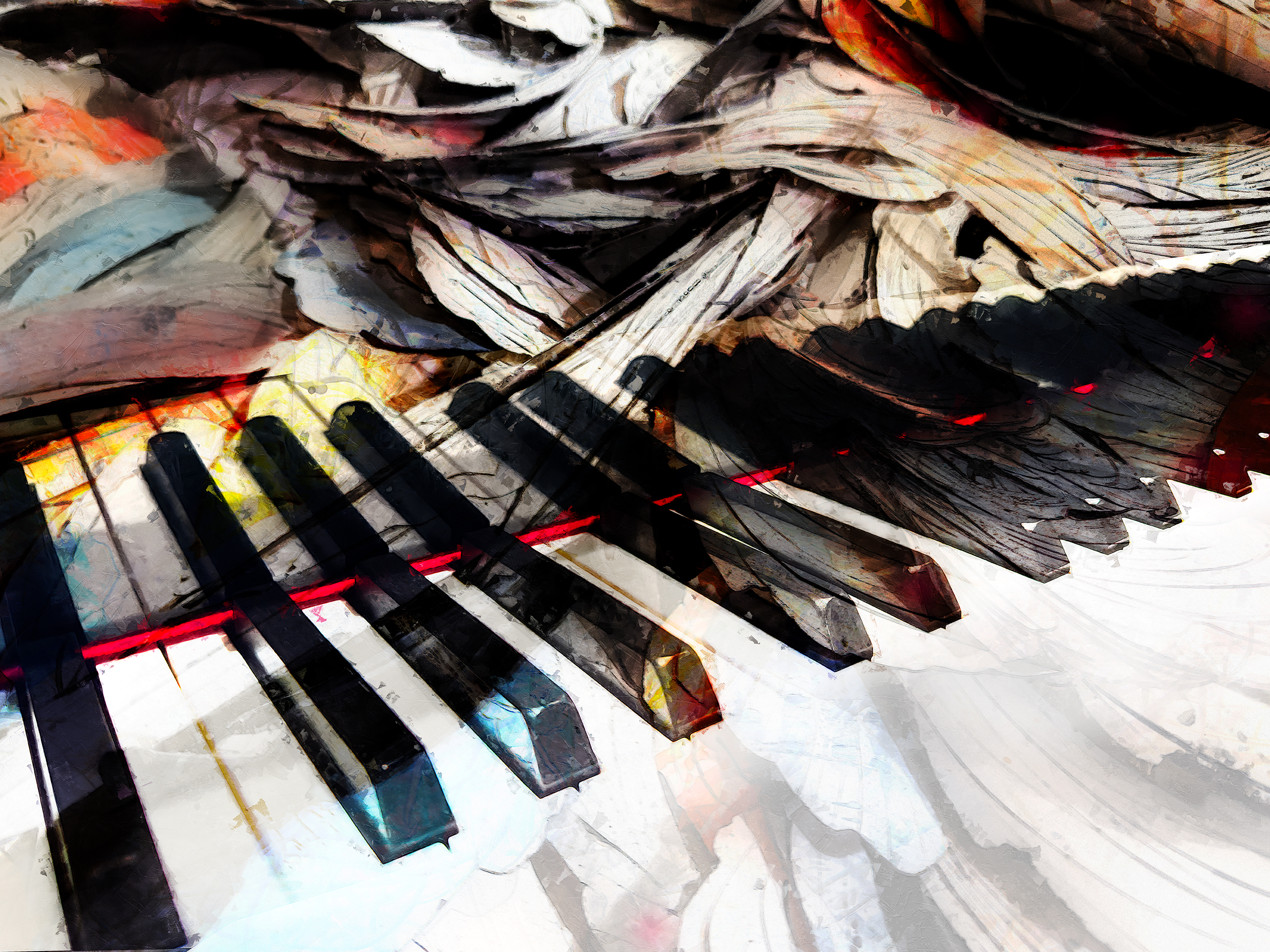
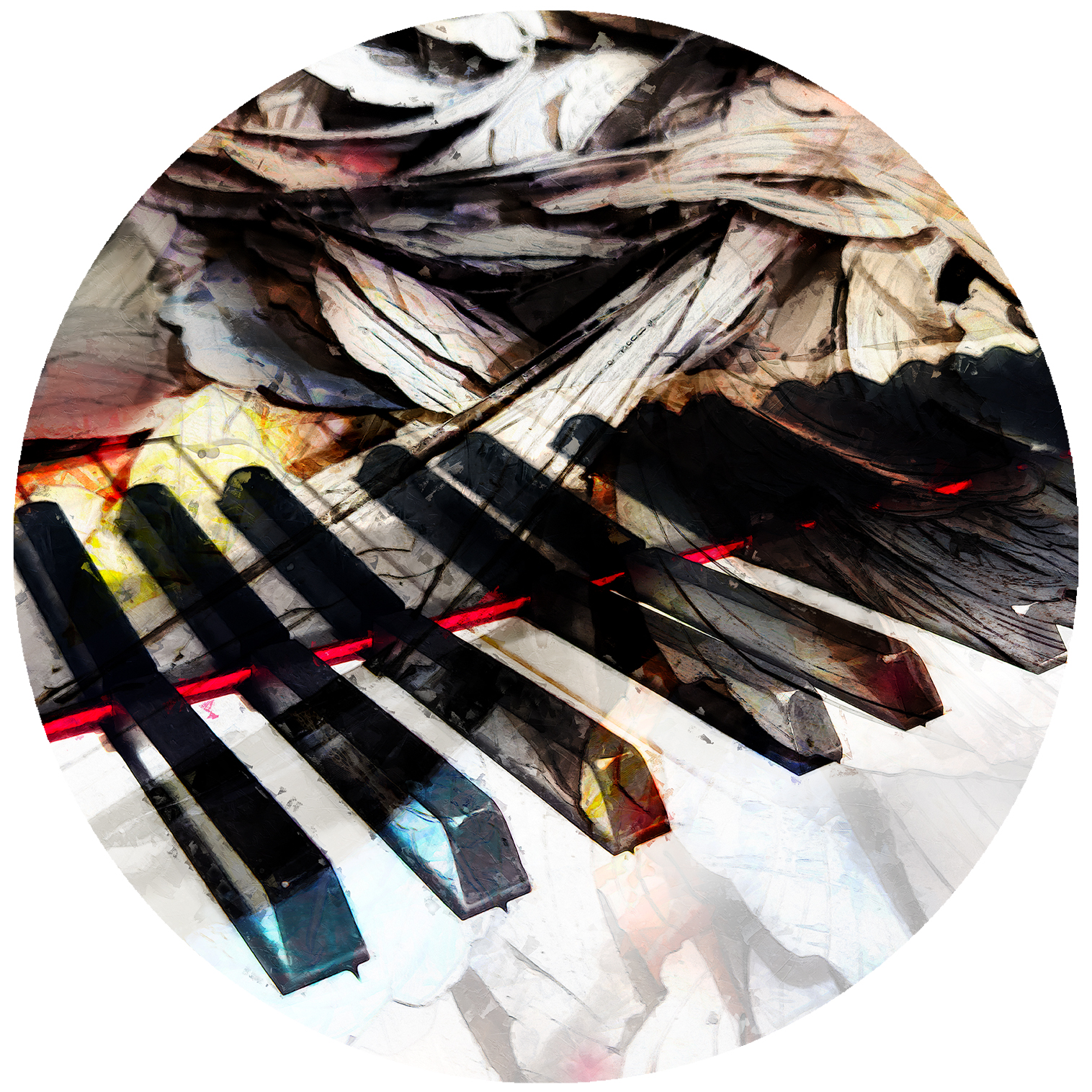
There is a moment, just after the final note fades, when sound does not end—it lingers. It dissolves into wood, into air, into memory. Ivory Echoes exists in that suspended moment, where music is no longer performance but presence. This work is not about the piano as an instrument alone, but as an archive of emotion—an object that remembers everything ever pressed into its keys.
At its core, Ivory Echoes is a meditation on resonance: not only the physical vibration of strings and soundboard, but the psychological afterimage of music itself. A grand piano is never silent in the truest sense. Even in stillness, it carries the weight of past performances—the ghost of arpeggios, the imprint of touch, the subtle tension of anticipation before the next phrase begins. This piece seeks to honor that unseen accumulation of sound, where each note becomes part of a larger, invisible composition written across time.
The surface presents itself with restraint, but beneath that restraint lies complexity. Like a score held just out of reach, it invites the viewer to listen with more than ears. It asks for memory, attention, and surrender. The ivory tones are not simply color—they are atmosphere. They suggest distance and intimacy simultaneously, as though the instrument has been placed in a room where light itself behaves like music: soft, layered, and transient.
There is a certain reverence embedded in the composition, a quiet acknowledgment of craftsmanship. A piano is among the most human of instruments. It is mechanical, yet deeply emotional; engineered, yet unpredictable in the hands of a performer. Every hammer strike is both controlled and fragile, precise yet inherently fleeting. Ivory Echoes reflects this duality. It does not glorify perfection—it honors impermanence.
The idea of “echo” is central here. An echo is never the original sound, yet it carries its shape. It is memory made audible. In this sense, the work becomes less about a singular moment of performance and more about what remains after that moment has passed. It is the residue of expression—the soft architecture left behind when emotion has already moved through the room.
In a broader sense, Ivory Echoes speaks to the relationship between musician and instrument as something almost autobiographical. Pianists often describe their instruments not as objects, but as companions—beings that respond, resist, and remember. Over time, a piano develops a voice shaped by every artist who has ever approached it. It becomes layered with identity. This piece reflects that accumulation, suggesting that no piano is ever truly the same twice. It evolves with touch, with intention, with silence.
The visual language is restrained, but deliberate. Negative space becomes as important as form, mirroring the pauses between phrases in a musical score. These pauses are not absence—they are structure. They are where meaning settles. Without them, music collapses into noise. Without them, memory cannot form. In this way, the composition behaves like a nocturne: introspective, suspended, deeply aware of its own quietness.
There is also an emotional undertone of nostalgia—not for a specific time or place, but for the experience of listening itself. The kind of listening that requires stillness. The kind that allows a single note to expand beyond its duration. In a world increasingly defined by speed and fragmentation, Ivory Echoes slows perception down to something closer to breath. It restores attention as a form of devotion.
From a collector’s perspective, the work functions as both object and atmosphere. It does not demand interpretation so much as presence. It is designed to live in a space where silence is not empty, but curated. A space where light changes its meaning throughout the day. A space where sound is remembered even when it is no longer present.
Ultimately, Ivory Echoes is about continuity. Not the continuity of melody, but the continuity of feeling. It suggests that music does not end when the pianist lifts their hands—it continues in the room, in the listener, in the unseen architecture of memory. It is a reminder that the most powerful compositions are not always the ones we hear most clearly, but the ones that remain with us long after the final chord has dissolved.
In that sense, the piano becomes more than instrument. It becomes witness. And what it witnesses is not performance alone, but the fragile, unrepeatable act of human expression itself—translated into resonance, held briefly in air, and then preserved only in memory.