“Jazz is about being in the moment.” — Herbie Hancock
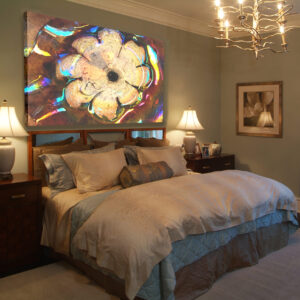
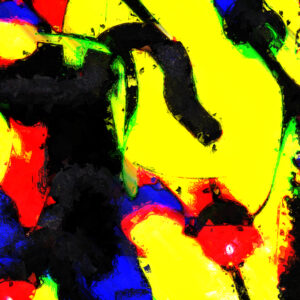
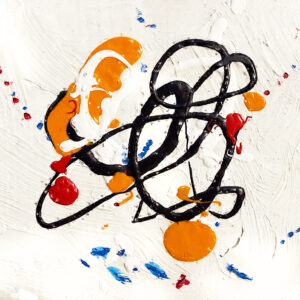
Piano Jazz Score 42 x 10 — Signed Overpainted Canvas-single edition
A visual composition where music becomes matter
There are works of art that depict music, and then there are works that behave like music. Piano Jazz Score 42 x 10belongs firmly to the second category. It is not an illustration of sound, but a physical improvisation—layered, responsive, and alive with the same tension and release that defines great jazz performance.
This signed overpainted canvas transforms the language of piano composition into visual rhythm. The elongated format (42 x 10) immediately suggests a musical staff stretched into architectural space—like a single, sustained phrase held across time. Rather than presenting a static image, the piece reads as a score that has been played, interrupted, reinterpreted, and reassembled through paint.
At its core, this work is about presence. Jazz has always demanded it. As Herbie Hancock suggests, the essence of the form is not prediction but participation—being fully inside the unfolding moment as it happens. That philosophy is embedded here not just conceptually, but physically, through layers of overpainting that echo improvisational decisions made in real time.
Improvisation as structure, structure as improvisation
The visual rhythm of Piano Jazz Score 42 x 10 mirrors the duality at the heart of jazz: discipline and freedom existing simultaneously. Much like a pianist navigating chord changes, the surface moves between control and spontaneity. Some passages feel deliberate and architectural; others break away into expressive gesture, as if the composition itself is deciding what it wants to become.
This tension recalls the spirit of Thelonious Monk, who famously treated improvisation not as decoration but as discovery—an unfolding logic that reveals itself only in motion. His approach to jazz, angular yet deeply intentional, resonates strongly with the visual language of this work, where edges, interruptions, and unexpected transitions become part of the composition’s emotional grammar.
Here, paint behaves like sound. Layers accumulate like harmonies. Overpainting becomes a form of call-and-response. Earlier marks are not erased—they are absorbed, partially revealed, and allowed to influence what comes next. The result is not a single image, but a recorded conversation between moments in time.
The physical language of sound
What distinguishes this piece within a contemporary art context is its insistence on physicality. The surface carries evidence of process—gesture, revision, and restraint. It is not polished into silence. Instead, it preserves the friction of its making.
The elongated 42 x 10 format intensifies this experience. It guides the eye horizontally, much like reading a musical phrase or following a pianist’s right-hand run across the keyboard. The viewer is not meant to observe the work all at once, but to experience it sequentially—like listening rather than looking.
In this way, the canvas becomes a time-based medium. Each section holds its own tempo. Some areas feel like rests—open space where silence carries weight. Others are dense with visual syncopation, layered marks that suggest polyrhythmic movement. The painting does not describe jazz; it behaves like it.
Overpainting as improvisational memory
The overpainted nature of this work is essential to its identity. Nothing here is final in the traditional sense. Earlier marks remain embedded beneath newer decisions, creating a sense of history within the surface itself.
This mirrors how jazz musicians build vocabulary—not by discarding what came before, but by absorbing it. A phrase is played, remembered, altered, and eventually transformed into something new. In this way, the canvas functions like a living archive of artistic decision-making.
The studio process behind this piece reflects that same philosophy. Multiple works are often developed in parallel, with color relationships and gestures migrating across surfaces. Ideas are not isolated; they evolve collectively. This approach creates a visual ecosystem where each canvas informs the others, much like musicians responding to one another in a live ensemble.
A collector’s perspective: rarity, presence, and authorship
As a signed, overpainted work, Piano Jazz Score 42 x 10 carries the unmistakable mark of authorship. The signature is not simply a designation—it is a final gesture within the composition, a closing note in a piece that still feels ongoing.
For collectors, this work offers something beyond aesthetic appeal. It offers process visibility. The viewer can trace decisions, interruptions, and recoveries. There is a sense that the painting has not been manufactured, but performed.
This is where its value becomes experiential rather than decorative. It exists in the same conceptual space as a live jazz performance: unrepeatable, situational, and deeply tied to the moment of its creation. Even in its completed state, it resists closure.
Jazz, space, and emotional architecture
Jazz has always been about more than music—it is a way of organizing time, emotion, and collective awareness. This painting translates that architecture into visual form. It invites the viewer to slow down, to follow sequences rather than consume an image instantly.
There is also a cinematic quality to the work. The horizontal structure suggests movement across a stage or along a timeline. It feels like a score being performed in reverse—what we see is not the beginning of creation, but its residue.
Within this residue, emotion is not illustrated but embedded. The painting holds tension without resolving it too quickly. It allows ambiguity to remain active. That openness is what gives it its resonance.
Closing reflection
Piano Jazz Score 42 x 10 is ultimately about translation—how sound becomes sight, how improvisation becomes surface, and how momentary decisions can accumulate into lasting form.
It stands as a reminder that the most powerful creative acts are not fixed statements, but ongoing conversations. Between artist and material. Between silence and gesture. Between structure and freedom.
Or, as jazz itself continually demonstrates: the work is never truly finished—it is simply played.