“Great art picks up where nature ends.” — Marc Chagall
In the realm of contemporary expression, this resonant truth from Marc Chagall serves not just as an artistic maxim, but as a guiding philosophy. It is an invitation to leave behind mere representation and venture beyond the familiar, into the elusive territory where imagination and experience converge. Few works embody this ethos as wholly as Modern Art Finding a Perfect Balance by Michael John Valentine — a piece that not only captures beauty, but extends it into a refined continuum of emotion, balance, and visual poetry.
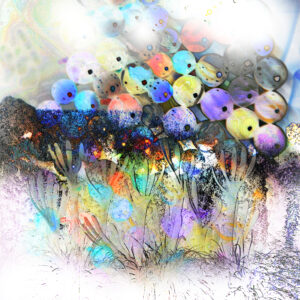
At first glance, Modern Art Finding a Perfect Balance may appear as an arresting abstract composition crafted with expert nuance and vibrant energy. But in truth, it is far more than color on surface; it is an exploration — a meticulous negotiation between order and spontaneity, between the visible world and the world the human spirit seeks to create where nature alone does not suffice. Just as Chagall envisioned art as a continuum that begins where nature leaves off, Valentine’s work asserts itself as a junction point between what is seen and what is felt.
Valentine, an artist with more than five decades of rigorous practice and formal training, is no stranger to this artistic fulcrum. His creative journey — honed through years of dedicated studio work — culminates in a body of work that deliberates upon the dialogue between instinct and intention. Every stroke, every shift in hue, and every interplay of texture in Finding a Perfect Balance reflects a refined visual lexicon born of deep observation and a restless commitment to artistic evolution.
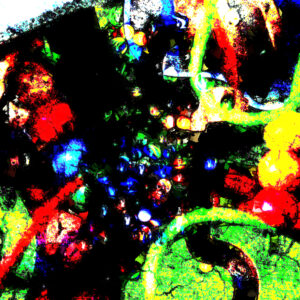
What sets this work apart is not just its aesthetic allure, but its sophisticated harmony. The visual composition unfolds like a musical score — rhythms of color that dance and dialogue with each other, cadenced against spaces that breathe and resonate with quiet power. In this piece, Valentine achieves what many modern artists aspire to but few truly master: he finds equilibrium between expressive freedom and compositional restraint. The result is a canvas that feels alive, rich with implied movement yet grounded in structural coherence.
This balance is more than an aesthetic achievement; it articulates a philosophy. Drawing from the deepest wellsprings of abstract modernism, Valentine operates with the understanding that art’s highest purpose is not to mirror the world — nature — but to complete its narrative, to embellish it with meaning that eludes plain sight. Through this work, the viewer is invited into a contemplative space where color becomes a language of feeling and form becomes a vessel for imagination.
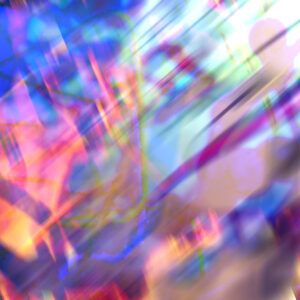
The tactile quality of the piece further reinforces this immersive experience. Through deliberate application and selective overpainting, the surfaces hold both depth and resonance, inviting a viewer to linger — to trace with the eyes the subtle transitions from one tone to the next, to discover the texture as though uncovering hidden strata within the canvas itself. This tactile dimension elevates Finding a Perfect Balance beyond visual appreciation into the realm of sensory encounter — vivid yet nuanced, bold yet intimate.
Modern Art Finding a Perfect Balance also carries with it the rare distinction of authenticity and individuality. Unlike mass‑produced decor, each signed canvas retains a singular presence: a testament to Valentine’s handcrafted vision. Whether acquired as the anchor piece in a refined interior, a centerpiece within a private gallery, or a treasured addition to a carefully curated collection, this work commands both attention and introspection. Its presence is a quiet declaration: art is not merely decorative, it is existential — a living testament to our highest capacities for perception and expression.
Collectors and connoisseurs recognize the value of such pieces not just for their visual impact but for their provenance. Each iteration of the work — from the elegantly matted prints to the luxurious overpainted canvases — carries with it the artist’s signature and a certificate of authenticity. This traceable lineage reinforces both its collectible appeal and its position as a serious work of modern art.
This piece’s name — Finding a Perfect Balance — is itself reflective of the artist’s intent: to harmonize contrasts. Here, color interacts with form with an almost orchestral precision, guiding the viewer’s gaze in a measured sequence of impressions. Warm tones converse with cool; dense areas counterbalance open planes; dynamic suggestion yields to contemplative space. The composition does not merely invite visual engagement — it rewards it, revealing new depths and interplays with every viewing.
It is in this layered experience that Chagall’s insight resonates most clearly. Where nature provides inspiration and raw potential, art completes the circle — nurturing a dialogue between perception and aspiration. Valentine’s work embodies this completion, transforming what is seen into what is understood, and ultimately, into what is felt.
For those who seek more than just aesthetic pleasure — for those who yearn for art that speaks to imagination, intellect, and emotion — Modern Art Finding a Perfect Balance is a rare offering. It is a work that challenges you to see beyond the surface, to sense the underlying rhythms of life, and to participate in a greater continuum of artistic discovery.
This piece stands not only as a visual achievement but as an intellectual and emotional milestone — an art object that picks up where nature ends, fulfilling Chagall’s enduring vision of what great art truly embodies.