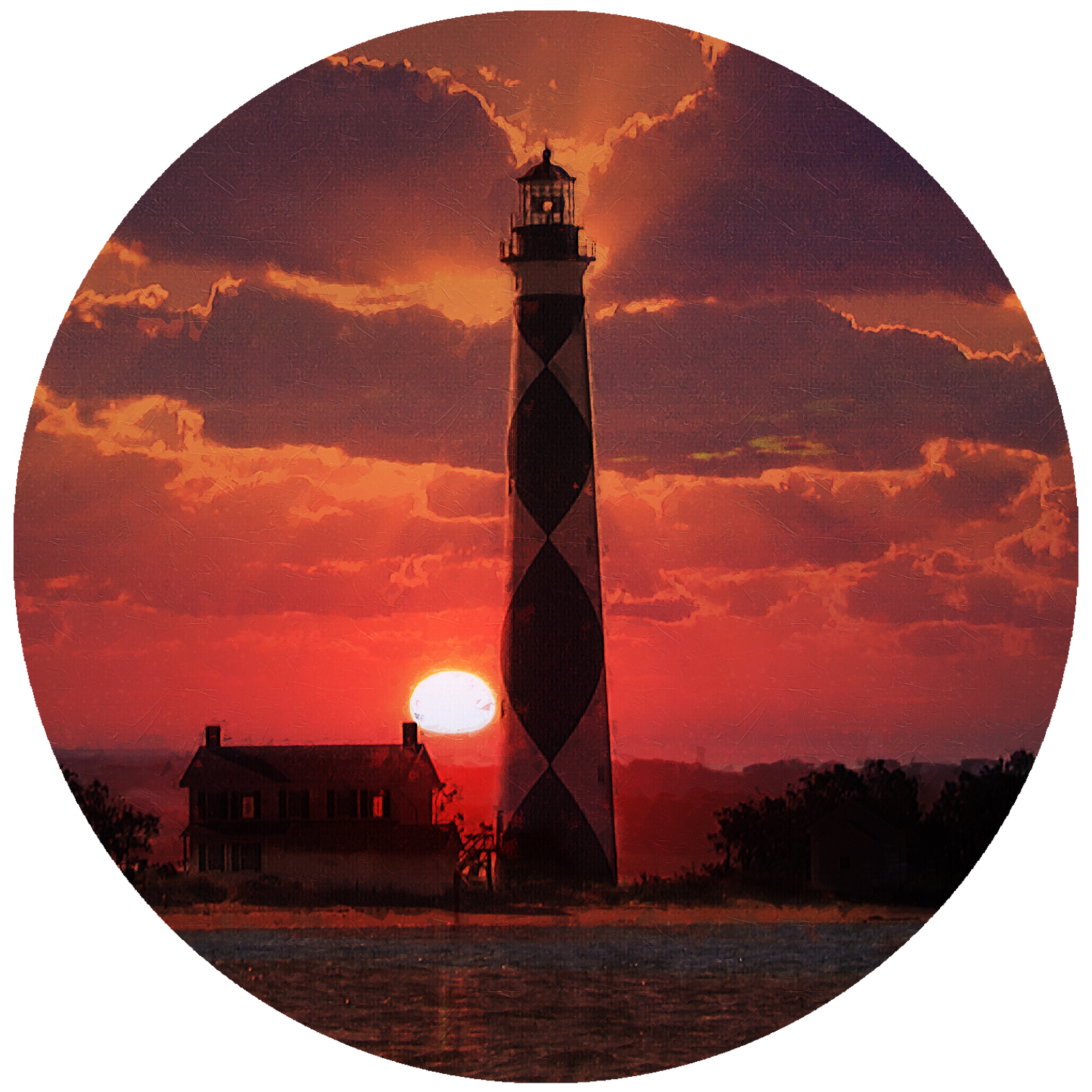
The Watch Below Cape Lookout
Every evening, after a long day chasing the wind across the Atlantic’s restless pulse, old First Mate Calvert would climb the mizzenmast of The Meridian to keep watch as the sun began its slow slide toward the horizon.
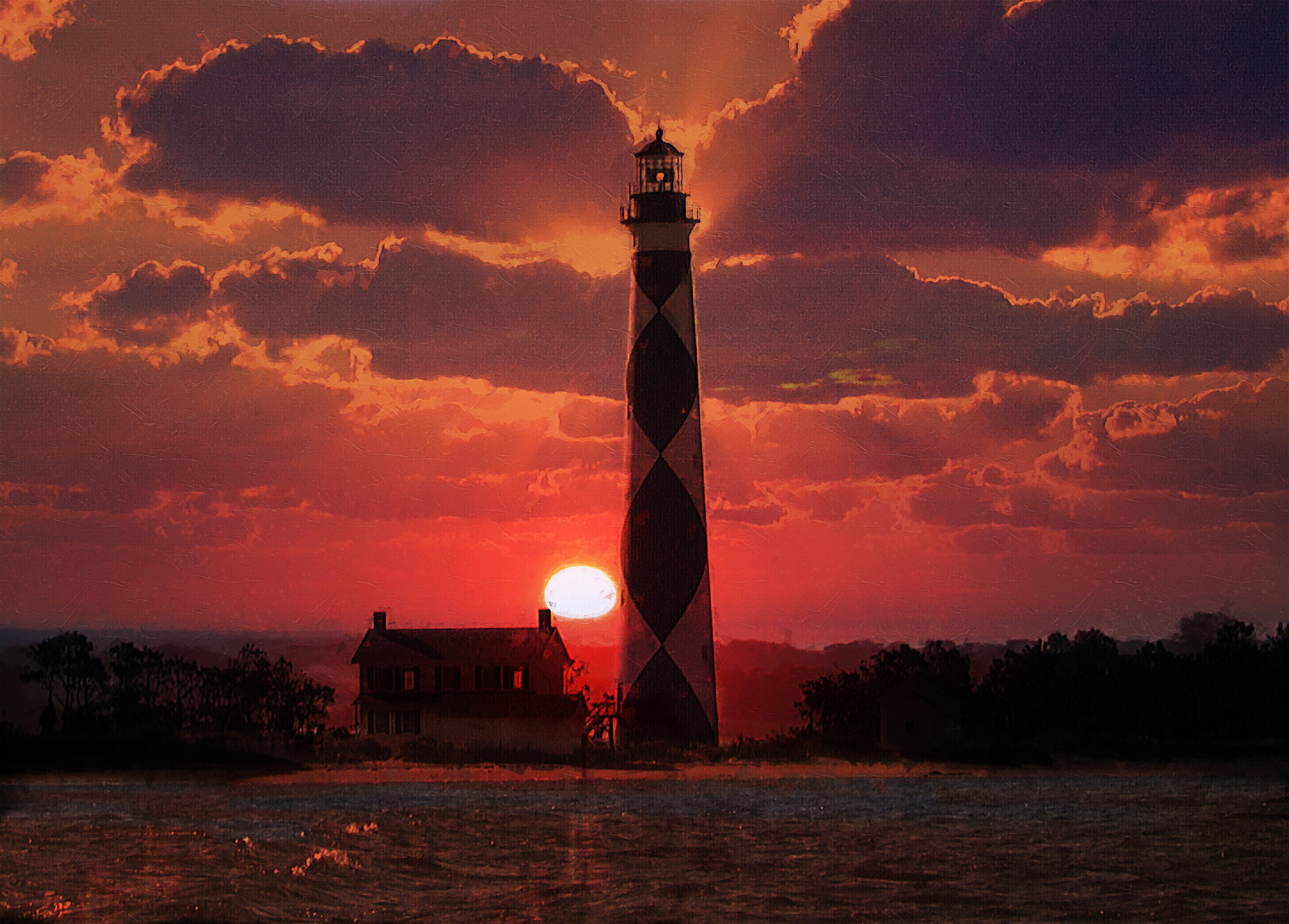
Out here, in the fertile waters off Cape Lookout, mariners whisper of a light that lives long after the sun dips. The lighthouse — its black‑and‑white diamonds standing proud against salt and sky — was built to guard souls and sails alike from the treacherous shoals that have claimed so many hulls.
But there was another guide, too — one no chart could show.
As dusk approached, the sun would melt into strands of molten gold and rose above the breakers. Calvert swore there was a moment — just a heartbeat — when the horizon seemed to invite a sailor’s deepest memories to walk out onto the water. The waves turned rosy lavender, and the sea whispered like a voice from a distant dream. In that fleeting twilight, the crew — tired and salt‑stung — felt the world shift beneath them: a sense that all storms, all journeys, all longing might be balanced, just for an instant, between day and night.
Fishermen from Harkers Island told stories of summer cabins half‑buried in sand, forged by wind and time, where families watched the same sky. They spoke of how the life of the Cape changed with every set of sails and with every return to harbor. And from the National Seashore, where wild ponies wandered the dunes and sea breezes carried centuries of salt, those who stayed ashore saw the same wonder Calvert chased across the waves.
Calvert believed that at sunset — when the light turned amber and the sea seemed to glow — you could almost hear the laughter of sailors long gone, echoing like a hymn through the gulls’ cries.
“It’s not just a sunset,” he would say, voice low against the wind. “It’s the promise of the sea — that no matter how far we’ve roamed, there’s always beauty waiting at the edge of the horizon.”