“What you feel here is intentional; what you interpret is personal.” — Michael John Valentine
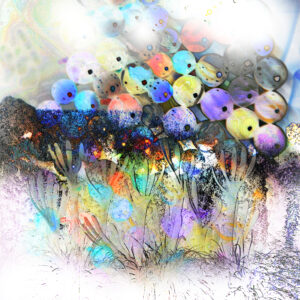
In Michael John Valentine’s Something In The Wind, we encounter far more than a visual composition — we are invited into a fluid, dynamic encounter between perception and emotion. This abstract modern wall art, available in multiple formats ranging from peel‑and‑stick decals to large overpainted canvases, is emblematic of Valentine’s unique artistic vision: a harmonious interplay of intentional mark‑making and the viewer’s imaginative response.
At first glance, Something In The Wind arrests the eye with its rhythmic gestures, flowing hues, and palpable movement. Yet Valentine’s work resists a singular narrative. In his own words, the emotional resonance of the piece is intentional, while its interpretation remains deeply personal. This duality lies at the heart of the piece, transforming it into a living artwork that evolves within the psyche of each observer.
The Essence of the Piece
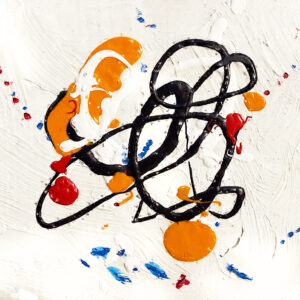
Something In The Wind is, at its core, an exploration of motion — not just physical motion, but the more elusive currents of thought, breath, and emotion that shape our inner experience. Like wind itself, unseen yet felt, the visual currents in this piece suggest forces that move us without always revealing their source. The brushstrokes and textures guide the eye in a sweeping narrative that feels at once spontaneous and meticulously considered.
Valentine’s technique involves overpainting — adding layers of pigment and texture in select areas — and sealing the canvas with a glossy protective finish. Whether you choose a print or an overpainted original canvas, these layers and sheen work together to create subtle depth and shifting perception as light interacts with the surface.
A Collector’s Perspective
Owning Something In The Wind is to possess an artwork with both presence and flexibility. Its availability across formats — from modest 5×7 glossy matted prints to commanding 38×56 overpainted signed canvases — makes the piece accessible to a spectrum of collectors, yet each option carries a sense of exclusivity and craftsmanship. The artist’s use of acrylics on canvas, combined with original photography in many of his works, lends an authenticity and uniqueness that transcends mass‑produced décor.
For seasoned collectors, the piece isn’t merely decorative. It is a statement of artistic intention — a testament to Valentine’s over half‑century of creative exploration, which spans painting, photography, and mixed media. His body of work, cultivated over more than 55 years, combines technical depth with emotional subtlety, positioning him as a distinct voice in contemporary abstract art.
The Language of Abstraction
Abstract art often demands more than observation; it requires engagement. In Something In The Wind, form functions as a language without literal syntax. Lines and colors converse in metaphors of breath, flight, and unseen momentum. The title itself evokes a poetic sensibility — something ineffable yet present, like a breeze that carries scents and memories without a clear origin. It is this enigmatic quality that invites viewers to project their own experiences and emotions onto the canvas.
Valentine’s work aligns with broader traditions in abstract art where meaning is not prescribed but activated within the viewer. Just as celebrated abstract expressionists once encouraged personal interpretation as a core part of visual experience, Valentine’s approach reaffirms that art is not just perceived, but lived.
Emotional Resonance and Interior Spaces
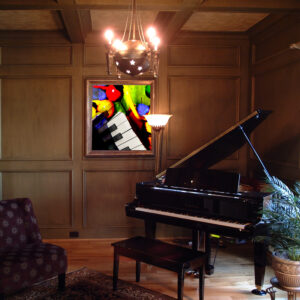
Because abstract works engage the viewer’s imagination, Something In The Wind can transform the spaces it inhabits. In a home, it becomes a focal point of reflection; in an office, it provokes contemplation and mental openness. Its subtle yet dynamic presence encourages not just admiration, but dialogue between the artwork and the observer.
This capacity to influence a room’s emotional tenor — without depicting any specific figure or scene — is what elevates Valentine’s abstract compositions. They do not merely fill space; they shape the way space feels. The interplay of lines and color, movement and stillness, creates an ambiance that shifts subtly with the viewer’s gaze and mood.
The Personal Encounter
Perhaps the most compelling aspect of Something In The Wind is its invitation to introspection. The artist’s assertion — that what you feel is intentional while what you interpret is personal — underscores a central truth of impactful art: it is not static. It lives within the thoughts, memories, and emotions that each viewer brings. In this way, the piece is less a finished statement and more an open question — a visual prompt that invites ongoing interpretation.
Whether one reads serenity in its curves or turbulence in its strokes, the work accepts all interpretations without judgment. It mirrors back the viewer’s inner world, much like wind “reveals” direction without announcing its source. The result is an artwork that feels both universal and intimately private, capable of speaking to diverse sensibilities while remaining singularly evocative.
A Legacy of Craftsmanship
Valentine’s studio practice — integrating original photography with layered acrylics — anchors his abstract explorations in a disciplined craft tradition. To produce a work like Something In The Wind, the artist synthesizes intuitive gesture with a seasoned understanding of composition, texture, and material behavior. His deliberate application of medium and finish ensures that each canvas showcases visual rhythm with structural integrity.
For collectors who appreciate the tactile qualities of paint and the conceptual depth of abstraction, this piece represents both aesthetic richness and thoughtful intention. It stands as a testament to a lifetime of artistic devotion — a creative journey lived through hundreds of works that span a variety of themes, styles, and emotional registers.
Conclusion
In Something In The Wind, Michael John Valentine offers more than an image; he offers an experience. One that acknowledges the viewer’s presence, invites personal reflection, and rewards repeated engagement. By declaring that “what you feel here is intentional, what you interpret is personal,” Valentine opens a space where art becomes a conversation between creator and observer.
This piece exemplifies how abstract art can be both specific and universal, grounded in deliberate craftsmanship yet liberated through individual perception. It is a work that resonates beyond its visual edges — a quiet testament to the power of art to capture something fleeting, like wind, yet enduring in human experience.