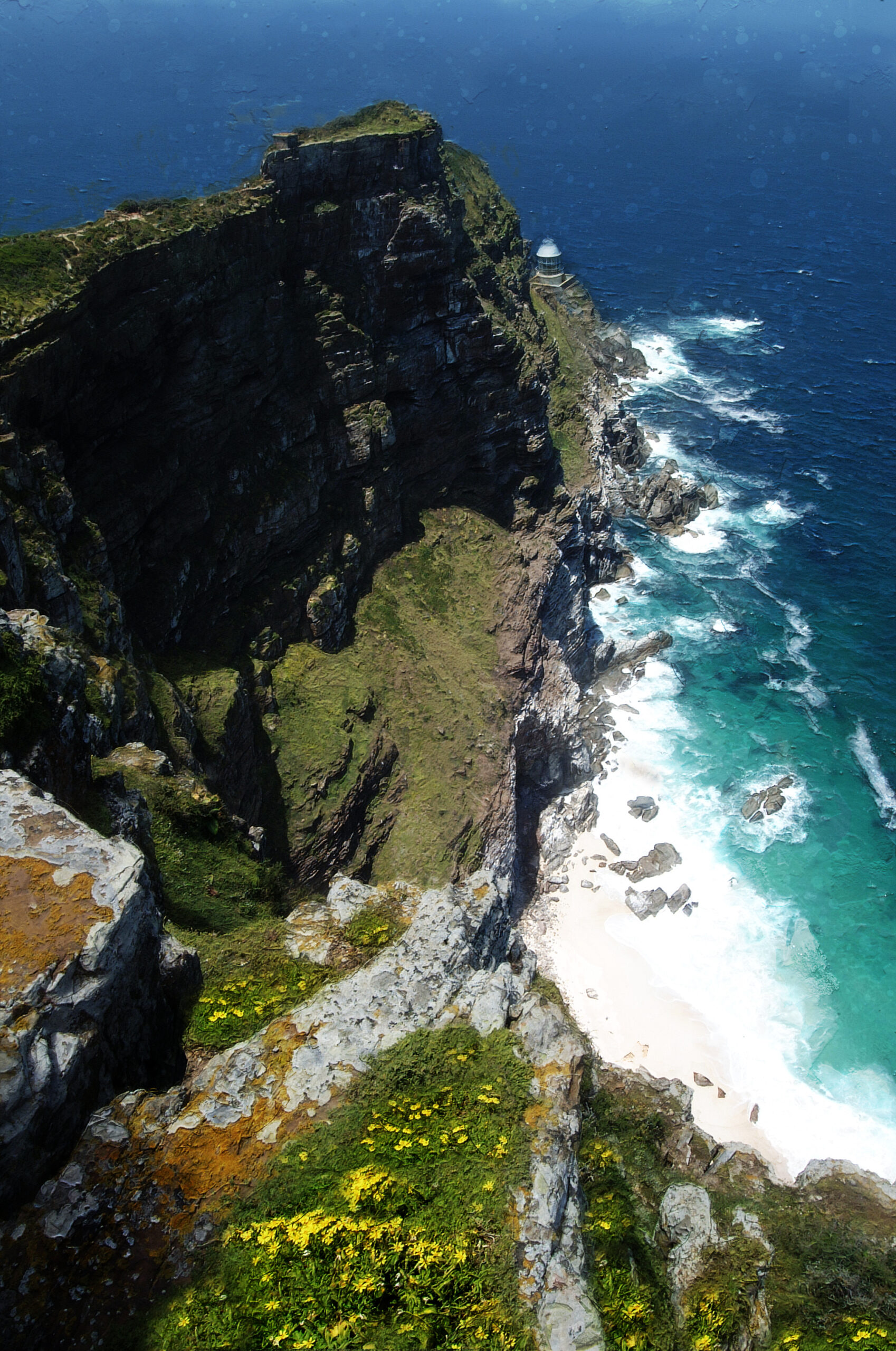
Geographical Overview — The Cape of Good Hope, South Africa
The Cape of Good Hope is a dramatic rocky headland at the southwestern tip of the Cape Peninsula in South Africa’s Western Cape province. Though commonly thought to be Africa’s southernmost point, that distinction actually belongs to Cape Agulhas, roughly 150 km (93 mi) to the southeast. Still, the Cape of Good Hope remains one of the most iconic headlands on the continent due to its maritime history, powerful landscapes, and sheer natural beauty.
Geographically, the cape sits where the cold Benguela Current from the South Atlantic meets the warm Mozambique-Agulhas Current from the Indian Ocean, creating turbulent seas and frequent storms—a meeting of elemental forces that has shaped both seafaring lore and the cape’s rugged coastlines.
The surrounding terrain is part of Table Mountain National Park and includes steep cliffs, rolling hills, windswept beaches, dunes, and native fynbos vegetation—a rich and endemic plant kingdom found only in this part of the world. This landscape is home to diverse fauna, from baboons and antelope to seabirds and marine life visible offshore.
Historically, the cape marked a major milestone in European exploration: the rounding of it in 1488 by the Portuguese navigator Bartolomeu Dias opened the first all-water route from Europe to Asia, ushering in an age of global maritime trade.
Artist Statement & Narrative for The Cape of Good Hope South Africa Lighthouse
~ Michael John Valentine, Original Painting on Canvas
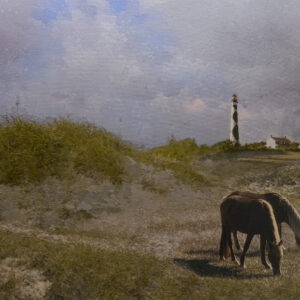
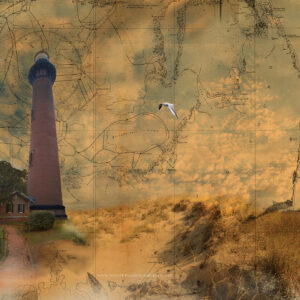
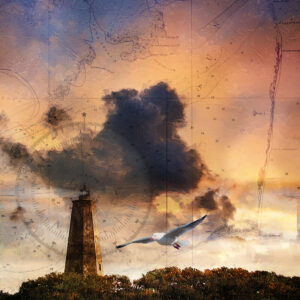
At the heart of your latest original painting lies more than just a coastal sentinel; it embodies the moment where earth and ocean collide in both fury and grace—the spirit of the Cape of Good Hope captured through brush and light.
Perched dramatically on the precipice of Africa’s storied cape, the lighthouse is a structure of purpose and poetry. It stands as a testament to human resilience against the tumultuous forces of nature—the pounding waves, the swirling currents, and the relentless winds that have shaped mariners’ lore for centuries. In your canvas, this lighthouse becomes more than a beacon of navigation; it is an emblem of endurance, of hope’s quiet luminescence in the face of elemental uncertainty.
Composition & Emotional Terrain
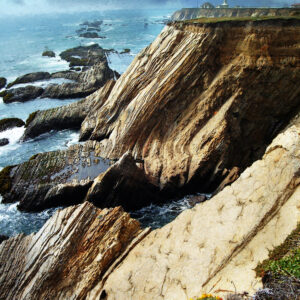
The composition draws the viewer in with a tension between stability and movement. The rugged cliffs evoke the ancient geology of the Cape Peninsula—rocks that have borne witness to endless tides and age-old winds. Against this austere backdrop, the lighthouse’s verticality anchors the scene, mirroring the courageous spirit of those who have braved these seas throughout history.
Your handling of light and shadow invites the eye to wander across textures that hint at time’s slow passage—each grain of sand, each gust of wind, each ripple in the ocean a chronicle of countless journeys. The sea itself rolls with energy and purpose, echoing the Cape’s reputation as a place of both peril and possibility. It is fitting that one of the world’s great maritime milestones—the first modern rounding of the cape by a European explorer—later gave way to centuries of maritime navigation that still honour this place.
Color & Mood
The palette resonates with coastal tones that balance serene hues and dramatic intensity. The deep blue-greens of the ocean, suggestive of the warm Mozambique-Agulhas currents meeting cooler waters, contrast with the chalky earth tones of the promontory. These colors reflect not only geographical truth but psychological depth—each brushstroke a thoughtful negotiation between calm and storm, shadow and illumination.
Perhaps what distinguishes this work most is your nuanced capture of atmospheric light: it is neither harsh nor sentimental, but transformative. Under your brush, light becomes a narrative device, carving pathways of mood across the canvas and inviting the viewer into a lived experience rather than mere observation.
Nature as Co-Author
Embedded in the landscape are subtler embodiments of the Cape’s rich biodiversity. The windswept fynbos—a plant community unique to the Cape Floristic Region—might be suggested in textured foreground strokes, speaking to a world teeming with life even in its most exposed reaches. These details remind us that the Cape of Good Hope is not just a maritime waypoint but a thriving ecological nexus, where diverse species have adapted resiliently to the interface of land and sea.
Silent yet present are the wildlife and birdlife that animate these coastal reaches—shadows glimpsed through a brush of ochre or hints of movement suggested at the periphery of the composition. The result is a canvas alive with both place and presence.
Cultural and Symbolic Resonance
There is a profound narrative lineage that accompanies a scene like this. For centuries, the Cape of Good Hope has invoked both fear and fascination, earning the old maritime nickname “Cape of Storms” before being renamed to reflect optimism about new marine routes. That rich duality—of challenge and hope—is woven into your artistic portrayal.
Your lighthouse stands as a symbol of guidance through uncertainty—an apt metaphor in both historical and psychological terms. Maritime history imbues the site with myth and meaning, from sailors’ ballads to legends like that of the Flying Dutchman, and these whispers of narrative tension are subtly mirrored in the dramatic interplay of sea, sky, and structure.
Conclusion: A Legacy in Light
In The Cape of Good Hope South Africa Lighthouse, the viewer encounters a landscape that transcends simple representation. Through masterful command of medium and mood, you have distilled the essence of one of the world’s most evocative coastal places—melding geography, history, and human aspiration into a luminous testament to endurance.
This painting invites the onlooker not just to see the Cape but to feel it: the salt on the breeze, the weight of history in the rocks, and the promise of light amid the vast, shifting rhythms of sea and sky. It is a work that speaks both to the universal human longing for guidance and to the specific wild beauty of one of Earth’s most remarkable terrestrial thresholds.