The purpose of art is washing the dust of daily life off our souls.” — Pablo Picasso
Sacred Mechanics
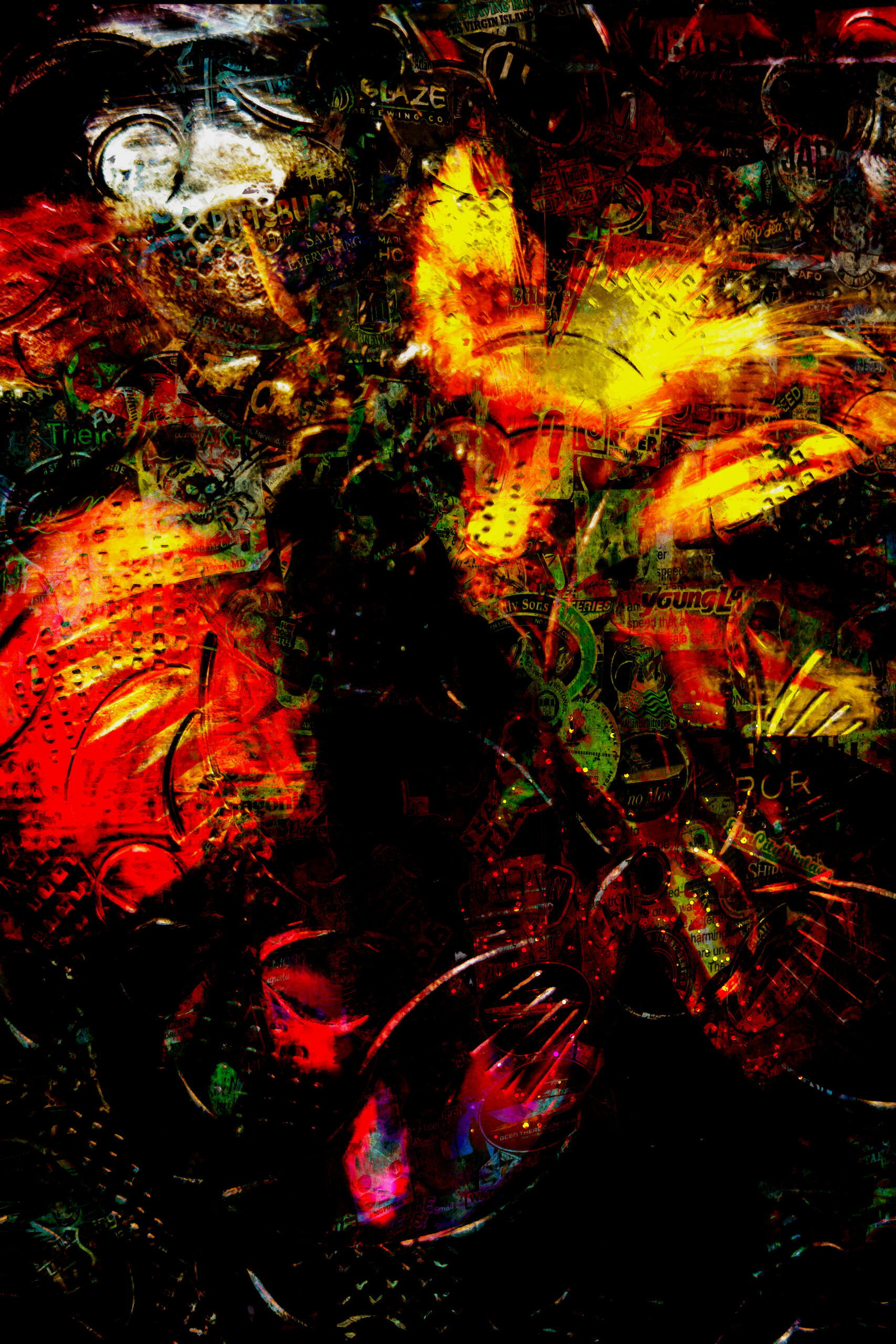
From the Series: Chromatic Insurrection- inspired by a trip to Key West Florida
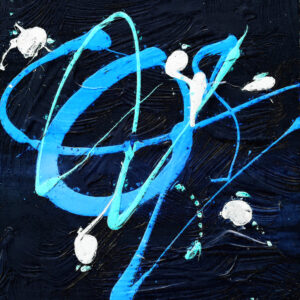
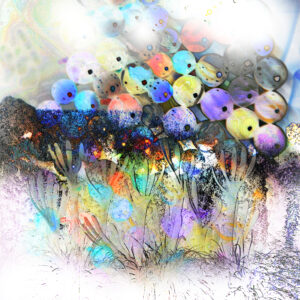
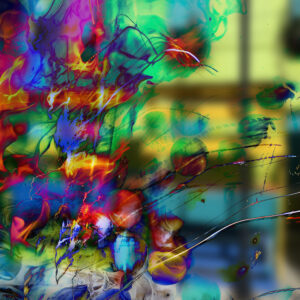
Sacred Mechanics l Echo Beneath The Surface l Residual Presence l Riot Architecture l Blue Violet Thesis
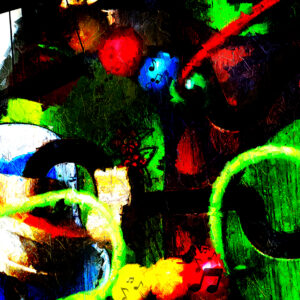
“Sacred Mechanics” occupies a powerful position within this body of work—where structure and spirituality intersect, and where the industrial language of form becomes something almost ritualistic. This is not simply a composition; it is a system. A constructed environment where movement, tension, and symbolism coexist beneath a surface that feels both engineered and alive.
At first encounter, the piece reads as dense and immersive. Dark passages anchor the composition, while bursts of incandescent color—fiery yellows, molten reds, and electric highlights—ignite the surface from within. There is a sense of internal illumination, as though the work is powered rather than painted. Mechanical suggestions emerge—circular forms, linear tensions, fragments that hint at machinery—but they never fully resolve into literal objects. Instead, they exist as echoes of function, implying motion, energy, and purpose.
This is where the title reveals its full weight. “Sacred Mechanics” is not about machines—it is about the systems that govern both creation and perception. It reflects a belief that even within chaos, there is structure; within abstraction, there is intention. The work becomes a visual metaphor for the unseen frameworks that hold everything together.
Central to achieving this complexity is the overpainting process.
Unlike traditional methods that prioritize clarity and finality, this approach embraces revision as a core principle. Each layer is both an addition and a challenge to what came before. Paint is applied, disrupted, partially removed, and reintroduced in a continuous cycle. This creates a surface that is not static, but evolving—one that carries the evidence of its own making.
In “Sacred Mechanics,” this process is especially evident in the interplay between opacity and transparency. Certain areas feel dense and impenetrable, while others allow glimpses into earlier states of the work. These moments of exposure are not accidental; they are curated. They provide depth, not just visually, but conceptually—reminding the viewer that what they see is only a fraction of what exists within the piece.
This layered history ensures that the work remains entirely one-of-a-kind. It cannot be replicated, not because of its imagery, but because of its process. Every decision, every revision, every moment of restraint or intervention contributes to a final result that is singular in its existence. This commitment to uniqueness is a defining characteristic of this practice, setting the work apart in a landscape often driven by repetition.
Michaels educational background plays a critical role in supporting this level of complexity. The confidence to push a composition to its limits—and then bring it back into balance—comes from a deep understanding of artistic fundamentals. Color relationships, spatial tension, and compositional structure are not left to chance. They are embedded within the decision-making, allowing the work to remain cohesive even at its most intense.
This balance between instinct and discipline is what gives “Sacred Mechanics” its authority. It feels immediate, yet intentional. Expressive, yet controlled.
Equally essential to the identity of the piece is the environment in which it is created— three live studios, each contributing a distinct dimension to the work.
Studio One serves as the conceptual foundation. It is where the initial framework is established—where composition is considered, layers begin to form, and the direction of the piece is defined. This space allows for precision and focus, ensuring that the work begins with a strong structural core.
Studio Two expands that core into physical reality. Designed for large-scale execution and more aggressive techniques, it is where the work gains its energy and finds the final glazing process. Here, the painting becomes immersive. Movement, scale, and material interaction take precedence, allowing the piece to evolve beyond its initial constraints. It is within this space that “Sacred Mechanics” develops its sense of power—its physical presence.
Studio Three introduces a completely different dynamic. As a curated smoking lounge and experiential environment surrounded by current cigar and bourbon works, it transforms the way the work is encountered. With custom-built humidors, a bar, and a controlled atmosphere, this space invites collectors into a deeper engagement with the art. It is here that “The Cigar Art Experience” unfolds—where the act of viewing becomes participatory, and where the sensory elements of smoke, light, and environment enhance the emotional impact of the work.
Together, these three studios form an integrated ecosystem—one that supports not only the creation of the work, but its presentation and experience. They reflect a level of intentionality that extends beyond the canvas, positioning fine art within a broader cultural and lifestyle context.
The Certificate of Authenticity (COA) further solidifies this framework. Each piece is accompanied by detailed documentation that records its origin, process, and placement within the body of work. The COA is more than verification—it is an extension of the piece itself. It provides collectors with confidence in the work’s authenticity and reinforces its status as a singular creation.
In a market where duplication is increasingly common, this level of documentation ensures that “Sacred Mechanics” remains anchored in originality.
Ultimately, the piece is about more than its visual impact. It is about the systems that shape it—the processes, environments, and knowledge that come together to bring it into existence. It reflects a practice that is both deeply personal and highly refined.
“Sacred Mechanics” does not simply depict energy.
It is built from it.
The Exhibition Canvas comes in 3 sizes and goes through several steps that include overpainting with acrylics, signing with acrylics on the front and a final glazing to protect the canvas before being rolled in a sealed tube then a box ( shipping is free in the USA )
The Matted Prints come in 3 sizes and are shipped in a box. ( shipping and handling is free in the US)
The Glossy Poster Print measures 16 x 24 and arrives in a sealed tube that is placed in a box. ( shipping is free in the US )
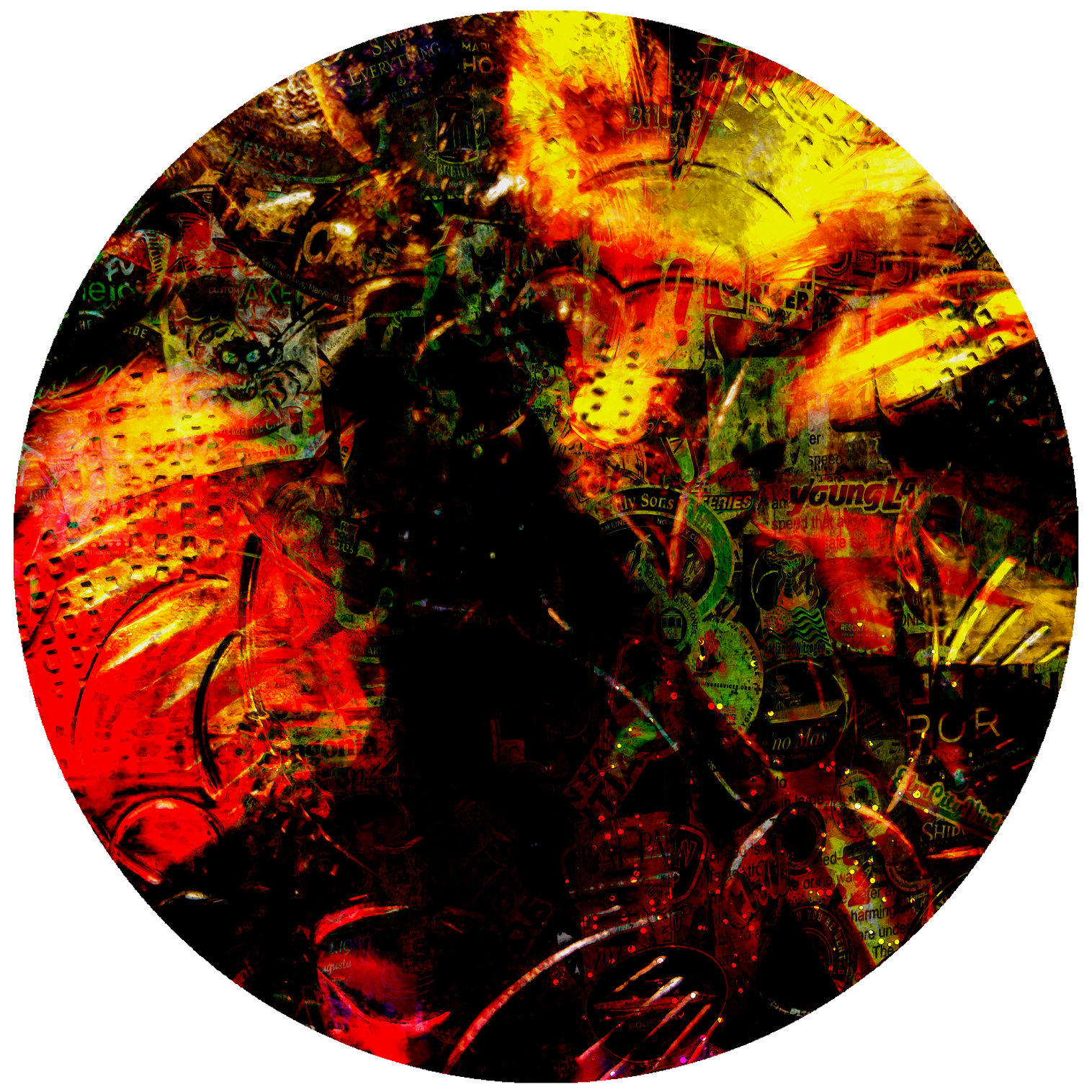
The 4 Inch Round Peel And Stick Decal is perfect for many applications beyond cars and comes in a sealed envelope ( shipped for free )