Color is a power which directly influences the soul.” — Wassily Kandinsky
Riot Architecture
From the Series: Chromatic Insurrection- inspired by a trip to Key West Florida
Sacred Mechanics l Echo Beneath The Surface l Residual Presence l Riot Architecture l Blue Violet Thesis
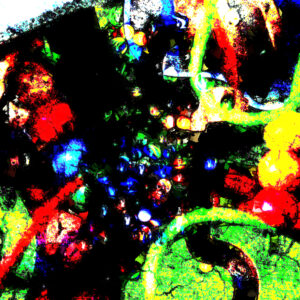
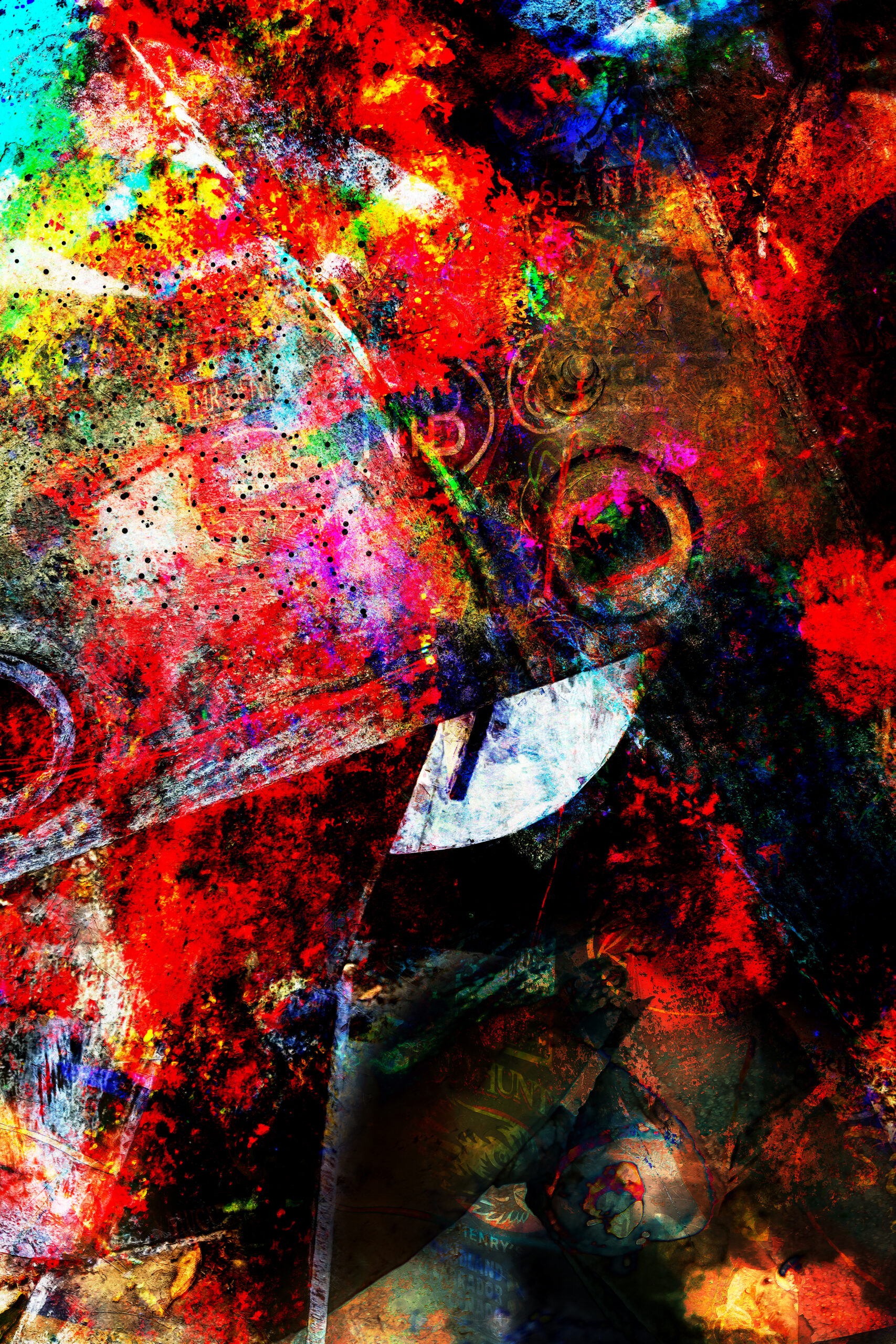
“Riot Architecture” stands as a controlled eruption—an intentional collision of structure and breakdown, where the language of abstraction becomes both the medium and the message. At first encounter, the work feels almost confrontational: a field dominated by searing reds, fractured by black voids and punctuated with bursts of electric color. But beneath that immediate intensity lies something far more disciplined—an engineered chaos that reveals itself slowly, layer by layer.
The red is not simply color here; it is pressure. It behaves like heat under compression, expanding and contracting across the surface. It carries echoes of warning, urgency, and raw human impulse. Against it, the black passages act as both interruption and architecture—voids that carve space, impose rhythm, and create the illusion of structural collapse. This interplay between saturation and absence forms the backbone of the composition, giving the piece its title: not just a riot of color, but a riot given form, a rebellion with underlying design.
What elevates “Riot Architecture” beyond pure abstraction is its textural complexity. The surface reads like a palimpsest—histories written, buried, and rewritten again. There are moments where fragments of visual language emerge: hints of typography, mechanical gestures, and ghosted imagery that seem to surface briefly before being overtaken. This is where the overpainting process becomes essential. Rather than treating each layer as a final statement, it’s used as a negotiation. Marks are laid down, resisted, obscured, and reasserted. The result is a surface that feels lived-in—worked, challenged, and resolved through tension rather than decoration.
The overpainting is not additive; it is reductive and selective. It demands restraint. In many areas, what remains visible is only what has survived a process of elimination. This creates a visual hierarchy that feels organic rather than imposed. The viewer senses that what they are seeing is not everything that exists within the work—only what has endured. That sense of buried depth is what gives the piece its psychological weight.
There is also a compelling duality between spontaneity and control. The gestural marks suggest immediacy—moments of instinctive action—yet the composition as a whole resists randomness. There is a clear orchestration at play. Diagonal tensions pull the eye across the canvas, while clustered areas of detail create focal pressure points. Even in its most chaotic passages, the work maintains balance. This is where a formal training and 40 years of experience quietly assert themselves. The piece does not rely on chaos; it harnesses it.
The educational foundation is evident not in overt references, but in the confidence of execution. The understanding of composition, color theory, and spatial dynamics allows the art to push the work to the edge without losing coherence. Many artists attempt this level of intensity, but without that underlying discipline, the result often collapses into noise. Here, the noise is intentional—it is shaped, directed, and ultimately resolved into something that feels complete.
“Riot Architecture” also operates within a contemporary visual language that resonates with both fine art and urban influence. There is a sense of cultural layering—echoes of signage, media, and industrial texture—that places the work firmly in the present moment. Yet it avoids becoming illustrative or narrative. Instead, it captures a feeling: the tension of modern existence, the overload of information, the constant negotiation between order and disruption.
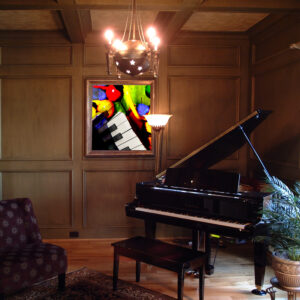
From a collector’s perspective, the piece holds significant presence. It is not passive; it demands engagement. It changes depending on distance—at scale, it reads as a unified force, while up close it reveals intricate detail and decision-making. This dual experience increases its longevity, ensuring that it continues to reveal itself over time.
The Certificate of Authenticity (COA) accompanying “Riot Architecture” reinforces its position as a serious, archival work. Each piece in this series is documented with precise details of its creation, including the layering process, materials, and signature overpainting methodology. The COA is not merely a formality—it is an extension of the work’s narrative, providing collectors with a tangible connection to its origin and ensuring its place within your evolving body of work. It also affirms the piece’s exclusivity, marking it as part of a limited and intentional series rather than an isolated experiment.
Ultimately, “Riot Architecture” is about tension held in equilibrium. It is the moment just before collapse—and the structure that prevents it. It reflects a practice that is not afraid of intensity, but also not dependent on it. Instead, it demonstrates control at the highest level: the ability to push material, color, and composition to their limits, and then bring them back into alignment.
This is not chaos. This is authorship.
The Exhibition Canvas comes in 3 sizes and goes through several steps that include overpainting with acrylics, signing with acrylics on the front and a final glazing to protect the canvas before being rolled in a sealed tube then a box ( shipping is free in the USA )
The Matted Prints come in 3 sizes and are shipped in a box. ( shipping and handling is free in the US)
The Glossy Poster Print measures 16 x 24 and arrives in a sealed tube that is placed in a box. ( shipping is free in the US )
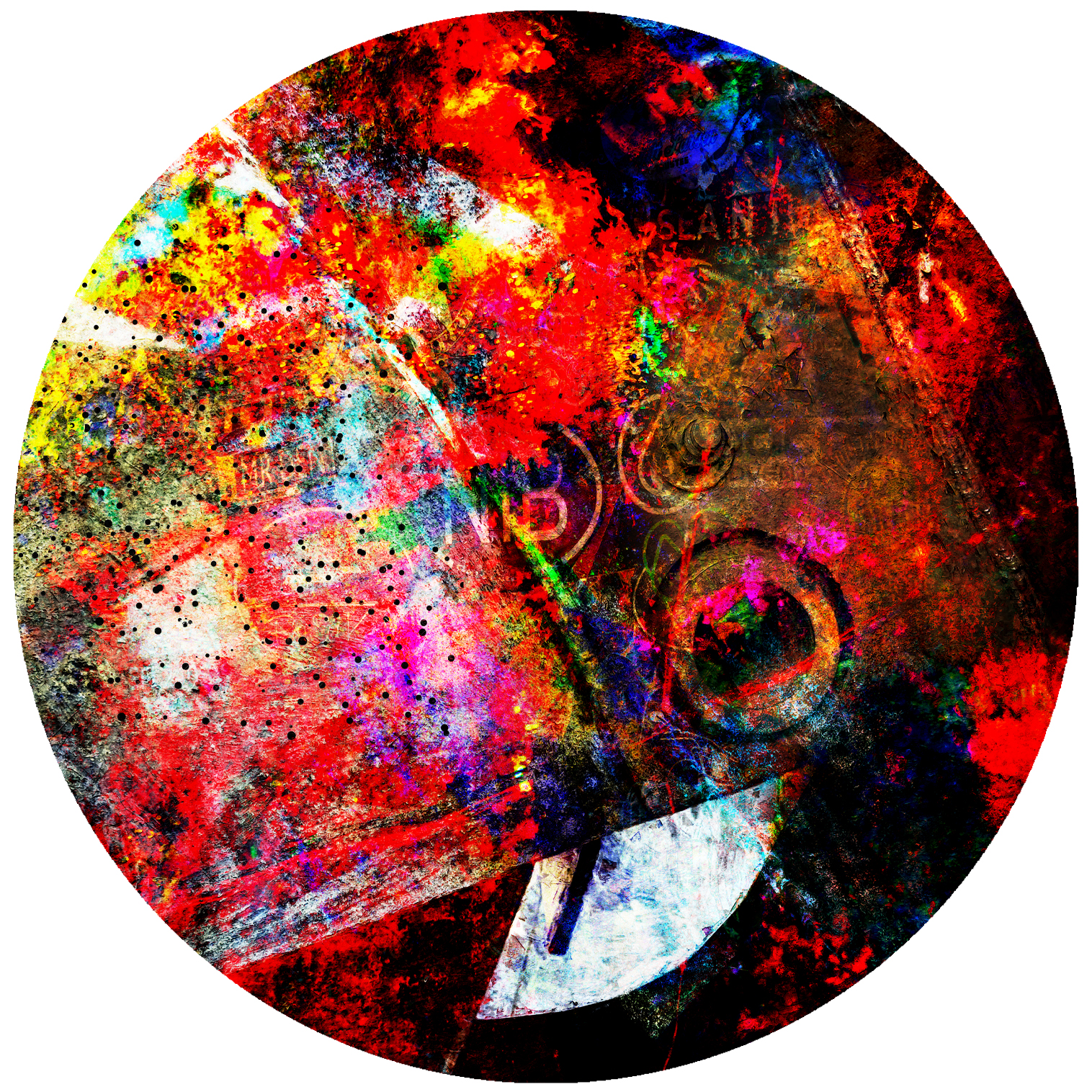
The 4 Inch Round Peel And Stick Decal is perfect for many applications beyond cars and comes in a sealed envelope ( shipped for free )