“Ziggy played guitar.” — David Bowie
There are certain albums in music history that stop being albums and become mythology. The Rise and Fall of Ziggy Stardust and the Spiders from Mars was one of them. It was not simply a collection of songs—it was theater, rebellion, fashion, identity, and sound wrapped into a singular artistic vision that permanently altered popular culture. Bowie created a character larger than life, yet strangely human, and through Ziggy Stardust he transformed performance into living art.
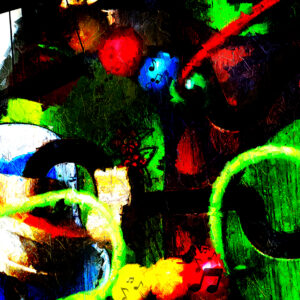
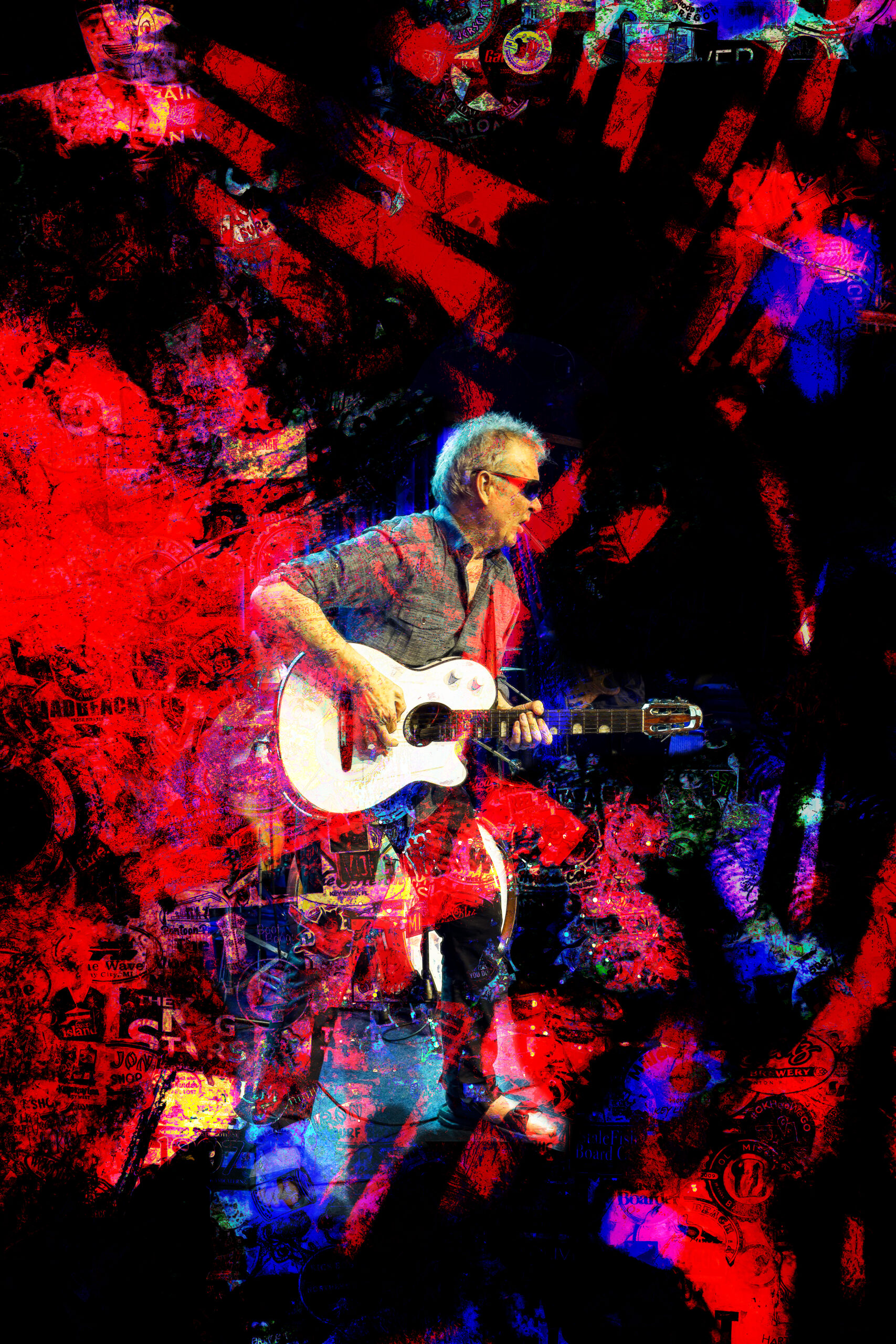
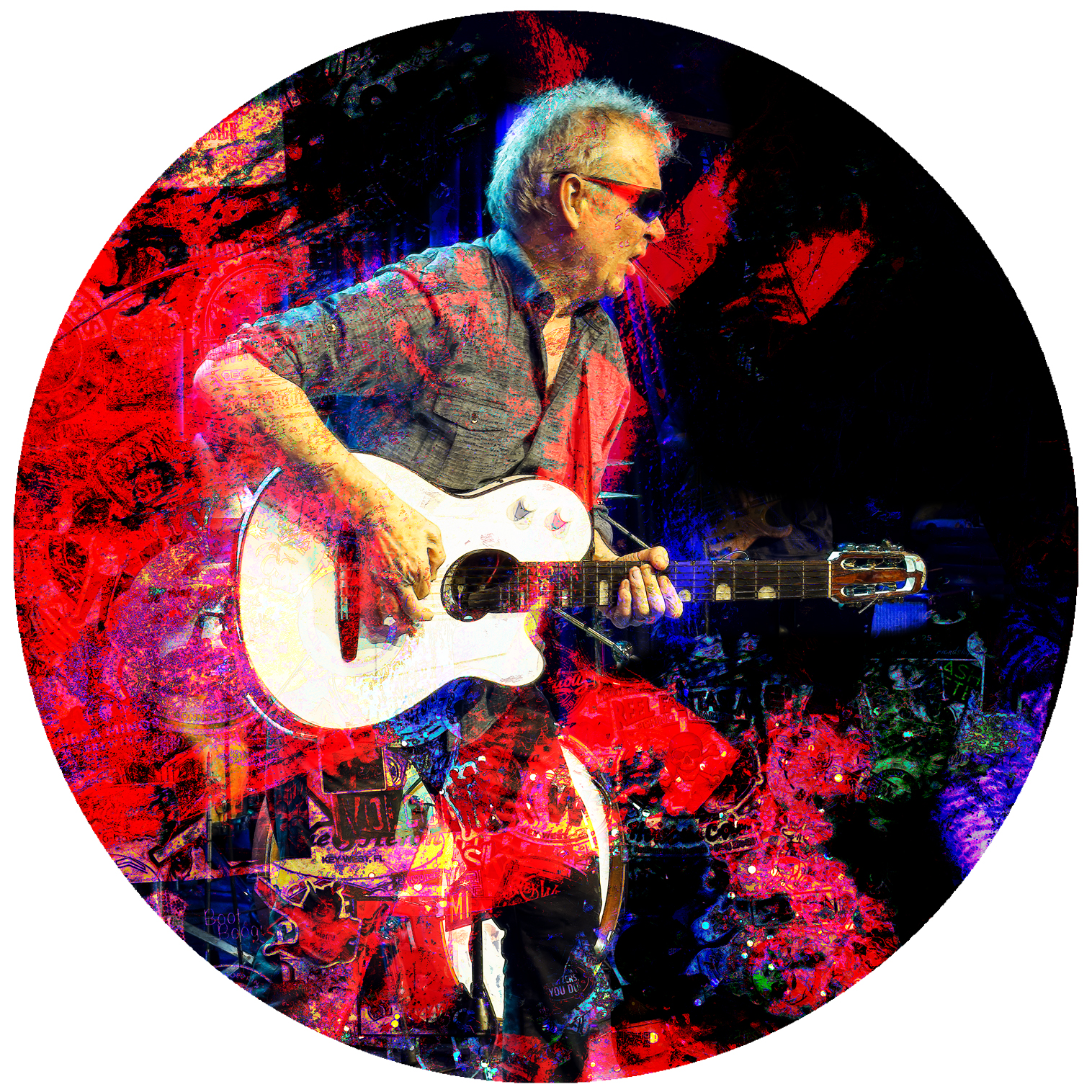
“Ziggy Played Guitar” channels that same electric collision of music, image, and raw creative energy. This overpainted work by Michael John Valentine is not merely an homage to Bowie’s glam-rock masterpiece; it is a study of artistic transformation itself. Like Bowie stepping onto a stage beneath blinding lights, Valentine approaches the canvas as both creator and performer—building layers, destroying them, and rebuilding them until emotion replaces perfection.
The piece exists somewhere between concert memory and abstract dreamscape. Guitar forms emerge and disappear beneath aggressive texture, atmospheric movement, and hand-finished detailing. The composition pulses with rhythm, almost like feedback rolling through an amplifier before the first note of a legendary performance. There is motion embedded into the paint itself. Nothing feels static. Every mark suggests sound.
Created through Valentine’s signature overpainting process, the artwork carries the physical evidence of its own evolution. Unlike mass-produced prints or digitally generated imagery, each surface has been altered repeatedly by hand. Layers are applied, partially obscured, scraped back, rebuilt, and refined again. Earlier movements remain buried beneath the final composition like echoes beneath a finished song. The result is depth that cannot be replicated mechanically.
That process mirrors the spirit of Bowie himself. Ziggy Stardust was never clean or polished in the traditional sense. It was dangerous, theatrical, emotional, and unpredictable. Valentine embraces that same philosophy in paint. The work intentionally preserves traces of experimentation and imperfection because that is where authenticity lives. You are not looking at a sterile reproduction of an idea—you are looking at evidence of artistic risk.
Michael John Valentine’s background in fine art and decades of studio practice are foundational to this approach. Educated formally in art and design, Valentine developed a strong understanding of classical composition, color theory, and mixed-media construction long before establishing his signature contemporary style. Those academic foundations remain visible beneath the expressive surface of his work. There is structure beneath the chaos. Balance beneath the spontaneity.
Over time, Valentine refined a process that merges traditional fine-art training with modern layered abstraction. His studio practice became less about producing images and more about building atmosphere and emotional resonance. The result is a body of work that feels simultaneously contemporary and timeless—pieces that carry the sophistication of gallery art while remaining emotionally immediate.
In “Ziggy Played Guitar,” texture becomes part of the storytelling. Metallic undertones flash beneath darker passages like stage lights hitting chrome hardware. Fragments of linework resemble musical notation dissolving into distortion. Areas of controlled detail collide against raw gestural movement, creating tension throughout the piece. It feels alive because it was constructed physically, not digitally. Every inch bears the presence of the artist’s hand.
Collectors are increasingly drawn to works like this because they understand the difference between decoration and originality. An overpainted canvas carries individuality at the material level. No two pieces develop identically because no two painting sessions unfold identically. Slight changes in pressure, layering, movement, and intuition create one-of-one outcomes impossible to duplicate. That uniqueness is central to Valentine’s studio philosophy.
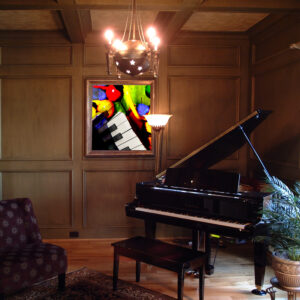
The floating presentation further enhances the work’s gallery presence. Rather than confining the image, the framing creates visual separation between the artwork and surrounding space, allowing the composition to breathe like an object suspended in motion. It gives the piece a sculptural quality that changes subtly with lighting and viewing angle.
Yet beyond the technique and presentation, the emotional center of the work remains music itself—specifically the transformative power of performance. Bowie understood that music could create identity, alter perception, and blur the line between fantasy and reality. Valentine captures that sensation visually. The painting feels like standing near a stage moments before a concert begins, when anticipation becomes almost physical.
There is also nostalgia embedded within the piece, though not in a sentimental way. It recalls an era when albums were worlds unto themselves and artists were willing to reinvent everything in pursuit of originality. Bowie’s Ziggy Stardust persona represented fearless self-creation, and that spirit continues to resonate through contemporary art, fashion, and culture decades later. Valentine does not imitate that legacy—he translates its energy into visual form.
For collectors of music-inspired contemporary art, “Ziggy Played Guitar” occupies a rare space. It functions simultaneously as fine art, cultural reference, and handcrafted object. It speaks to Bowie enthusiasts, modern art collectors, and anyone drawn to work carrying both sophistication and emotional voltage.
Most importantly, the piece embodies something increasingly uncommon in modern creative culture: authenticity through process. The visible layers, physical texture, and overpainted surface remind the viewer that meaningful work is built over time through experimentation, revision, and courage. That philosophy links Bowie’s music to Valentine’s studio practice in a surprisingly powerful way.
Like the best records, the artwork reveals more the longer you live with it. New textures emerge under changing light. Hidden passages begin to surface. Details once overlooked suddenly become central. It evolves through observation.
And perhaps that is the most fitting tribute to Ziggy Stardust of all.
Not simply spectacle.
Transformation.