“Every composition has a rhythm. I paint to discover the beat that already exists within the forms, colors, and movement of the moment.”
— Michael John Valentine
Organic Rhythms
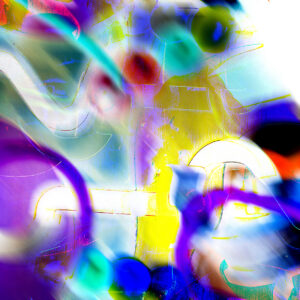
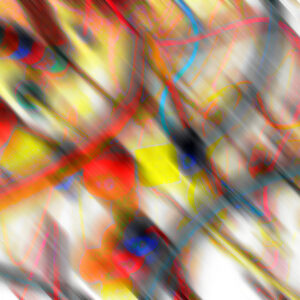
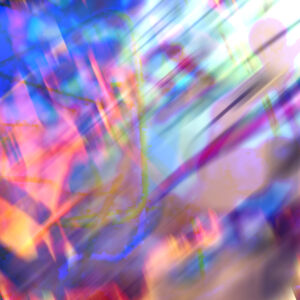
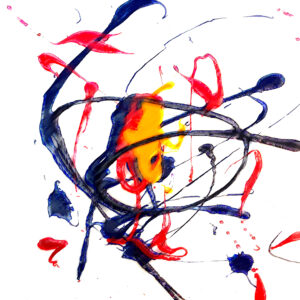
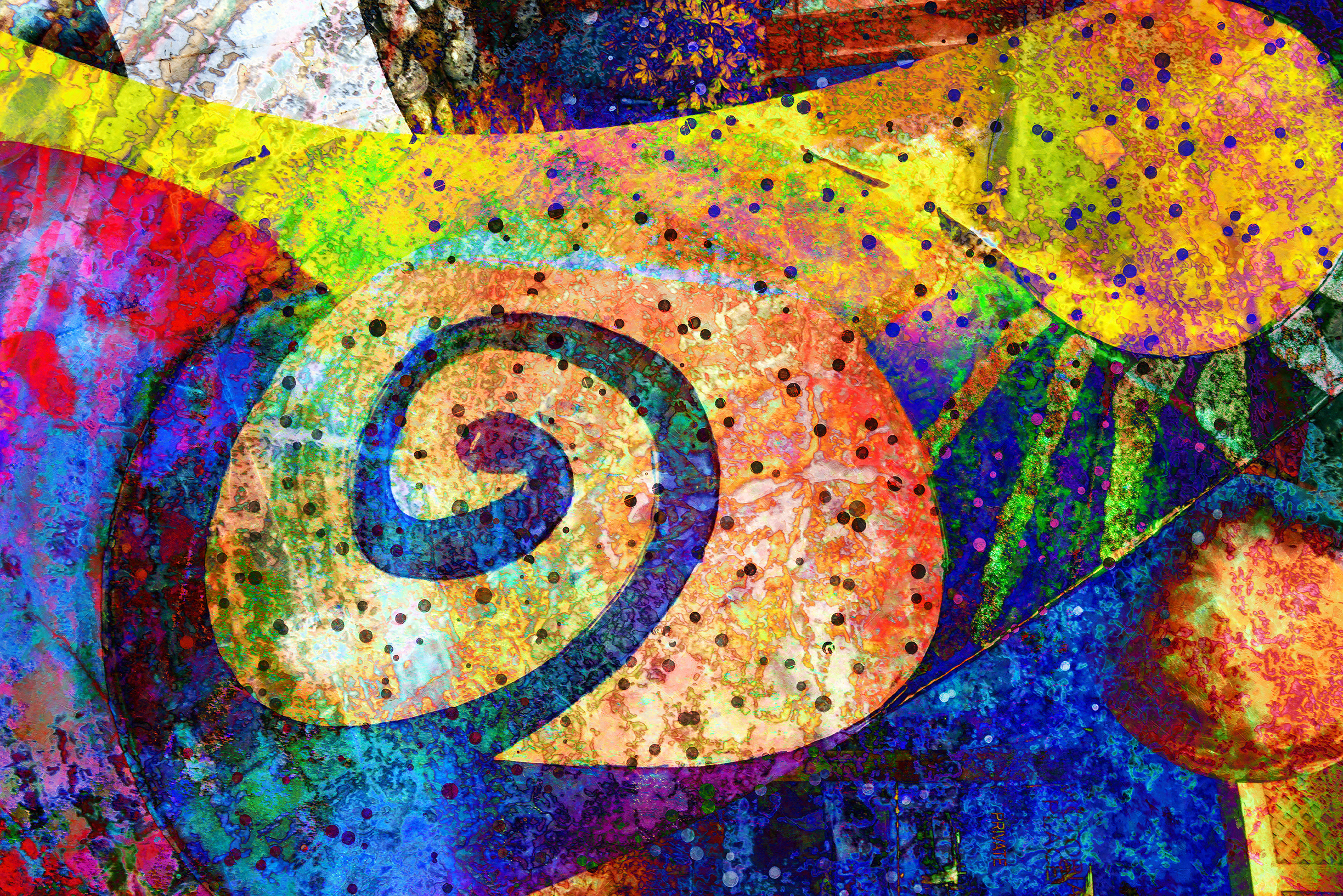
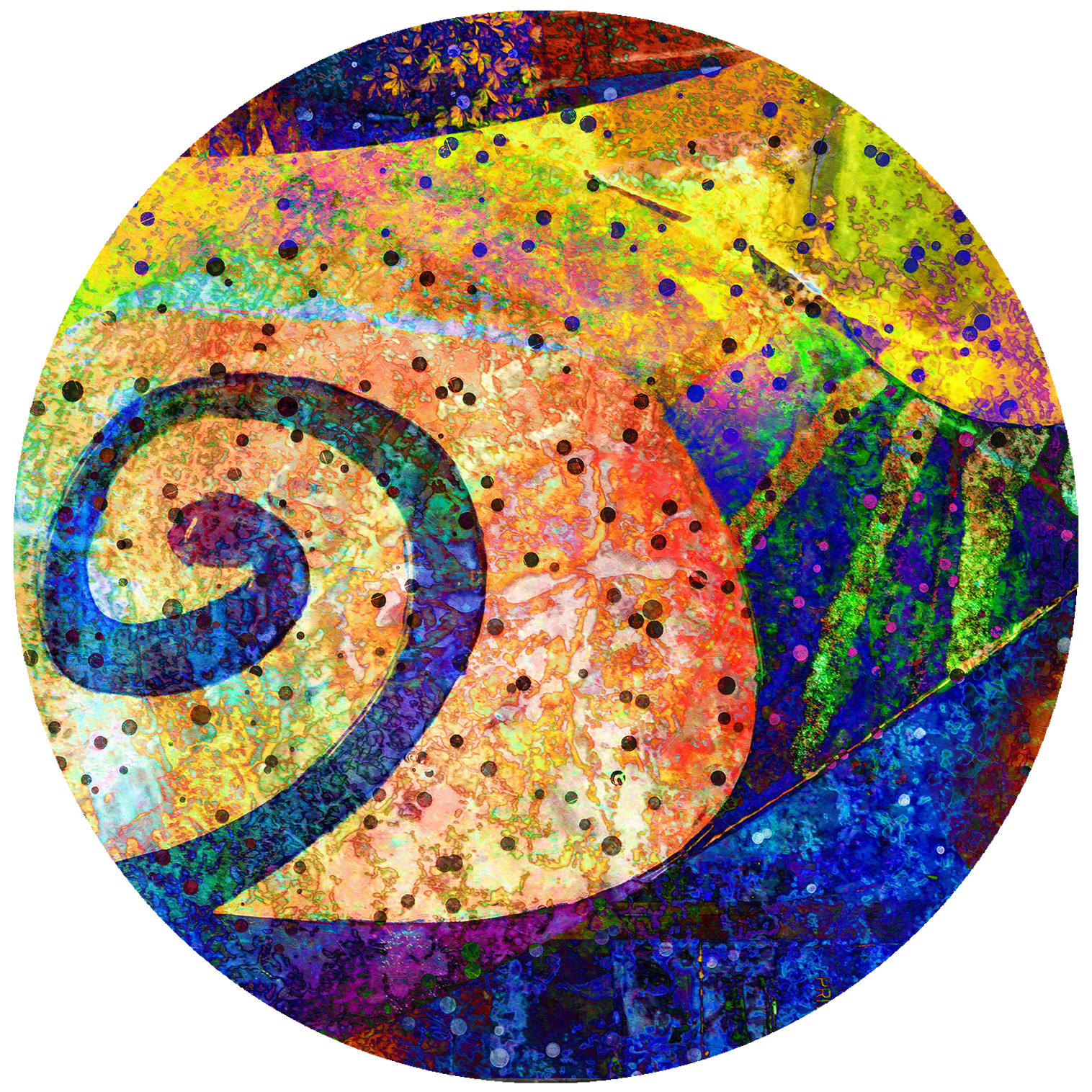
Organic Rhythms explores the natural cadence that exists within form, color, movement, and space. Rather than presenting a literal interpretation of nature, this body of work looks beneath the surface to discover the visual patterns and recurring movements that give the natural world its energy. Curving forms intersect, colors shift and respond to one another, and layered shapes create a sense of movement that can be experienced much like rhythm in music.
For me, rhythm has always been an important part of creating art. Music does not need to remain still to be beautiful, and neither does a painting. A musical composition can move between repetition and variation, quiet passages and powerful ones, creating a continuous sense of movement. Organic Rhythms approaches the canvas in much the same way. Lines, shapes, textures, and color become visual notes, while the overall composition becomes a kind of visual score.
The work begins with an intuitive response to the canvas. Rather than determining every element before the painting develops, I allow the composition to evolve. One shape suggests another. A color introduces a new possibility. A curve may lead the eye across the surface and create an unexpected relationship with another form. As these elements accumulate, the painting begins to establish its own internal rhythm.
That rhythm is not necessarily symmetrical or predictable. Nature rarely is. The patterns found in waves, leaves, clouds, branches, flowers, geological formations, and even the movement of water are constantly changing. There may be repetition, but there is also variation. There may be structure, but there is also spontaneity. Organic Rhythms draws from that balance.
Color plays an especially important role in establishing the movement within these compositions. Rather than functioning simply as an identifier of an object, color becomes an active participant. Contrasting colors can create visual tension, while related colors can create a sense of continuity. A concentrated area of color may become the visual equivalent of a strong musical note, while quieter passages allow the eye to pause before continuing through the composition.
Layering adds another dimension to this visual language. Acrylic paint allows me to build surfaces gradually, creating relationships between what is immediately visible and what exists beneath it. Earlier marks can remain partially exposed, creating depth and a sense of history within the painting. New layers may soften, interrupt, or redefine what came before them. The process becomes less about covering the canvas and more about allowing each stage to contribute to the final composition.
The resulting forms are intentionally open to interpretation. I am not interested in telling the viewer exactly what to see. A particular shape might suggest a botanical form to one person, an underwater movement to another, or an entirely abstract sensation to someone else. The ambiguity is part of the experience. The paintings are designed to invite the eye to move, explore, and make connections.
There is also a sense of movement that comes from the way the forms interact. Curves may sweep across the canvas, circular shapes may repeat at different scales, and layered passages may create the impression that the composition is continuing beyond its physical boundaries. The eye is encouraged to travel rather than settle in a single location.
This idea of movement is central to the concept of Organic Rhythms. The paintings are not static arrangements of individual elements. They are interconnected compositions in which each form contributes to the overall cadence. Like instruments within an ensemble, individual elements can have their own character while still belonging to a larger composition.
My approach to painting has developed through decades of working with color, texture, composition, photography, and experimentation. With Organic Rhythms, those experiences come together in a body of work that is less concerned with representing a particular place or object and more concerned with capturing a feeling of movement and connection.
There is something universal about rhythm. We experience it in music, in the changing seasons, in the movement of water, in the growth of plants, in the repetition of waves, and in the natural patterns that surround us every day. Even without consciously recognizing it, we respond to rhythm constantly.
I see abstract painting as an opportunity to translate that experience into another language.
Organic Rhythms is therefore not simply an exploration of organic shapes. It is an exploration of how those shapes can interact to create energy, balance, repetition, contrast, and movement. Each painting develops its own visual cadence, allowing color and form to move together across the canvas.
Ultimately, I want these works to be experienced rather than explained. The viewer can follow a sweeping line, pause within a field of color, discover a repeating form, or simply allow the composition to unfold gradually. There is no single path through the work.
Like a piece of music, the experience can change with each encounter.
The rhythm may be energetic or restrained. It may feel spontaneous or deliberate. It may recall something familiar without ever becoming literal. What matters is the movement between the elements—the spaces, contrasts, repetitions, and transitions that allow the painting to breathe.
Organic Rhythms is my exploration of that visual beat: the quiet pulse that connects form, color, movement, and emotion, and the idea that sometimes the most compelling stories in art are found not in what a painting depicts, but in the rhythm it creates within us.