A Brief History of Savannah
Situated on the banks of the Savannah River in the southeastern United States, Savannah, Georgia is one of the most historically resonant cities in America. Founded in 1733 by General James Edward Oglethorpe, Savannah became the first settlement in what would become the colony and later state of Georgia — designed not merely as a colonial outpost but as an idealized urban community. Its original plan, known as the Oglethorpe Plan, laid out a repeating pattern of squares and wards that balanced civic, religious, and residential life with green public space — a bold urban vision that still shapes the city today.
From its earliest days, Savannah was a place of strategic and cultural importance. As the seat of colonial government and the first state capital of Georgia, it stood at the crossroads of trade, conflict, and cultural exchange. Savannah’s port was central to the Atlantic world economy — a hub for rice, tobacco, and cotton export — and a point of arrival for immigrants, ideas, and, tragically, enslaved Africans whose labor underpinned much of the region’s early prosperity. Today, the city’s Historic District — one of the largest National Historic Landmark districts in the nation — reflects layers of these stories through Georgian, Greek Revival, Victorian, and antebellum architectural wonders.
Savannah also occupies a unique place in American military history. During the American Revolution, it was the scene of fierce battles and sieges, notably in 1779 when French and American forces attempted to wrest control from the British. In the Civil War, the city was a Confederate stronghold until General William Tecumseh Sherman’s “March to the Sea” culminated in its capture in December 1864, a pivotal moment that symbolized the inexorable Union advance.
Yet history in Savannah is not static — it is lived and contested. The city’s elegant squares shaded by live oaks draped in Spanish moss, its cobblestone River Street and vibrant cultural festivals like its century-old St. Patrick’s Day parade, all serve as living testaments to both communal memory and evolving identity.
Savannah Steps — A Reflection in Paint
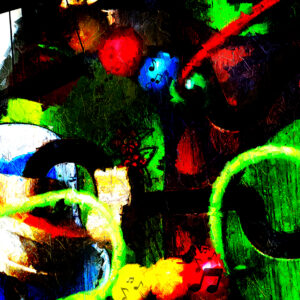
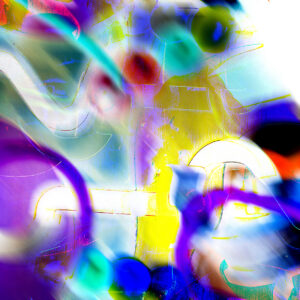
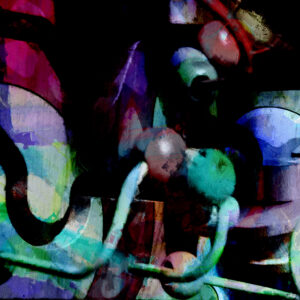
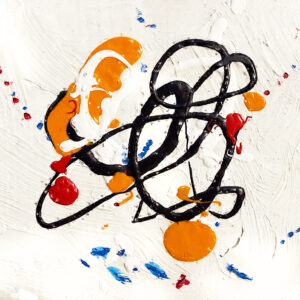
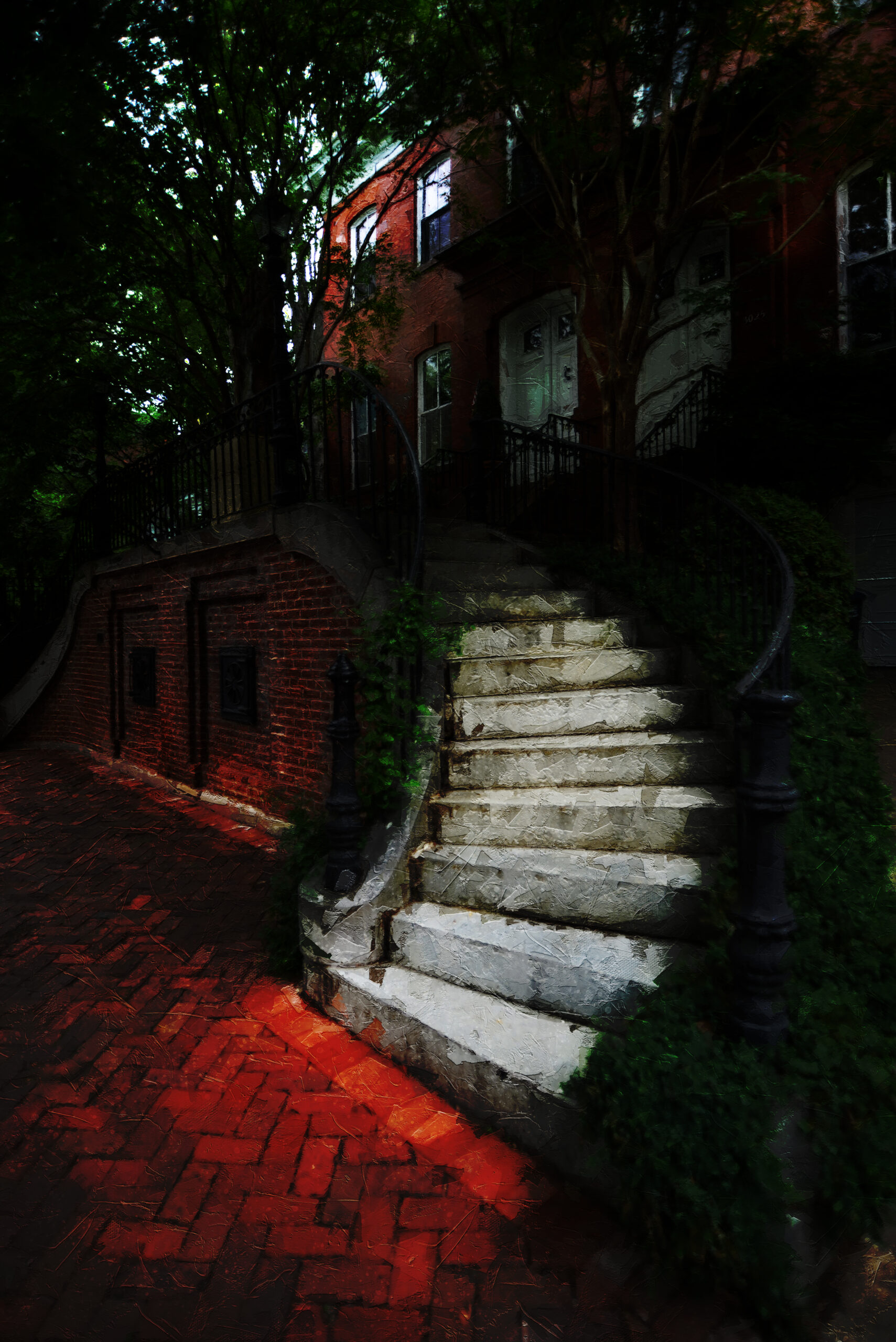
Savannah Steps emerges from this rich tapestry of history, memory, and ambience — not as a literal depiction of place, but as an emotive articulation of what Savannah evokes: rhythm, depth, and the echo of footsteps across time. Conceived and executed by contemporary abstract artist Michael John Valentine, this original painting stands at the intersection of cerebral design and visceral response. It is, in every sense, a work that transcends canvas to become experience — a dialogue between viewer and place, history and present, emotion and form.
This piece’s title — Savannah Steps — is itself an invitation. It conjures images of aged brick sidewalks, moss-draped oaks bending over cobbled streets, and the slow, unhurried progression of time that defines Savannah’s historic quarters. Yet Valentine’s approach is not illustrative; rather, it is interpretive. Here, abstraction becomes the language through which memory, sensation, and imagination converge.
Where representational art might anchor a viewer in recognizable landmarks, Valentine employs an abstract vocabulary — gesture, color, texture, spatial tension — to render the essence of place. The painting can be thought of as a sequence of lived impressions: the cadence of footsteps echoing beneath oak canopies; the felt warmth of Southern light shifting through green quietude; the layered histories embedded in every square and plaza. In this way, Savannah Steps articulates not the geography of Savannah, but its soul.
At a technical level, the composition is a masterful interplay of contrasts and harmonies. Layers of overpainted surface create depth and shifting viewpoints, inviting the eye to travel across planes of pigment as if navigating streets in a dream. Subtle stratifications of hue — perhaps suggestive of afternoon light on aged brick, or the muted greens and umbers of historic squares — engage the senses without dictating interpretation. Every viewing becomes a new encounter, every glance a renewed story.
This method — layering, reworking, listening to the material — aligns with Valentine’s broader artistic philosophy: that art should be felt as much as seen. His works are constructed not from photorealistic mimicry, but from a deep well of observation, memory, emotion, and intuition. Each brushstroke carries the weight of lived experience, refined by more than half a century of practice and reflective craftsmanship. This is art not of surface but of substance.
Collectors of contemporary abstraction are often drawn to works that respond to this complexity — pieces that operate both as visual statements and as repositories of nuance. Savannah Steps is precisely such a work: a painting that reveals new subtleties with time, one that rewards contemplative viewing and sustained engagement.
Indeed, what sets this piece apart — and what makes it a significant addition to any discerning collection — is its balance. There is complexity without cacophony, depth without opacity, motion without violence. The painting invites dialogue between viewer and canvas, encouraging reflection rather than dictating conclusion.
In an age where much of visual culture is dominated by the literal and the immediate, Valentine’s abstraction poses a quiet challenge: to slow down, to feel, to participate in the act of seeing. Savannah Steps is not just an artwork — it is an encounter. It is both a mirror and a window: a mirror in that it reflects our inner landscapes of memory and emotion, and a window in that it opens onto something greater than itself: the resonant rhythms of a city like Savannah, steeped in history, built on layers of human experience, and ever alive in the imagination.
Owning Savannah Steps is therefore not merely possessing an object; it is entering into an ongoing conversation — between place and painter, past and present, texture and time.