
“The object isn’t to make art, it’s to be in that wonderful state which makes art inevitable.”
— Robert Henri
At first glance, these words by Robert Henri might seem paradoxical to anyone who has stood before a blank canvas, brush in hand, asking simply how to make art. But Henri’s statement — distilled, succinct, and profound — reframes creativity not as an act of production but as a lived condition of the artist’s consciousness. The quote speaks to something deeper than technique, execution, or object-making; it speaks to the being of the artist and the inner alchemy that transforms experience into expression.
Henri (1865–1929), a seminal figure in American art and leader of the Ashcan School, was not interested in art as a commodity or a checklist of stylistic flourishes. His life and teaching urged artists to reject mere craft and instead cultivate a state of awareness — a receptive, energized, and mindful state where creativity emerges not as a forced endeavor but as an inevitable flowering of the self.
I. Art as an Inevitable State of Being
Henri’s insight emphasizes presence — being so attuned to the inner rhythms of thought and feeling that art isn’t something you make, but something that naturally unfolds from you. In this view, art is not the product of labor, but the by-product of a particular harmony between mind, emotion, observation, and impulse.
When an artist enters “that wonderful state,” they are neither forcing form nor controlling outcome. Instead, they are receptive, open, and fluid — attuned to intuition, nuanced perception, and the unconscious inspirations that bubble to the surface when the self is fully present. It is a state akin to flow, where time dissolves and the border between artist and art dissolves with it.
For many creatives, this state is recognizable: moments when brush moves without hesitation, where ideas cohere effortlessly, where the inner and outer worlds align. The art created in such states feels inevitable because the artist has moved beyond self-doubt, constraint, and calculation. The act itself has become a natural expression of being.
Henri’s ethos resonates with artists across disciplines, from painters to sculptors to writers: the goal is not mastery of technique but mastery of mindfulness, of allowing one’s inner life to engage with the world with intensity, curiosity, and openness.
II. “Coming Around”: A Modern Echo of Henri’s Philosophy
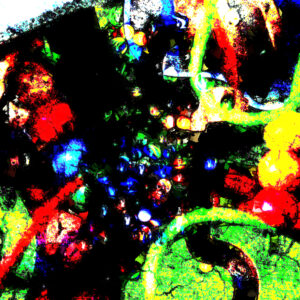
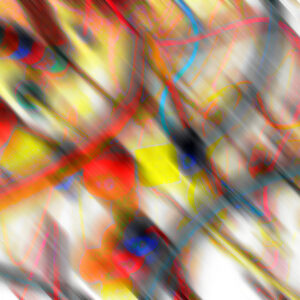
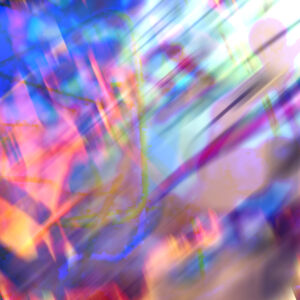
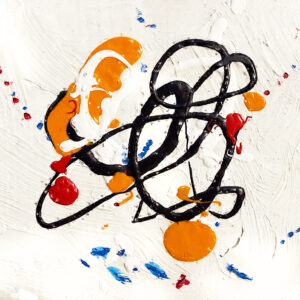
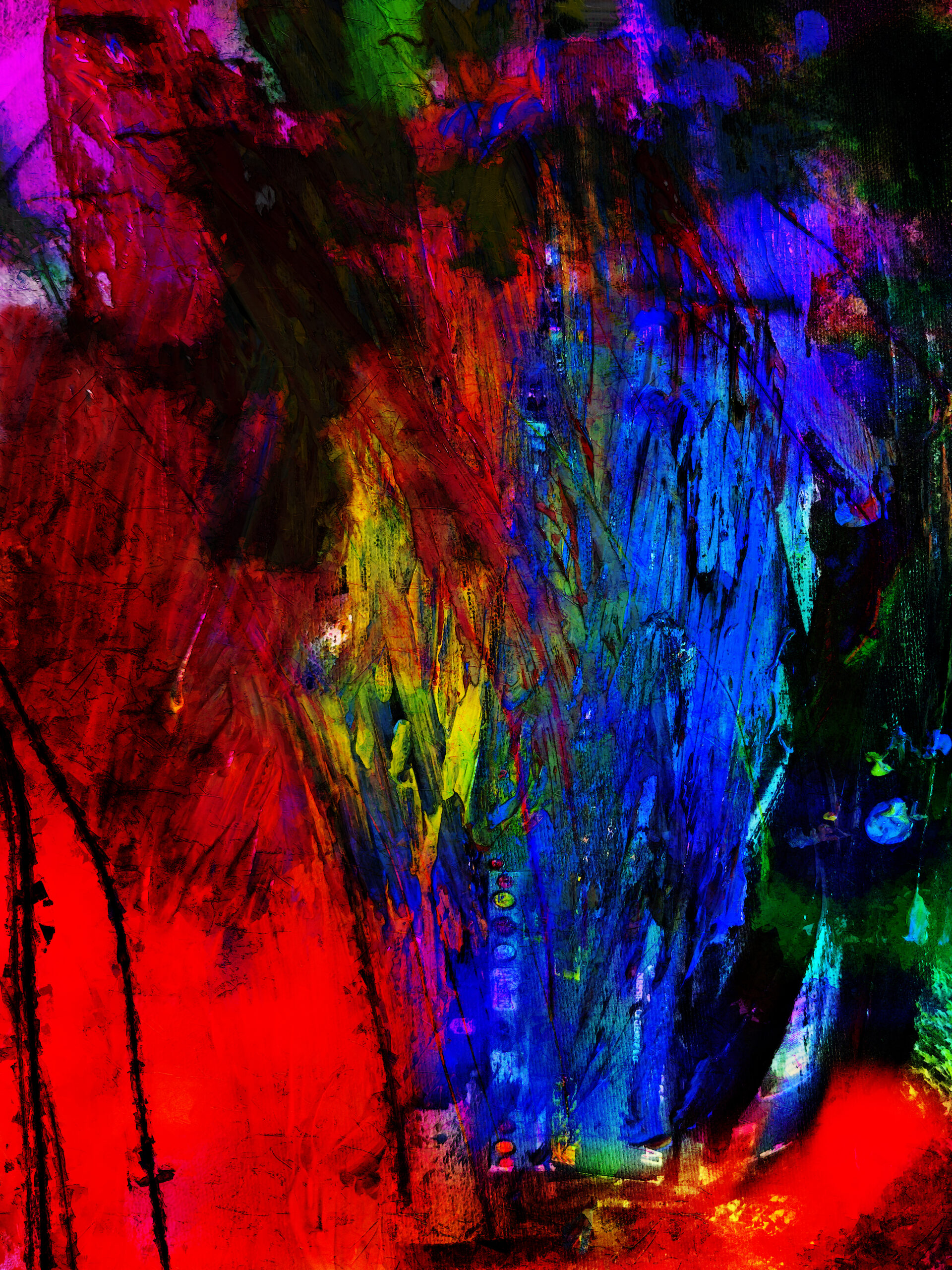
Take Coming Around Abstract Modern Art Painting Print Poster or Decal by Michael John Valentine — an artwork available in varied tactile and visual formats, from petite decals to expansive overpainted canvases.
At surface level, the piece is a celebration of contemporary abstract aesthetic: bold colors, layered brushwork, and a composition that rewards both close study and ambient appreciation. But when viewed through Henri’s lens, Coming Around becomes more than a visual spectacle — it becomes a portal into that state Henri describes.
Valentine’s work, like much fine abstract art, doesn’t illustrate a specific narrative so much as evoke a cognitive and emotional experience. Its forms do not delineate objects but cultivate atmosphere. Its gestures are cues, not commands. In abstract works like this, the viewer is invited into the same state of receptivity that Henri urged of creators — where personal associations, mood, and instinct converge.
This is not art that announces itself with declarative storytelling; it arises quietly within the viewer’s psyche. One doesn’t merely see it — one feels it, and in that feeling, the art reveals itself.
III. The Artist’s Inner Condition
Henri’s philosophy places the origin of art inside the artist’s inner world rather than in the external act of creation. He believed that being an artist means becoming increasingly capable of sustained attention, fearless self-expression, and emotional honesty. In his teachings, technique serves experience — not the other way around.
This viewpoint also collapses the dichotomy between life and art. For Henri, art is not a separate pursuit but the lived expression of life — its moment-to-moment energy, its pains, joys, curiosities, and depths. “Art is simply a result of expression during right feeling,” he wrote in another context, underscoring that creative work is always born of internal alignment.
Under this philosophy, producing a painting like Coming Around is not a technical act but a manifestation of vitality and awareness. The strokes on the canvas are not simply marks; they are the imprint of a state of mind — arrested, articulated, and shared.
IV. Inevitable Creativity in the Modern Context
Henri’s quote has resonance far beyond his early 20th-century milieu. In an age dominated by productivity metrics and social media validation, it reminds both artists and appreciators that art’s true source is not external recognition or output quotas, but interior awareness and emotional truth.
Coming Around — whether experienced as a glossy poster or a gallery-wrapped canvas — embodies this ethos through its invitation to pause, reflect, and enter a contemplative state. The piece does not insist on interpretation; it invites experience. And it is in that experience — that receptive space — where art inevitably emerges.
This is why abstract art, at its best, can be both elusive and powerful: it mirrors Henri’s notion of art as a state rather than a thing. The viewer doesn’t decode meaning so much as encounter presence. The piece becomes a mirror of the viewer’s own consciousness, catalyzing those quiet yet transformative moments when art feels less like a product and more like an event — a shared point of contact between creator, work, and observer.
V. Conclusion: Art as Presence
Henri’s insight — that art is an inevitable consequence of a certain state of being — reframes creativity as a condition rather than a task. It invites artists to cultivate internal receptivity, emotional courage, and mindfulness. And it invites viewers to approach artworks not merely as objects but as experiences that reflect states of mind.
In works like Coming Around, this idea finds a visual echo: abstract forms that do not represent but evoke, that do not instruct but invite. The art becomes inevitable not because of meticulous craftsmanship alone, but because it emerges from — and beckons us into — that “wonderful state” where creativity is not forced, but felt.