“The longer you look at an object, the more abstract it becomes, and, ironically, the more real.”
— Lucian Freud
Leaving Your Mark
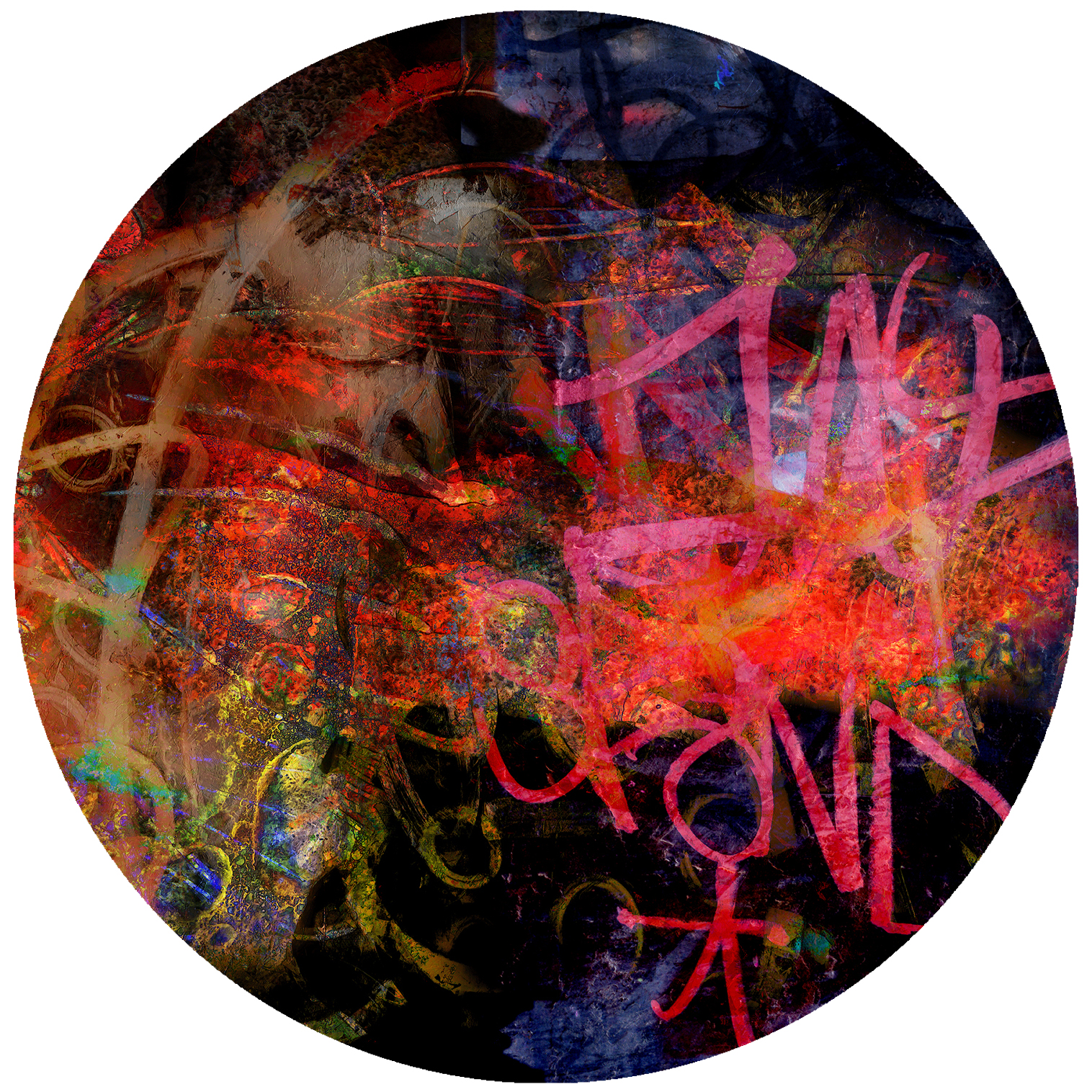
Graffiti Art by Michael John Valentine
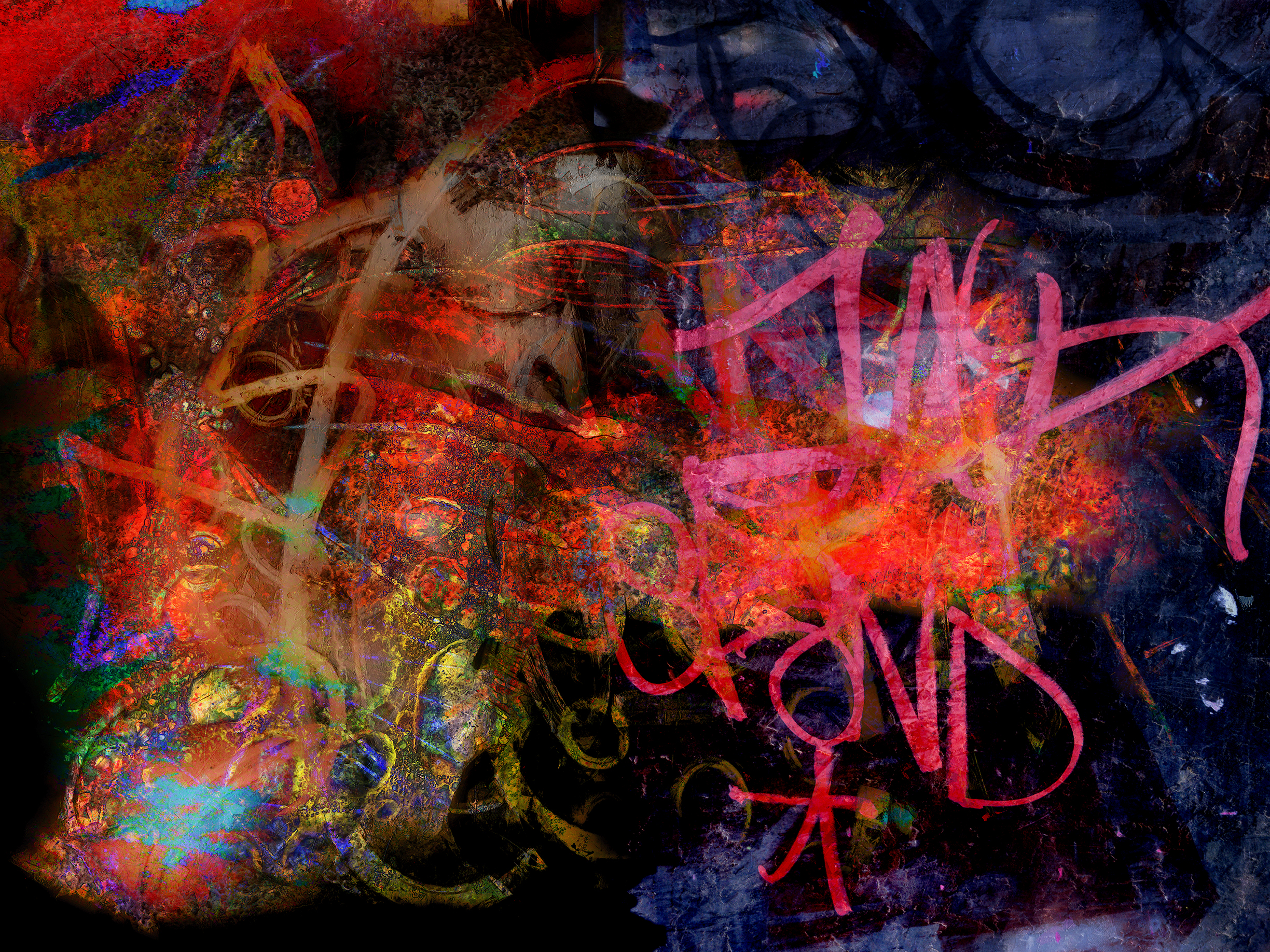
Michael John Valentine’s Leaving Your Mark is a bold, kinetic fusion of street‑inspired urban expression and refined fine‑art sensibility — a work that stands at the crossroads of spontaneous intervention and contemplative observation. The title itself suggests a universal human impulse: the desire to be seen, to leave a trace in the world that outlives the moment of its making. Here, Valentine captures that instinct not as a fleeting scribble, but as a considered and evocative visual testament.
Where traditional graffiti is fleeting — ephemeral splashes on brick and concrete — Leaving Your Mark reclaims that transience, transforming it into a permanent work that invites extended contemplation. Underpinning this transformation is the guiding insight of Lucian Freud: that sustained looking alters our perception of an object, revealing layers of abstraction that ultimately deepen its reality. Freud’s reflection — drawn from a lifetime of exacting portraiture and intense engagement with his subjects — reminds us that abstraction and realism are not opposites but partners in perception.
Valentine’s piece channels this idea visually. At first glance, the graffiti elements evoke the raw energy and immediacy of street tagging — vibrant marks, gestural strokes, a sense of joyful rebellion. Yet as the viewer linger, those energetic lines coalesce into a harmonized interplay of rhythm, space, and form. What initially feels spontaneous acquires a narrative quality; what seemed raw reveals intentionality. In this way, the work embodies Freud’s paradox: the longer one engages with it, the more its abstract qualities begin to enrich our sense of its truth.
Executed with acrylic on canvas and finished with select overpainting and a glossy protectant layer, Leaving Your Mark occupies a rare place in contemporary art — a piece that straddles the vernacular of street art and the contemplative depth of studio practice. Its material execution speaks to Valentine’s fluency across mediums: the boldness of graffiti’s visual language, the precision of painterly layering, and the tactile resonance of overpainted surfaces.
This work rewards repeated encounter. On first approach, the eye is drawn to its gestural immediacy — color arcs and calligraphic sweeps that suggest movement and voice. On extended viewing, those elements integrate into a complex visual syntax: patterns and counterpoints emerge, inviting associations that are both personal and universal. In this way, Leaving Your Mark resists fixed interpretation. It is not a work that yields itself quickly, but one that grows in richness the more one dwells within its fields of gesture.
That psychological breadth aligns with Valentine’s broader ethos as an artist: to create works that bridge instinct and reflection, expression and poise. While rooted in the immediacy and attitude of graffiti, Leaving Your Mark transcends its source reference to become a sophisticated meditation on presence, identity, and the act of creation itself. Each form carries both the urgency of an unscripted mark and the deliberateness of a painter’s decision.
Collectors and connoisseurs will appreciate this duality. The piece occupies a versatile space — it can anchor a contemporary loft with its audacious gesture, or complement a finely curated collection with its depth and conceptual layering. Whether presented as a print, mounted canvas, or large‑scale original, Leaving Your Mark stands as both a visual statement and a conceptual invitation: to slow down, to look deeper, and to discover how the abstract folds back into the real.
In Leaving Your Mark, Valentine invites us into an expanded experience of seeing — one that honors the spontaneity of street art while embracing the contemplative rigor that Freud’s words evoke. Seen in this light, the artwork does more than adorn a wall: it becomes a space in which perception itself is made visible.