“If I create from the heart, nearly everything works; if from the head, almost nothing.”
— Marc Chagall
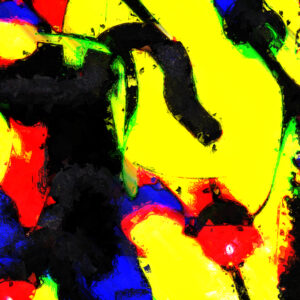
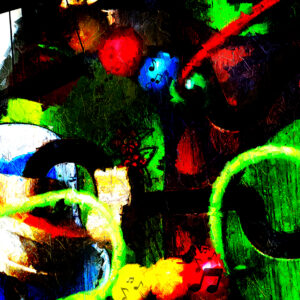
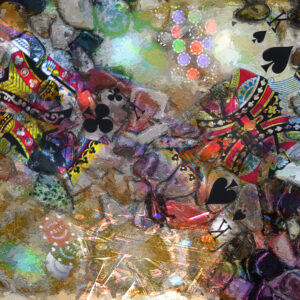
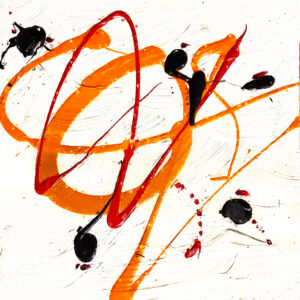
Modern Art Titled Abstract World by Michael John Valentine is more than a visual offering—it is a meditation on perception, emotion, and the very essence of abstract expression itself. Situated within Valentine’s broader corpus of modern abstract work, this piece exemplifies how thoughtful engagement with color, texture, and motion can transcend literal representation to evoke inner experience and emotional resonance.
At its core, Abstract World is a celebration of the expressive power of abstraction. Abstract art, by definition, moves away from realistic depiction toward a visual language comprised of shape, form, color, and line that stands on its own terms, independent of recognizable references to the visible world. This liberation from traditional depiction allowed modern artists to explore deeper dimensions of expression, emotion, and conceptual structure—pioneering a visual vocabulary that resonates uniquely with each observer.
Valentine’s work fits squarely within this lineage of exploration. With over 55 years of artistic practice rooted in both fine art education and immersive studio experimentation, he has developed a creative philosophy that embraces spontaneity, intuition, and layered technique. Abstract World invites viewers to suspend preconceptions and engage their senses directly with its visual rhythms. The varied sizes and formats in which this work is offered—from modest prints to overpainted, signed canvases—underscore its adaptability to different spaces and moments of reflection.
A Language of Emotion and Perception
Unlike figurative art that anchors understanding to identifiable forms, abstract art engages the viewer through the resonance of visual elements themselves—hue, contrast, composition, and texture. In Abstract World, these elements become agents of emotional communication. Each color field interacts with another in a dynamic interplay, where the juxtaposition of lights and darks, warm and cool tones, perceptually shifts the viewer’s focus and mood. The viewer does not merely see the painting; they feel its rhythms.
The choice to use acrylics on canvas, with selective overpainting and a glossy protective finish, creates a surface that simultaneously invites contemplation and rewards exploration. Above all, the viewer’s eye is encouraged to roam freely—a visual dance that rejects fixed interpretation in favor of personal psychological engagement.
This embrace of subjective interpretation resonates deeply with Chagall’s insight that art created from the heart has the power to transcend logic and speak directly to the human spirit. Like Chagall’s own practice—rooted in emotional veracity and imaginative emancipation—Abstract World thrives not on prescribed meaning but on the emotional realities that viewers bring into their encounter with the piece.
Technique as Expression
While abstraction may appear spontaneous, Valentine’s technique reveals a sophisticated dialogue between intent and improvisation. The work begins with the physical act of applying pigment, allowing fluidity and chance to shape early forms, before engaging in calculated refinements through overpainting. This layered approach produces a richness of surface and depth, generating an almost sculptural complexity within the two‑dimensional plane.
The glossy protectant not only preserves the integrity of the piece, but also enhances the visual tension between the matte texture of pigment and the luminous sheen that frames it. Such choices emphasize the tactile nature of Valentine’s abstract language—inviting not just visual analysis but a visceral, almost physical response.
The Experience of Viewing
Engaging with Abstract World is akin to stepping into an emotional topology. Without fixed forms to anchor meaning, the observer becomes an active interpreter—projecting memory, sensation, and intuition into the work. Each encounter is distinct: colors that whisper layered meaning on one viewing may command attention and stir emotion on another. Like a musical composition that reveals new harmonies with each listen, Abstract World rewards repeat engagement.
In spaces where it is displayed—whether a private collection, a curated gallery wall, or an interior designed for quiet reflection—the painting becomes a catalyst for dialogue. It invites viewers not just to appreciate a static surface, but to participate in an ongoing exchange: between heart and eye, emotion and intellect, the physical world and the internal psyche.
Collectible Significance
Within the broader context of Valentine’s body of work—spanning landscapes, figurative pieces, and thematic series like Earth and Universe abstractions—Abstract World stands as a versatile and evocative exemplar of his abstract practice. Each iteration of the piece, particularly the overpainted signed canvases, comes with a certificate of authenticity, affirming its place as a collectible work of fine art.
Collectors who are drawn to this work often seek more than decorative appeal; they are invested in art that stimulates thought and emotion, and that unfolds layered significance over time. This piece’s capacity to provoke contemplation situates it not merely as an adornment, but as an enduring companion in lived experience.
In Abstract World, Michael John Valentine gives form to the unseen languages of feeling and perception. In doing so, he aligns with the deepest aspirations of modern abstraction: to touch the viewer not through replication of the visible world, but through evocation of the inner landscapes of thought, emotion, and imagination.
Whether encountered in quiet solitude or shared in collective discourse, the painting stands as a testament to art’s enduring capacity to bridge the heart and the mind—illustrating, as Chagall observed, that authenticity of creative spirit is the true source of artistic resonance.