“Art is not what you see, but what you make others see.”
— Edgar Degas
In the rarefied world of art, where vision transcends mere form and enters the realm of shared human experience, no aphorism captures the alchemy of artistic communication more elegantly than Edgar Degas’s timeless insight: “Art is not what you see, but what you make others see.” Here, Degas—an innovator of French Impressionism whose work forever transformed our understanding of movement, emotion, and visual narrative—reminds us that art is not a solitary vision frozen in pigment, but a bridge between creator and observer, inviting a countless plurality of interpretation and affect.
At its core, this quotation subverts a traditional conception of artistic creation as a mere representation of the visible world. Degas suggests instead that art’s true legitimacy lies not in its faithful depiction of physical reality, but in its power to evoke inner vision. Artists don’t simply record what they see—they recast it, refract it through imagination, intuition, and empathy, and then offer it back to us transformed. What matters most, then, is not the artist’s isolated perception but the emotional and intellectual terrain they provoke within each viewer who encounters the work.
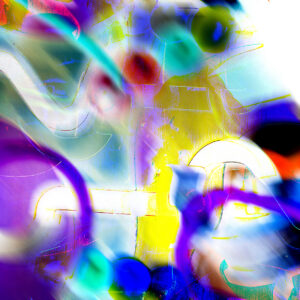
This philosophical framework resonates deeply with contemporary creators whose work refuses passive consumption and instead seeks active engagement. Consider the craft behind a piece like the Psychedelic Art Title: It’s a T‑Shirt from Michael John Valentine’s atelier. At first glance, the title playfully subverts expectations—inviting the wearer and viewer alike to pause and question what defines aesthetic worth in everyday objects. Is it simply an image printed on fabric? Or is it an experiential artifact—an invitation to experience light and color in a transcendent, hallucinatory temperament? Within this context, Degas’s words become a conceptual lens: the work’s worth isn’t dictated by its physical form but by the affective worlds it prompts within those who see and wear it. The piece ceases to be a garment and becomes a platform for interpretation, introspection, and dialogue.
In practical terms, art that embodies Degas’s maxim challenges the viewer to look beyond surface appearances. Where traditional representation might strive for likeness, visionary art aims for resonance. It asks: What feelings can be unlocked? What narratives can be woven? What truths might be glimpsed between the lines of paint, pattern, and symbolism? Great art does not answer these questions with rigidity—it invites each observer to explore them in their own language of experience.
Indeed, this philosophy elevates the artist’s role from that of mere observer to interpreter and provocateur. The creative act becomes a negotiation between intention and perception: the artist extends a vocabulary of form and motif, and the viewer, in turn, deciphers that vocabulary into something uniquely personal. This dynamic is what makes art an enduring cultural force—it is a conversation spanning time, place, psychology, and sensibility, a medium through which shared meaning may be discovered and reimagined.
Degas knew that art’s transformative potential lies not in its ability to reproduce, but in its capacity to reveal. A painting’s contour, hue, or composition becomes significant not for its fidelity to reality but for its ability to stir insight, reflection, emotion, and connection. In this sense, art becomes a form of empathic transmission—a language without fixed syntax, but rich in possibility.
So, when we return to the idea of wearable art or collectible pieces that blur boundaries between fashion, abstraction, and conceptual expression, we see Degas’s wisdom reflected. Such works do more than decorate; they commence a dialogue. They make visible what was once felt but unarticulated. They make tangible what was sensed but unseen. And, most vitally, they make others see. This is the essence of art as a shared human legacy: not static imagery, but a living experience, co-created by the artist and the audience in every gaze and every mind it touches.