“In the language of color, red speaks first — not as a whisper, but as insistence. To paint in red is to chart the invisible pulse of experience — the memory of love, the instinct of survival, and the cadence of the human heartbeat standing still.” Michael John Valentine
The Essence of Red: A Modern Abstraction That Resonates Beyond Sight
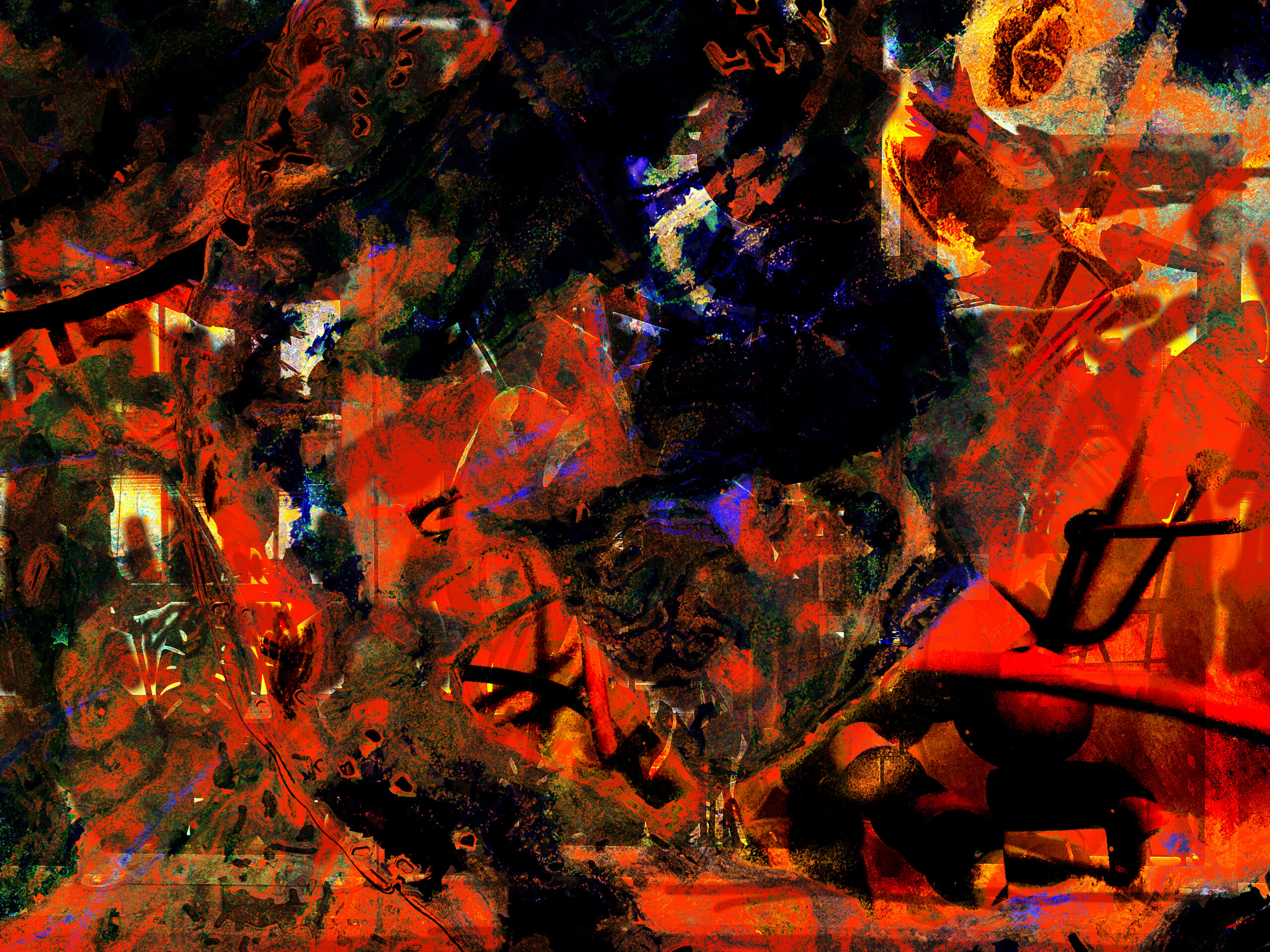
In the expansive world of contemporary abstract art, color is not merely a visual element — it is a language. And when that language is red, it speaks in tones of intensity, urgency, and emotional resonance that defy simple categorization. The work titled Modern Abstract Fine Art In Reds Original Painting on Canvas by Michael John Valentine positions itself at the very heart of this language — an unequivocal statement of presence that explores both color and consciousness.
Red is not neutral. Across cultures and art history, it is a primal hue: it signifies blood and life, fire and passion, anger and transcendence. In modern abstraction, red becomes more than pigment — it becomes narrative force. As art analysis has long demonstrated, color in abstract painting functions not as decoration but as emotion: a conduit between interior experience and outward expression. In this capacity, red’s psychological weight enables deep and layered meanings without relying on figuration or literal metaphor.
A Canvas of Intensity — The Formal Composition
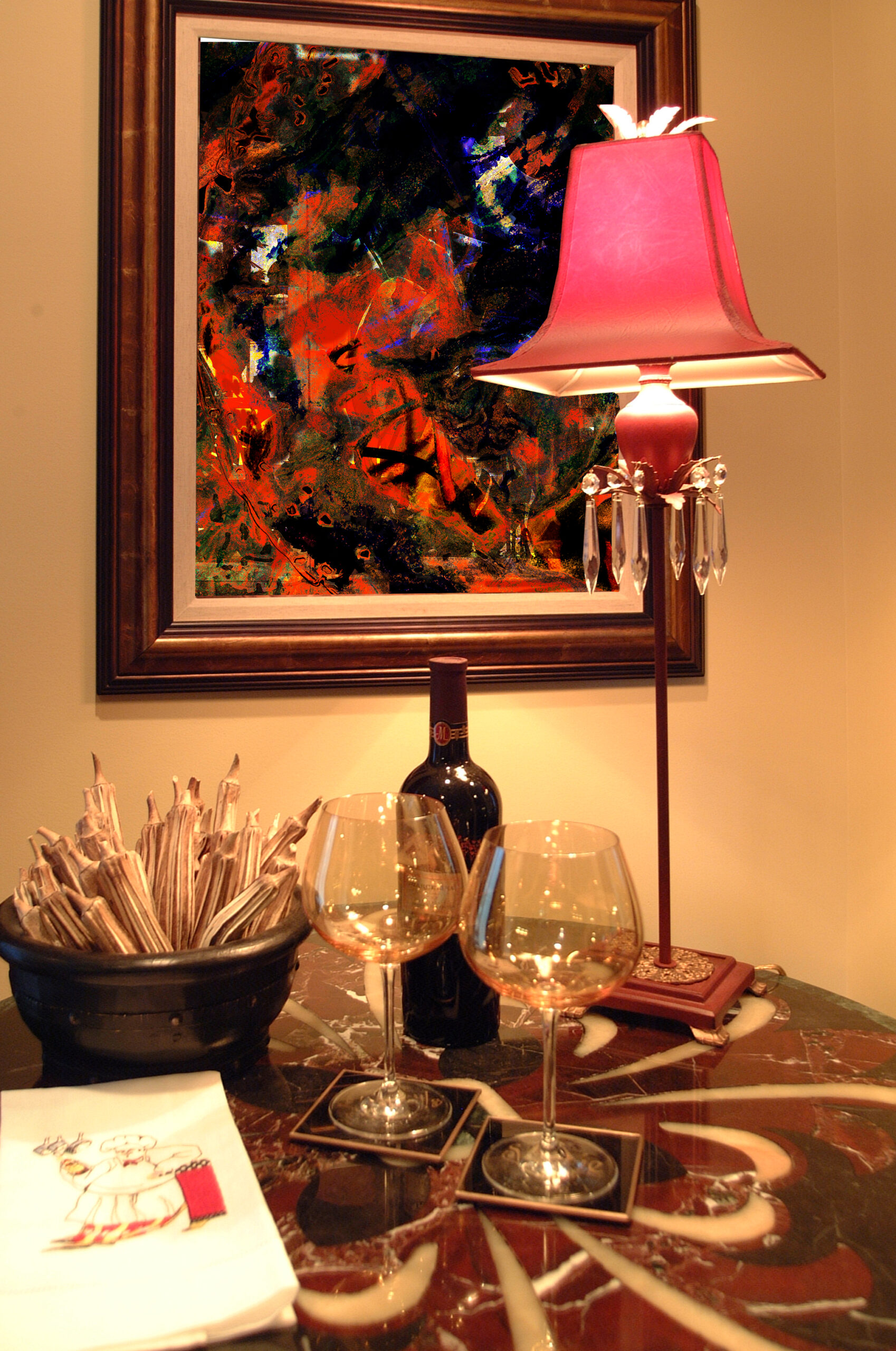
At first glance, Valentine’s Modern Abstract Fine Art In Reds arrests the eye. It is vivid and direct, yet its true prowess lies not in superficial spectacle but in its orchestration of visual rhythm. Layers upon layers of red — from the deepest crimsons to the brightest scarlets — interact like a shifting landscape of emotion. There is a push and pull between pigment densities, brushstroke energies, and areas of tension and release. The viewer perceives not just a field of red but a terrain of feeling — a sculpted topography where emotion becomes texture.
This is no accident. Abstract art, particularly in the lineage of Expressionism and Color Field movements, treats color gradients and saturation as compositional form. Artists like Mark Rothko used expansive fields of red to evoke spiritual introspection, using chromatic layering to create an immersive visual experience. In this lineage, Valentine’s work participates in a rich dialogue with historical abstraction — but with its own contemporary intensity.
Red’s Symbolic Potency: Beyond Interpretation
Unlike representational art, which relies on depicted forms to suggest meaning, abstract painting liberates the viewer to experience emotion directly. Here, Valentine’s choice of red becomes an open invitation: the viewer is not told what to feel, but rather encouraged to feel. Red can signify love, rage, celebration, violence, or spiritual depth — often within a single moment of perception. Modern color psychology supports this multiplicity; red is among the most dynamic of hues, associated simultaneously with heightened arousal and deep personal significance.
Moreover, in abstract art, there is no singular fixed narrative — only resonance. A viewer may experience warmth and serenity; another may feel urgency or agitation. This is not an inconsistency, but a testament to abstraction’s openness. Red becomes a mirror of the viewer’s interior world, a reflexive field that amplifies psychological complexity rather than limiting it to a fixed meaning.
Technique and Materiality: The Hand of the Artist
Valentine’s process — as with many of his works — transcends mere application of pigment; it is an act of sculptural painting. The surface is layered and textured, overpainted in intentional areas, and sealed with a protective glaze that lends both depth and permanence. This level of material engagement is critical: it allows the light to interact with the surface, shifting perception with every change in viewing angle or ambient illumination.
This physicality — the palpable presence of paint and the dynamic interplay of surface and depth — situates the piece not only in the realm of visual experience, but in the realm of lived experience. The viewer is invited into an aesthetic encounter that is as much tactile as it is visual. The glossy sealant does more than preserve; it enriches. The painting becomes a living object, its presence shifting subtly over time, suggesting that meaning in abstract art evolves as we return to it again and again.
Collector Context: Why This Work Matters
Original abstract art of this caliber holds significance not just for its immediate visual impact, but for its place within the ongoing continuum of modern and contemporary painting. In a market where authenticity, emotional depth, and conceptual resonance influence both aesthetic and investment value, this piece speaks with authority.
Unlike mass‑produced prints, Valentine’s original canvas is a singular artifact — each brushstroke traces the trajectory of the artist’s intention, and each variation in hue marks an unrepeatable choice. Original abstract works are inherently unique; there is no replication of lived artistic decision. For the discerning collector, this uniqueness is not incidental — it is the very definition of value.
As collectors increasingly seek art that engages both interiority and historical dialogue, works like this one — which invite reflection, memory, and emotional exchange — become central to any serious contemporary collection.
The Spatial Experience: Red in Environment
The power of red extends beyond the canvas itself; it redefines the space it inhabits. Placed in a gallery or private interior, the painting demands presence. It becomes an anchor — a focal point around which lighting, architecture, and human movement harmonize or contrast. In luxury spaces, it functions not as decoration, but as a beating visual heart, anchoring environment to emotion.
The psychological weight of red can also be transformative. Whether set in a minimalist loft, a corporate lobby, or an intimate living space, the painting engages spatial perception, inviting viewers into a somatic experience — one that resonates as deeply with the body as it does with the mind.
Conclusion: Red as Visual Poetry
Modern Abstract Fine Art In Reds Original Painting on Canvas is not merely a work to observe — it is a work to experience. In its daring embrace of red, it confronts the viewer with both the vitality and the vulnerability of color as expression. Its significance lies in its ability to evoke without prescribing, to open emotional terrain rather than define it, and to stand as a testament to the enduring force of abstract art.
This painting belongs in spaces that honor reflection — where art is not passive but part of life’s intricate perceptual cycle. It is not simply visual beauty; it is emotional architecture — a canvas alive with possibility, urgency, and the relentless pulse of red.