It is like becoming one with the cigar. You lose yourself in it, everything fades away, your worries, your problems, your thoughts, they fade into the smoke, and the cigar, and you are at peace – anonymous reflection on cigar enjoyment
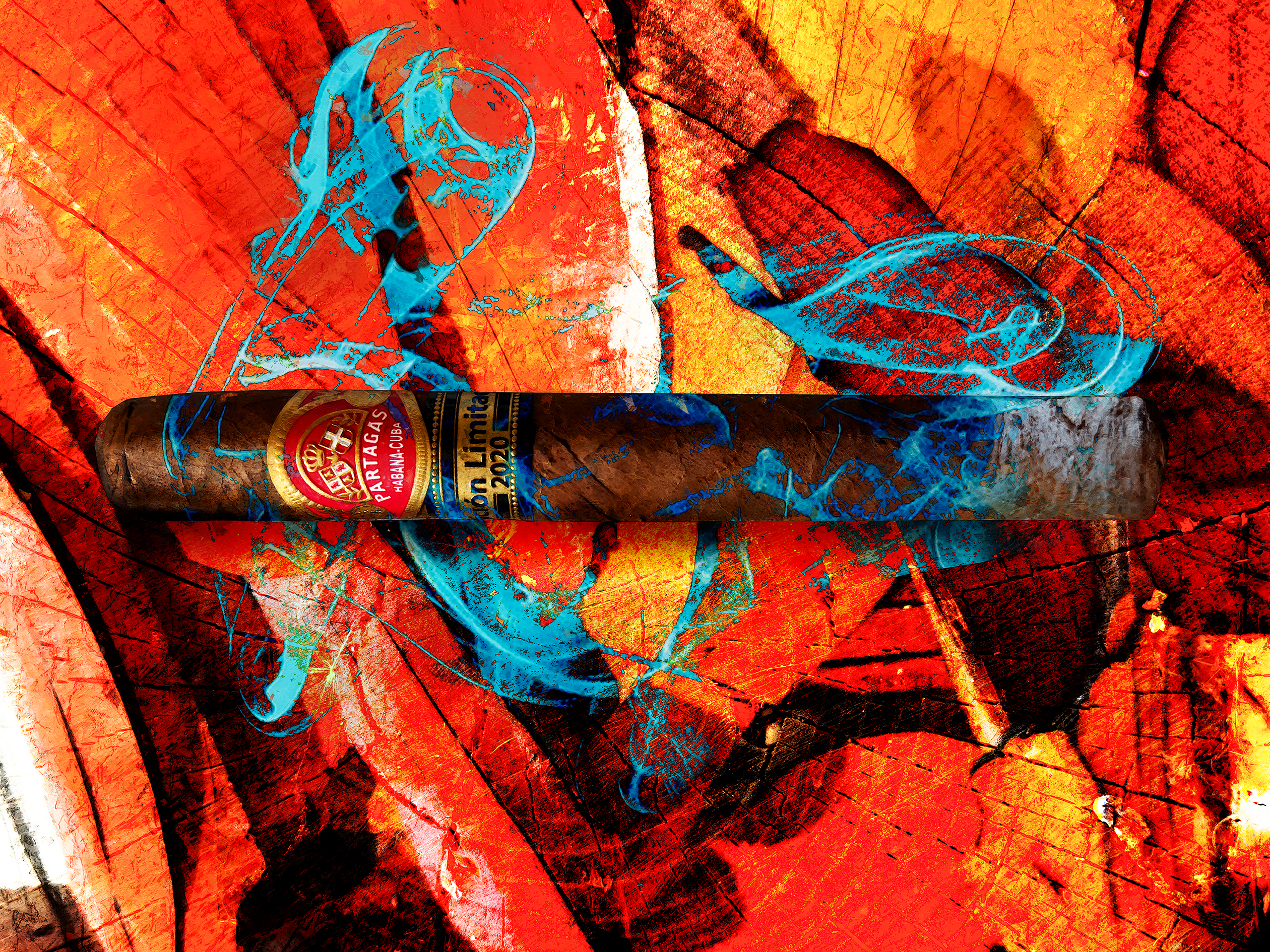
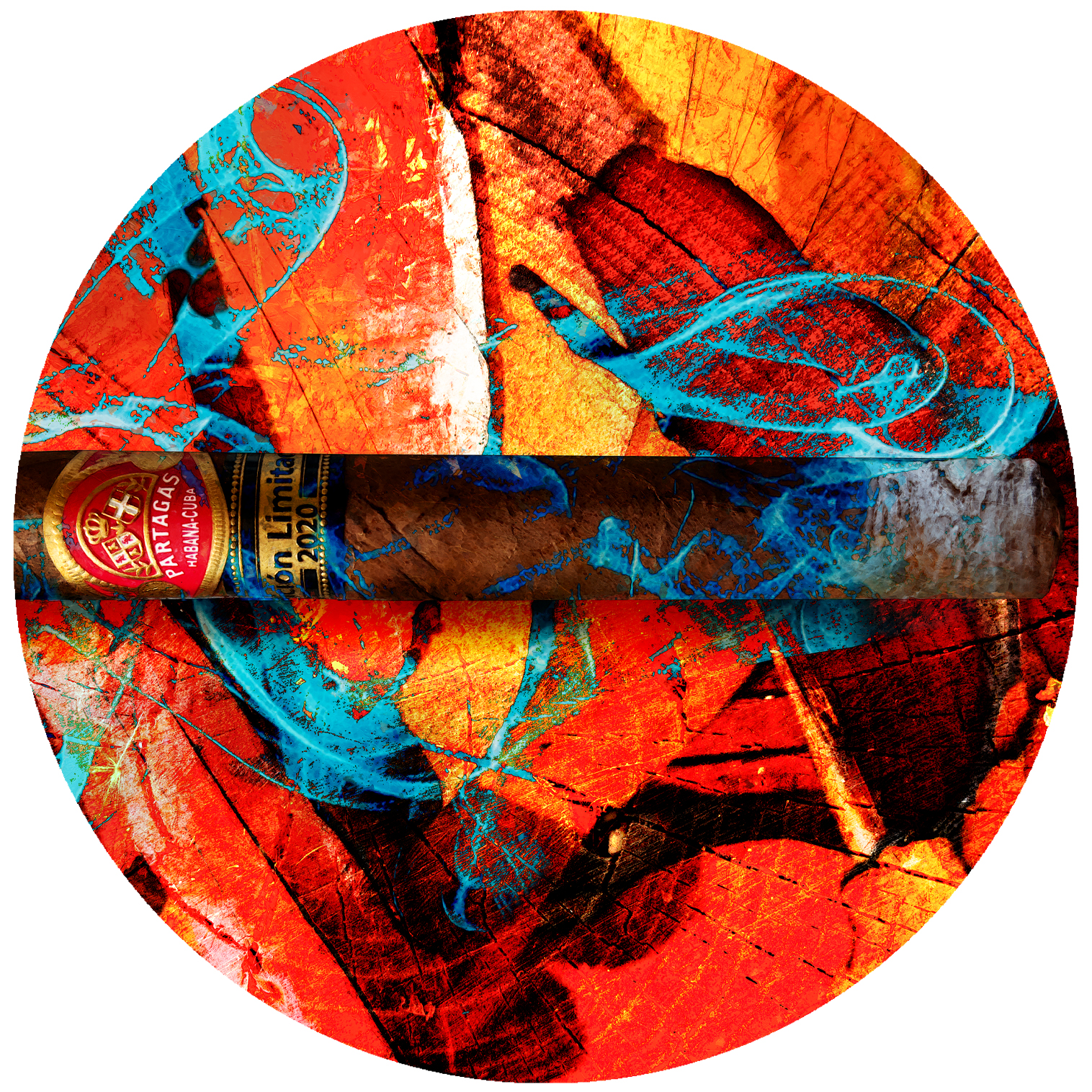
There is a moment—just before the ash falls, just as the ember glows at its most intense—when time feels suspended. Partagás: Disappearing Into Fire captures that exact threshold. It is not simply a depiction of a cigar; it is a meditation on combustion, on ritual, on the fleeting luxury of something meant to vanish.
At the center of the composition rests the unmistakable presence of a Partagás cigar, its band intact, defiant, and rooted in centuries of Cuban tradition. Yet everything around it resists stillness. The background erupts in saturated reds and searing oranges—tones that feel less painted and more ignited. These are not passive colors; they move, fracture, and pulse with an internal heat. Cutting through that inferno is a striking counterpoint of electric cyan—an unexpected, almost surreal force that disrupts the warmth with a cooling, chemical intensity.
This tension between heat and cool, tradition and abstraction, permanence and decay is where the piece lives.
The Overpainting Process: Building Fire Through Time
What defines this work—what elevates it beyond image into object—is the overpainting process. This is not a singular act of creation but a layered negotiation with the surface. Each phase is both revelation and concealment.
The foundation begins with a photographic or compositional truth: the cigar, grounded, recognizable, almost documentary in its precision. But that truth is only the beginning. Through successive layers of paint, medium, and intentional disruption, the image is pushed, fractured, and reborn. The art is not decorating the surface—it is challenging it.
Overpainting introduces time into the piece. Earlier decisions remain buried beneath later gestures, creating a visual archaeology. Scratches, drips, and aggressive marks are not accidents; they are evidence. They speak to resistance, to the artist’s hand refusing to let the image settle too comfortably into realism.
The cyan gestures, in particular, feel almost like energy made visible—like the invisible chemistry of combustion suddenly exposed. They wrap, interrupt, and invade the cigar’s space, suggesting that even something as controlled as a luxury smoke is ultimately subject to chaos.
And yet, through all this intervention, the identity of the cigar remains intact. The band is still legible. The form is still honored. This is where the discipline shows—knowing how far to push without breaking the emotional anchor of the piece.
Fire as Metaphor: Disappearance as Luxury
A cigar is one of the few luxury objects designed to disappear. Unlike a watch, a car, or even a painting, its entire purpose is consumption. It exists fully only in the act of being used.
Partagás: Disappearing Into Fire leans into this paradox.
The intense reds and fractured textures evoke not just flame but the inevitability of it. The cigar is not static—it is already in the process of becoming memory. The smoke, though not explicitly rendered, is implied in every directional mark and layered distortion. The piece becomes less about the object itself and more about the experience of it—the slow burn, the ritual, the quiet acknowledgment that something beautiful is meant to end.
There is also a deeper narrative here: heritage meeting impermanence. Partagás represents legacy, craftsmanship, and continuity. The intervention—raw, modern, almost confrontational—introduces the idea that even the most storied traditions are subject to reinterpretation, to reinvention, to fire.
Certificate of Authenticity: Securing the Intangible
In a work so rooted in transformation and impermanence, the Certificate of Authenticity (COA) becomes not just an accessory, but a critical extension of the piece itself.
The COA is the anchor.
Where the artwork explores disappearance, the COA establishes permanence. It formalizes the origin, verifies the hand, and protects the narrative. For collectors—particularly those operating at a high level—the COA is not a formality; it is a safeguard of value, provenance, and trust.
This becomes even more significant because of the overpainting process. No two pieces—even if derived from similar source material—are ever truly the same. The layering, the gestures, the physical interaction with the surface ensure that each work is singular. The COA affirms that singularity. It tells the collector: this exact moment of creation, this exact convergence of decisions, exists nowhere else.
There is also an emotional dimension to it. The COA connects the collector directly to the artist—not just as any artist, but as the originator of the experience. It transforms the acquisition from a purchase into a relationship. In a market where reproduction and digital saturation are constant threats, that relationship becomes invaluable.
A Collector’s Piece: Holding Fire
Ultimately, Partagás: Disappearing Into Fire is a piece about holding onto something that cannot be held.
It captures the essence of a Cuban cigar not as an object, but as an event—something lived, something felt, something that resists permanence even as we try to preserve it. The violence of the color, the tension of the composition, and the depth of the overpainting all work together to create a piece that feels alive, unstable, and urgent.
And yet, through the COA, through the physicality of the layered surface, through the artist unmistakable hand, it is also secured—anchored in a way that the subject itself never could be.
This is the paradox that’s mastered: creating permanence out of disappearance, value out of impermanence, and beauty out of combustion.
A cigar burns.
A moment fades.
But this—this holds the fire.