“Just as pure abstract art is not dogmatic, neither is it decorative.” — Piet Mondrian
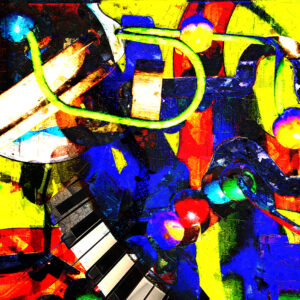
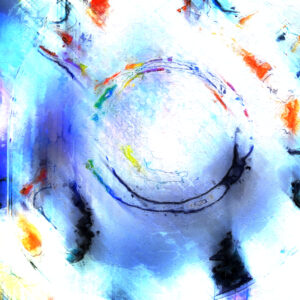
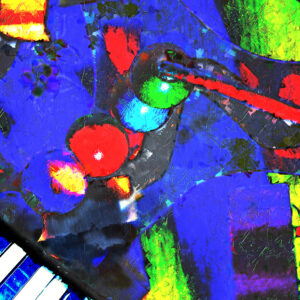
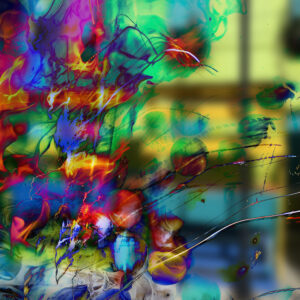
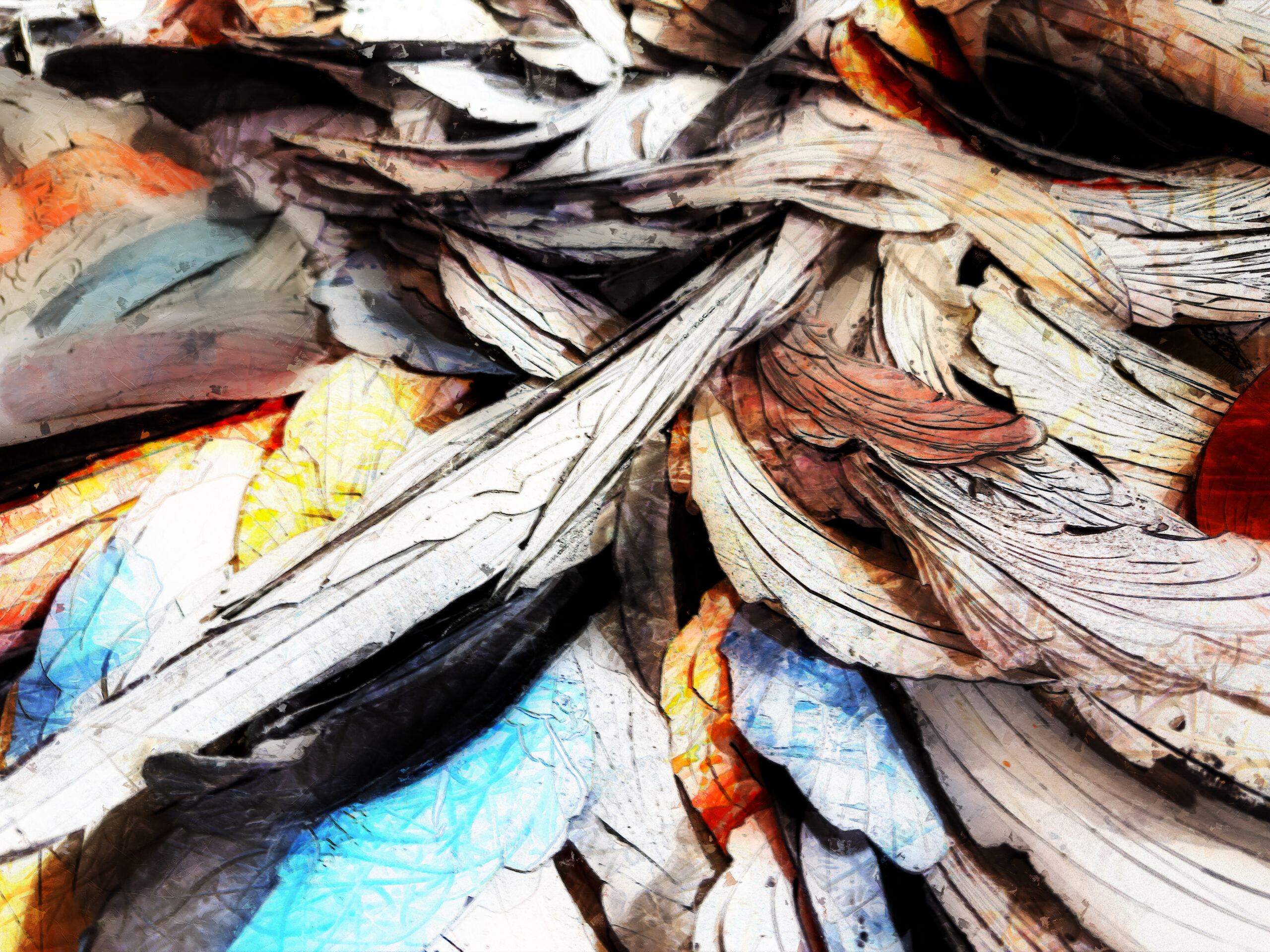
In the language of contemporary abstraction, this idea becomes more than a philosophical stance—it becomes a working principle. It speaks directly to the kind of visual tension, restraint, and intentional freedom that defines Moving Through Fields of Color, where gesture, layering, and emotional velocity converge into a single unified experience rather than a surface decoration.
At its core, this work exists in that rare space where abstraction is not an aesthetic choice but an intellectual and emotional discipline. Color is not applied—it is constructed. Form is not illustrated—it is excavated through process, revision, and controlled disruption. The painting becomes a record of decision-making, where each layer carries both memory and erasure, presence and correction.
Overpainting as a Living Process
The overpainting process is central to the evolution of the work. Rather than treating the surface as a final destination, it is approached as an active field—one that resists closure. Earlier passages are deliberately engaged, partially obscured, or reintroduced through translucent veils of pigment. This creates a visual archaeology: previous states remain embedded beneath the surface, generating depth that is not illusionistic but temporal.
This technique is not about correction. It is about accumulation and intentional contradiction. A field of color may begin as a gesture of spontaneity, only to be reconsidered, restructured, or interrupted by subsequent passages. What remains is a dialogue between decisions—an evolving conversation between intuition and revision.
The result is a surface that feels simultaneously resolved and unresolved. It does not settle into a single reading. Instead, it encourages prolonged looking, where the viewer becomes aware of time embedded within paint—time of application, time of removal, and time of reconsideration.
Educational Foundation: Kent State University
This approach is grounded in formal academic training in Fine Arts at Kent State University, where rigorous study of composition, color theory, and material practice established the technical foundation for experimentation. That academic structure is not abandoned in the work—it is transformed.
At Kent State, the discipline of drawing, painting, and critical theory creates an awareness of how abstraction is not an absence of skill, but a distillation of it. The ability to simplify form is built on the ability to construct it. Understanding value relationships, spatial tension, and chromatic interaction becomes essential when representational anchors are removed.
This background informs the controlled freedom within the work. The painting may appear intuitive, but it is supported by an underlying framework of formal knowledge—one that allows risk without collapse, and experimentation without loss of coherence.
The Certificate of Authenticity (COA) as Extension of the Work
In contemporary collecting, the Certificate of Authenticity (COA) is often treated as administrative documentation. In this practice, it is considered an extension of the artwork itself.
Each COA is individually issued, documenting not only authorship but the conceptual and material integrity of the piece. It confirms provenance, medium, dimensions, and creation context, but it also functions as a guarantee of continuity between artist intention and collector ownership.
For collectors, the COA becomes a critical anchor of trust and value. In a market where abstraction is frequently reproduced or digitally simulated, the COA re-establishes the object’s singularity. It asserts that the work is not an image, but an original physical event—one that cannot be replicated without loss of authenticity.
More importantly, the COA reinforces the idea that the painting is not complete at the moment of drying, but at the moment of verified recognition. It is the formal bridge between studio and collector, between private act and public record.
Emotional Structure and Visual Experience
Moving Through Fields of Color is not constructed to describe a subject, but to generate a state of perception. The viewer is not asked to interpret a narrative, but to enter a shifting environment of tension, rhythm, and atmospheric depth.
Color operates as both structure and emotion. It expands and contracts space. It creates movement without depiction. Layers interact like tonal voices in a composition, sometimes harmonizing, sometimes resisting resolution. The overpainting process intensifies this effect, as earlier chromatic decisions continue to influence the final field, even when partially obscured.
What emerges is a kind of visual breathing—an oscillation between density and openness. The painting does not offer a fixed point of entry; instead, it offers multiple thresholds, each revealing a different emotional register depending on time spent with the surface.
Collectibility and Contemporary Relevance
In today’s contemporary art landscape, abstraction retains its power precisely because it resists fixed interpretation. Works like this exist in a space where personal experience becomes part of the viewing process. No two encounters are identical, because perception itself is unstable.
For collectors, this creates a deeper relationship with the work. It is not simply acquired—it is lived with. Over time, subtle shifts in perception emerge as different layers of the painting reveal themselves through changing light, distance, and attention.
The integration of academic rigor, overpainting methodology, and certified authenticity positions the work within a lineage of serious contemporary abstraction. It is not decorative color field painting; it is constructed visual philosophy rendered through material practice.
Closing Perspective
Abstract painting, at its highest level, does not simplify reality—it intensifies it. Through layering, removal, and reconstruction, Moving Through Fields of Color becomes a site where perception is continuously tested and renewed.
In the spirit of Mondrian’s assertion that abstraction is neither dogmatic nor decorative, the work asserts its own independence from explanation. It exists instead as experience—structured, intentional, and materially verified through both process and provenance.
The result is a painting that does not conclude, but continues—through its layers, its history of revision, its academic grounding, and its authenticated existence as a singular work of contemporary abstraction.
The Exhibition Canvas comes in 3 sizes and goes through several steps that include overpainting with acrylics, signing with acrylics on the front and a final glazing to protect the canvas before being rolled in a sealed tube then a box ( shipping is free in the USA )
The Matted Prints come in 3 sizes and are shipped in a box. ( shipping and handling is free in the US)
The Glossy Poster Print measures 16 x 24 and arrives in a sealed tube that is placed in a box. ( shipping is free in the US )
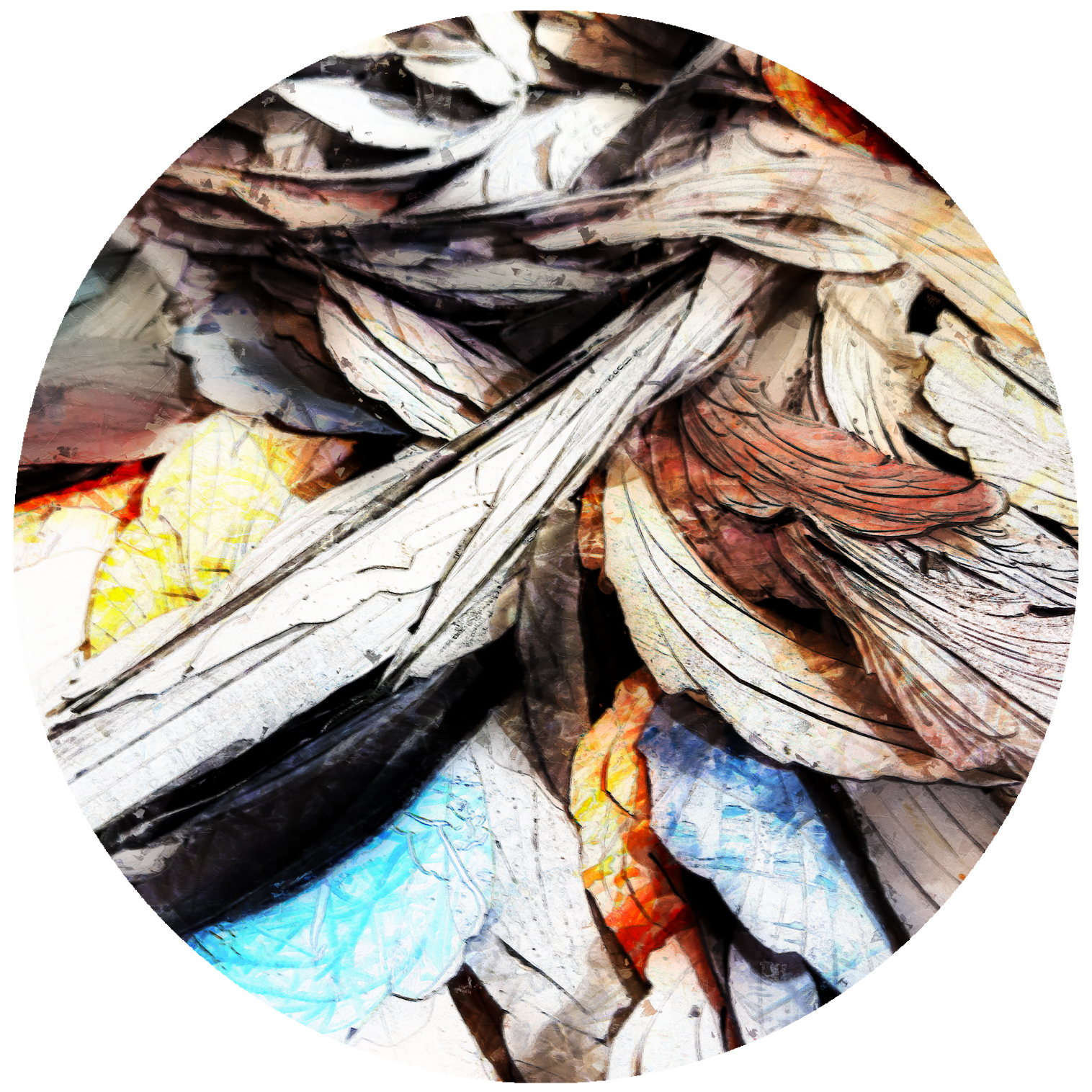
The 4 Inch Round Peel And Stick Decal is perfect for many applications beyond cars and comes in a sealed envelope ( shipped for free )