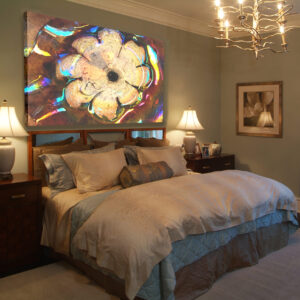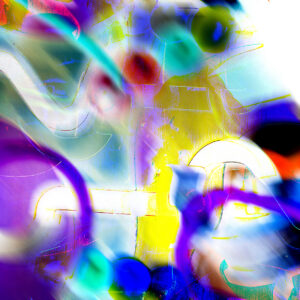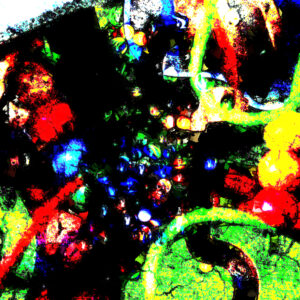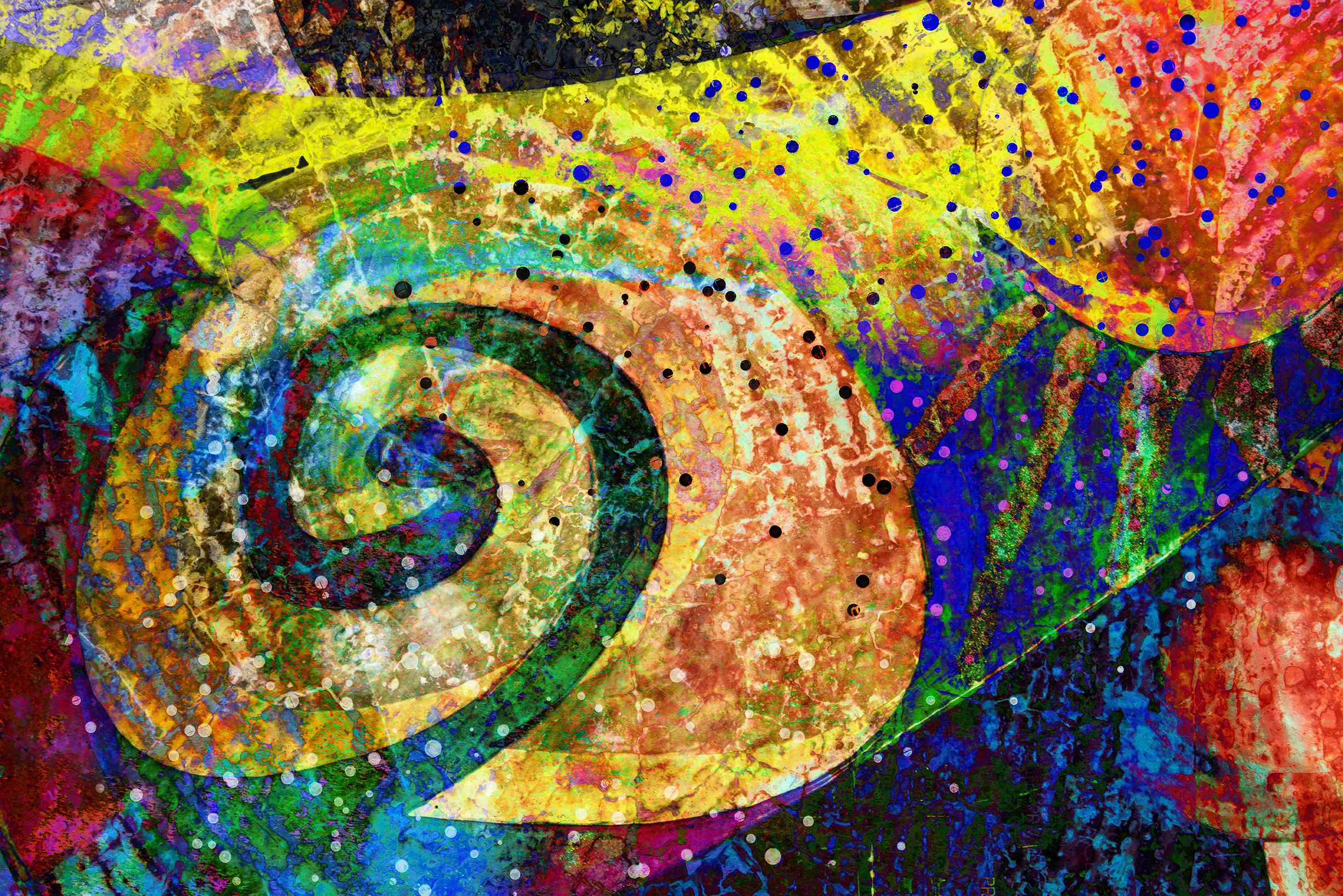
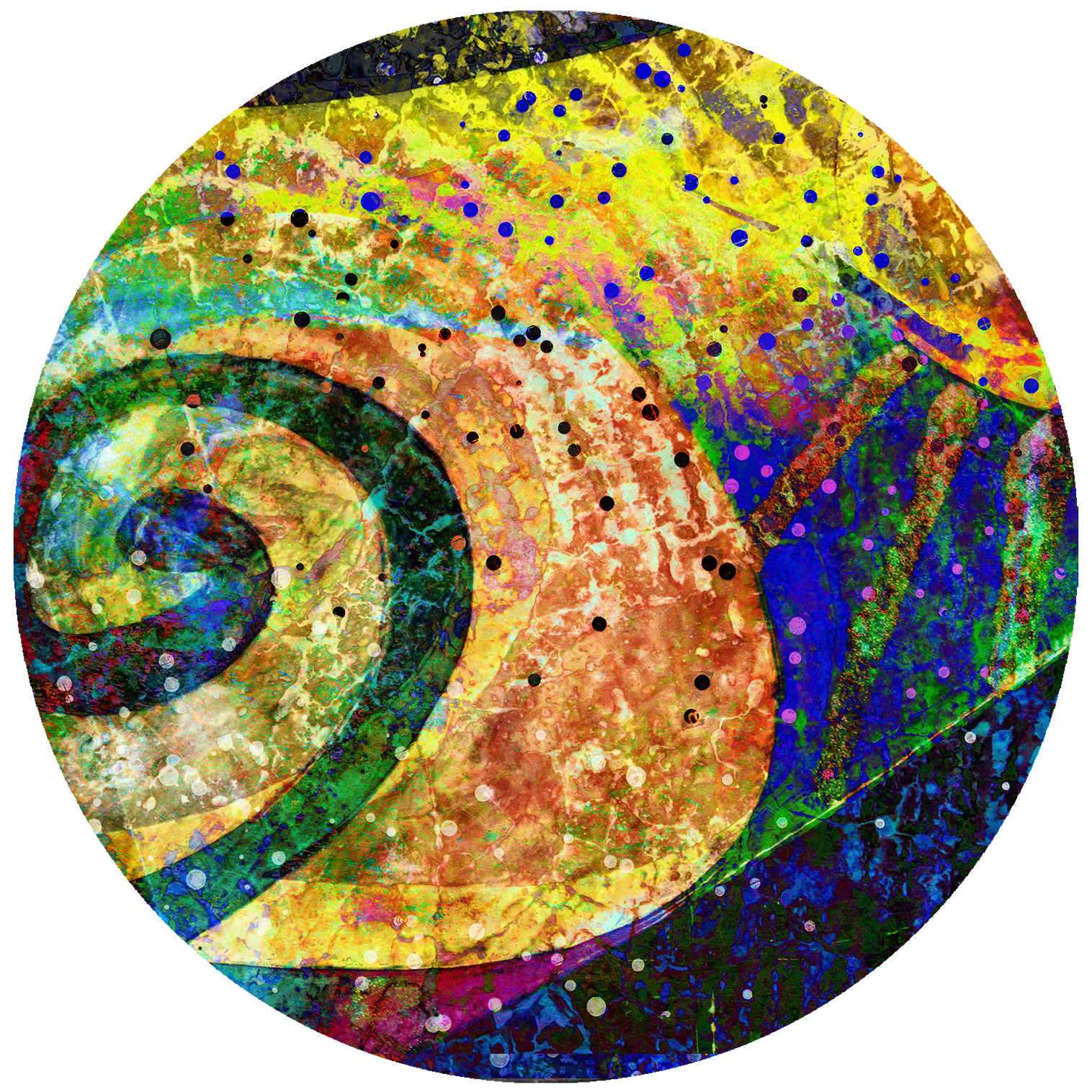
A Symphony of Organic Forms is a four part study in the movement of colors and shapes-
The Pulse Of Nature l Organic Rhythms l The Unfolding l Cosmic Harmonics
“Nature is always moving, always changing, always alive. I paint to capture a moment of that movement and give its pulse a place to live on canvas.”
— Michael John Valentine
The Pulse of Nature
The Pulse of Nature is an exploration of the energy, movement, and quiet complexity that exists throughout the natural world. Rather than attempting to reproduce nature literally, this body of work looks at what lies beneath its recognizable forms—the movement of color, the repetition of patterns, the relationship between organic shapes, and the constant sense of change that surrounds us.
Nature is never truly still. Even in a seemingly quiet landscape, something is happening. Leaves move with the slightest breeze. Water changes direction as it encounters a surface. Clouds shift across the sky. Light moves across the landscape. Flowers open and close. Trees grow, weather, and change with the seasons. Beneath all of it is a continuous rhythm—a pulse that exists whether we consciously notice it or not.
That idea became the foundation for The Pulse of Nature.
My approach to these paintings begins with an intuitive response to color and form. I am not trying to recreate a particular flower, landscape, leaf, or natural environment. Instead, I allow organic shapes and flowing forms to emerge through the painting process. The canvas becomes a place where movement can develop naturally, with each layer influencing what comes next.
Color becomes one of the primary ways that movement is expressed. Certain colors advance while others recede. Contrasts create energy, while subtle transitions provide moments of calm. A concentrated passage of color can draw the eye inward, while a sweeping shape can carry it across the canvas. These relationships create a visual rhythm that encourages the viewer to move through the composition rather than simply look at it from a distance.
The work also reflects my fascination with the way nature combines order and unpredictability. There are patterns everywhere in the natural world, but those patterns are rarely exact. No two leaves are identical. Waves repeat their basic movement but never form the same shape twice. Branches grow according to their own structure while responding to wind, light, and environment.
That combination of repetition and variation is something I find especially compelling as an artist.
In The Pulse of Nature, organic forms may repeat, but they are allowed to change. Curves may echo one another without becoming identical. Shapes may overlap and separate. Lines may appear to grow from one another or disappear beneath another layer of paint. The result is a composition that feels connected without feeling rigid.
Layering is an important part of creating that sense of depth and movement. Acrylic paint allows me to build the surface gradually, allowing earlier marks and colors to influence the layers that follow. Some elements remain visible, while others become partially concealed. This creates a visual history within the painting—a record of decisions, discoveries, and changes that occurred throughout the creative process.
That process mirrors nature itself.
Nothing in nature exists independently. A single element is influenced by everything around it. Light affects color. Weather affects growth. Water shapes stone. Wind changes the direction of branches. Time alters everything. The Pulse of Nature reflects that interconnectedness by allowing each element within the composition to influence the others.
The paintings are intentionally open to interpretation. One viewer may see botanical forms, while another may see flowing water, clouds, microscopic structures, or something entirely abstract. I enjoy that uncertainty. Art does not always need to identify an object in order to communicate something meaningful.
Sometimes a shape can simply suggest movement.
Sometimes a color can create a memory.
Sometimes a composition can evoke a feeling without providing a literal explanation.
That is particularly important to my work. I am interested in the emotional experience of painting as much as its visual appearance. Color, texture, layering, and composition can create an atmosphere that exists somewhere between recognition and imagination.
With The Pulse of Nature, I wanted the paintings to feel alive. The forms should appear as though they are continuing to move beyond the boundaries of the canvas. The viewer’s eye can follow one shape into another, discover relationships between distant areas of the composition, and gradually become aware of details that may not be immediately apparent.
There is also a sense of time embedded within these works. Nature is constantly in transition, and the paintings reflect that idea. They are not snapshots of a single moment. Instead, they suggest an ongoing process—growth, movement, transformation, and renewal.
My decades of working with painting, photography, color, and composition have given me the opportunity to explore those ideas in increasingly personal ways. I have learned that some of the most interesting moments occur when a painting begins to move beyond the plan I had when I started it. A mark leads somewhere unexpected. A color creates a relationship I did not anticipate. A shape begins to suggest another form.
Those discoveries are part of the rhythm of creating.
Ultimately, The Pulse of Nature is about connection. It is about recognizing the energy that exists within the world around us and translating that energy into a visual experience. The paintings do not attempt to explain nature. They attempt to respond to it.
Each composition has its own cadence. Some feel energetic and expansive. Others are quieter and more contemplative. Some emphasize movement, while others focus on balance and repetition. Together, they form a visual exploration of the patterns and forces that make the natural world feel alive.
For me, painting is often about capturing something that cannot easily be put into words. The Pulse of Nature is an attempt to capture that feeling—the sense that beneath the visible surface of the world is a continuous movement, a quiet rhythm, and an energy that connects everything.
The canvas becomes a place where that feeling can remain.
A moment of nature’s movement is transformed into color, form, and texture, creating an abstract experience that can continue to evolve in the eyes of the viewer.
The Pulse of Nature is not a depiction of nature. It is an interpretation of its energy—the rhythm beneath the surface, the movement between moments, and the quiet force that reminds us that everything around us is constantly becoming something new.