“Art is an adventure into an unknown world, which can be explored only by those willing to take risks.”
— Mark Rothko
This quote encapsulates the spirit behind Beads—it invites the viewer into uncharted emotional and visual terrain, where meaning is not prescribed but discovered.
Artist Statement & Curatorial Write‑Up for Beads
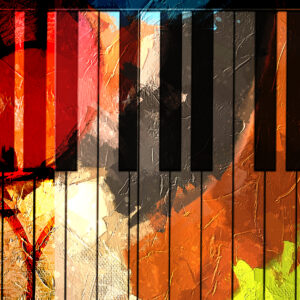
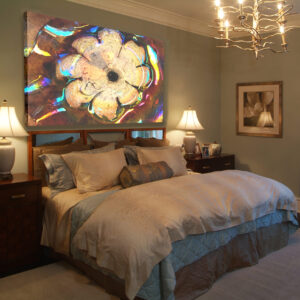
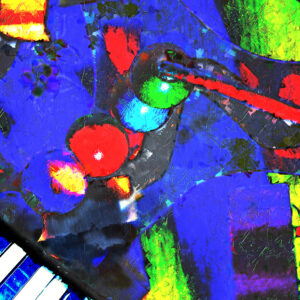
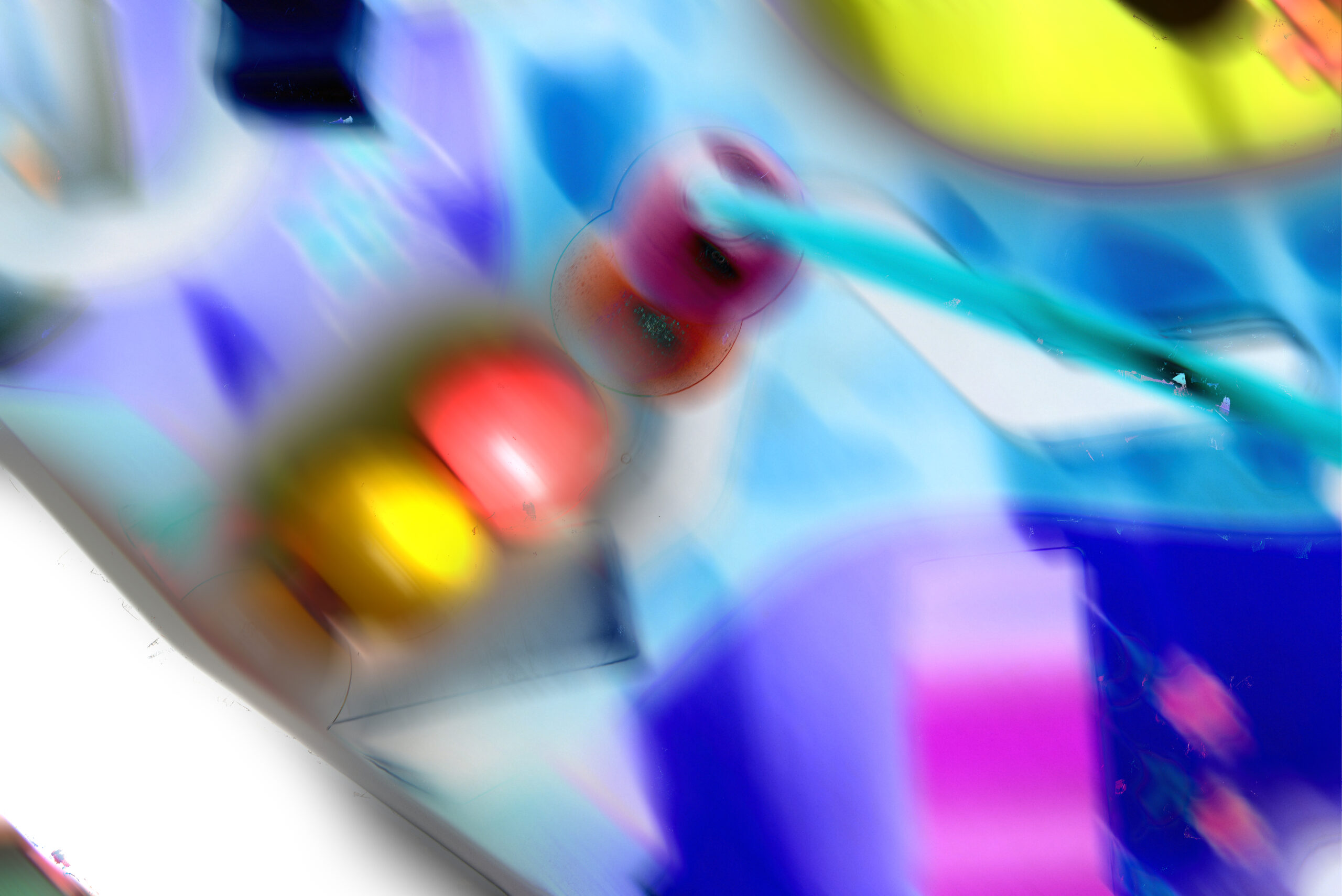
In Modern Abstract Wall Art Original Painting on Canvas Titled “Beads,” the viewer is presented not with a surface to be deciphered in the traditional sense, but with an experience to be felt, resonated with, and lived within. Drawing from the core ethos of abstract art—where emotion and perception override literal representation—this work exists in the interstice between color, texture, and meaning. It asks us not what we see, but what we feel, and ultimately, why we seek connection in paint.
Abstract art, in its most potent form, does not narrate a story that can be codified in words. Instead, it captures atmosphere, rhythm, and intention. It is less an illustration of reality than a vision—one that unfolds differently in each viewer’s mind. As Mark Rothko so profoundly stated, “Art is an adventure into an unknown world, which can be explored only by those willing to take risks.” In this sense, Beads becomes an invitation to embark on that very adventure: a subtle journey through color, form, and emotional resonance.
The Alchemy of Form and Feeling
At a glance, Beads presents a composition that is at once rhythmic and enigmatic—a dance of shapes and strokes that recall the cadence implied by its title. The motif of beads suggests sequence, repetition, and yet—paradoxically—uniqueness. Each “bead” on the canvas feels like a moment in time, an instance of energy frozen but not inert. In traditional understanding, beads might be objects strung together in a linear sequence. Here, they become metaphors for experience—discrete yet interconnected, each holding its own weight in the larger composition.
Much like a musical phrase, the visual elements in Beads echo and counter‑echo, rising and falling in tension. The viewer’s eye travels along these implicit lines, drawn into the rhythm of juxtaposed hues and subtle overpainting. This is not merely decorative abstraction—this is a composition rooted in movement, in the tension between control and surrender. This tension, fundamental to modern abstraction, mirrors the artist’s own negotiation with form and intuition.
Craftsmanship and the Physicality of Paint
While the concept and emotion of Beads are paramount, craftsmanship remains equally central. Overpainting in selected areas reveals an intuitive hand at work—one that responds to the material as much as to the idea. The sealant that envelops the surface is not purely protective; it activates the depth of color and gives the composition a living sheen. This glossy protectant, catching light from shifting angles, animates the work in ever‑changing dialogue with its environment.
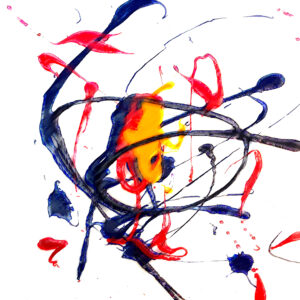
The physicality of the piece—the tangible textures and layered brushstrokes—echoes a lineage of abstract practice that values presence over imitation. It nods, without imitation, to the legacy of Abstract Expressionism where surface and gesture were not secondary to meaning, but carriers of it. Jackson Pollock, another towering voice in modern abstraction, described abstract work as something that confronts the viewer, something without defined beginning or end. In this confrontation lies the shared moment between the artwork and its beholder.
Beyond Description: The Language of Experience
One of the challenges—and indeed the delights—of abstract art is that it resists definitive description. There is no fixed narrative embedded in Beads. Instead, there is a terrain of experience: color relationships that evoke a mood, forms that suggest motion or stillness, surface tension that invites prolonged engagement. The title itself, Beads, offers a linguistic gesture more poetic than descriptive—an entry point rather than a closed explanation.
This indeterminacy is not a void but a space of possibility. Much like how music communicates without language, abstract painting communicates through sensation. This is something echoed by contemporary thinkers on abstraction, who liken its power to tap into emotional frequency without relying on figuration.
Every viewer thus completes the work in their own way, bringing personal associations, emotional registers, and visual memory into the fold. In this sense, the painting becomes a mirror as much as it is a creation.
Space, Scale, and Presence
Whether realized in an intimate 8×10 size or a commanding 30×63 format, Beads asserts its presence with equal conviction. Its scale becomes a participant in the viewer’s experience: larger formats invite the body into the work, allowing the observer to move through it physically, while smaller sizes invite closer, more introspective encounters. This versatility speaks to the painting’s dual role as both a statement and a companion piece—capable of defining a room or quietly enriching a personal space.
Abstract Art as a Living Dialogue
At its best, abstract art functions as more than decoration or aesthetic display. It becomes a dialogue. It demands attention, invites interpretation, and rewards the patient viewer with depths that unfold over time. Abstract art is not static; it is a living conversation between artist, canvas, and viewer.
And herein lies the defining accomplishment of Beads. It does not seek to answer the question what does this represent? Instead, it asks what does this evoke? It invites an emotional response rather than intellectual resolution. This quality—of generating meaning rather than prescribing it—is the core power of abstract practice.
Conclusion: An Embrace of Uncertainty
In a world increasingly preoccupied with definitive answers and instant interpretation, works like Beads remind us of the value of uncertainty, of exploration, and of introspective engagement. It recoils from easy categorization and stretches toward experience. It embodies the essence of abstraction: a visual poetry that resonates not in clarity, but in depth.
Through its rhythm, color, and form, Beads captures a moment of visual intuition—an echo of feeling converted into material beauty. It stands as a testament to the capacity of modern abstract painting to be at once personal, evocative, and universal.