“Have no fear of perfection—you’ll never reach it.” — Salvador Dalí
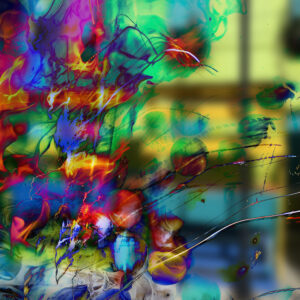
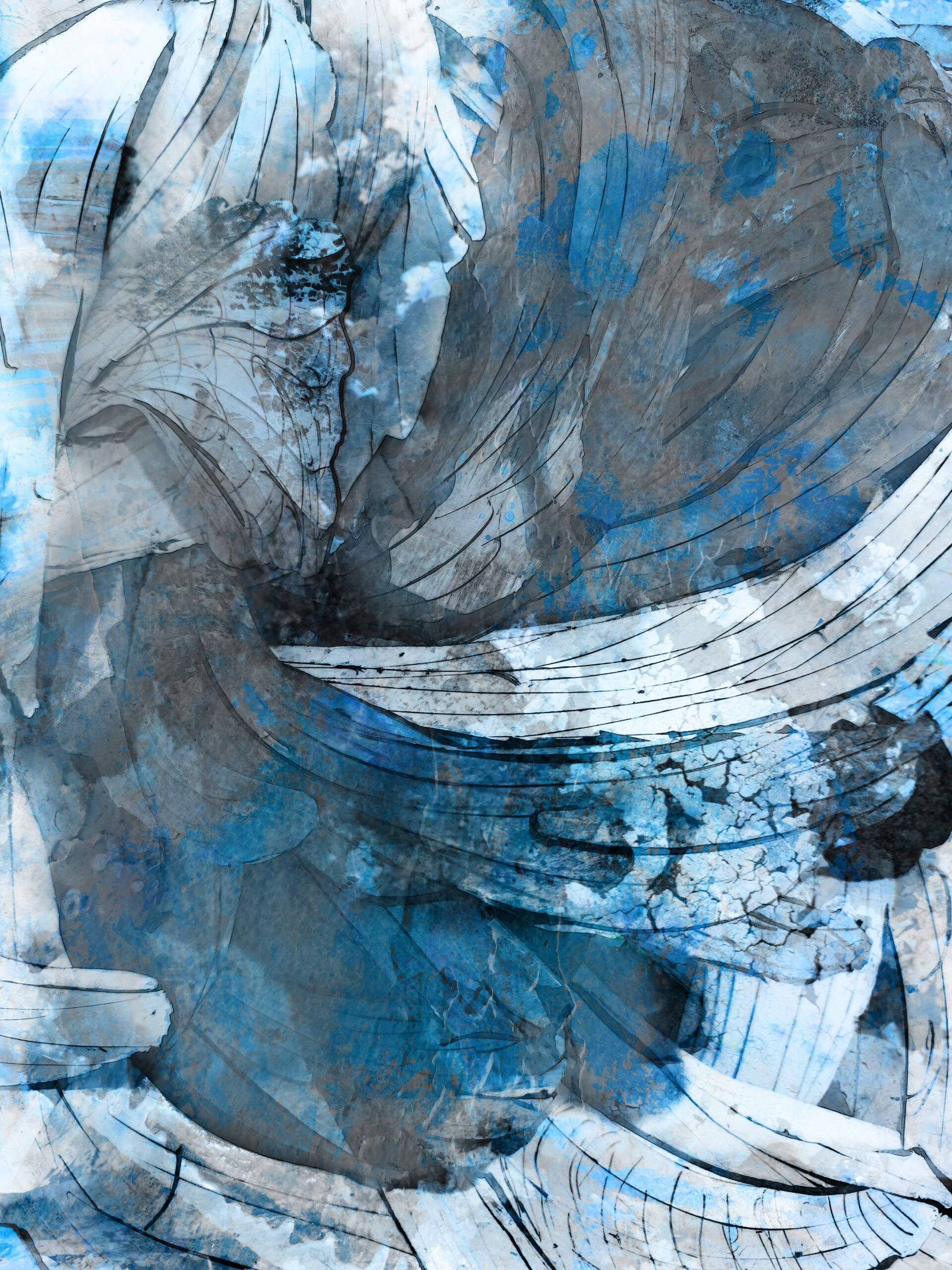
In A Sky That Wouldn’t Leave, Michael John Valentine captures something far more elusive than atmosphere—he captures persistence. Not the fleeting sky as we typically perceive it, but the one that lingers long after we’ve looked away. This is not a depiction of place, but of imprint—the way light, color, and memory settle into the mind and refuse to dissipate.
The work unfolds as a convergence of movement and suspension. Expansive gestures sweep across the surface, suggesting currents of air, shifting cloud formations, or even the residual motion of something once present but no longer visible. And yet, nothing feels transient. Every mark, every passage of tone feels held—anchored within the composition as though time itself has slowed to preserve it.
This tension between motion and permanence is central to the piece’s impact.
At its foundation, A Sky That Wouldn’t Leave is built through a sophisticated mixed media process that begins well before the final image emerges. Valentine often initiates his works through layered visual references—photographic fragments, compositional studies, and gestural underdrawings. These early stages are exploratory, establishing rhythm, directional flow, and the emotional architecture of the piece.
These initial elements are not treated as fixed—they are intentionally unstable.
Fragments are introduced, repositioned, and partially obscured as the composition evolves. This creates a dynamic base where multiple visual ideas coexist, overlap, and interact. The surface at this stage is already active, already carrying complexity, but it is only the beginning.
From this foundation, the work transitions into the defining phase of Valentine’s practice: overpainting.
Layer by layer, acrylics are applied with both precision and intuition. Some passages are built up with confident, sweeping gestures, while others are softened through translucent applications that allow earlier marks to remain visible beneath the surface. This interplay between opacity and transparency becomes the language of the painting.
Importantly, overpainting here is not about correction—it is about evolution.
Each new layer responds to what came before it. Areas of intensity are quieted; subtle passages are brought forward; entire sections are reworked, scraped back, and redefined. This continuous negotiation between addition and reduction creates a surface that feels alive—one that holds within it the evidence of its own making.
As noted in descriptions of Valentine’s broader body of work, this layered overpainting technique produces a “dimensional interplay where color and touch interweave,” resulting in a surface that carries both visual depth and tactile presence.
In A Sky That Wouldn’t Leave, this dimensionality is particularly pronounced.
You can sense the earlier layers beneath the final composition—ghosted gestures, softened edges, fragments of line and tone that continue to influence the overall structure. These remnants are not hidden; they are integrated, contributing to a sense of accumulated time embedded within the canvas.
Once the painting reaches a point of equilibrium—where structure, movement, and tone have fully resolved—the final stage begins: glazing.
This stage is both protective and transformative.
A carefully applied gloss sealant is introduced across the surface, enhancing the luminosity of the underlying pigments while preserving the integrity of the layered composition. The glazing does not flatten the work; it amplifies it. Light interacts with the surface in complex ways—catching on raised textures, slipping through translucent passages, and reflecting differently across areas of varying density.
As described in Valentine’s process, this final glazing “adds a sheen that enhances depth and light interaction,” allowing the painting to shift subtly depending on viewing angle and environment.
The result is a work that is not static, but responsive.
As the viewer moves, the painting changes. Colors deepen, surfaces emerge, and previously unseen details reveal themselves. This dynamic quality reinforces the central idea of the piece: that what we perceive is never fixed, and that certain moments—like certain skies—continue to evolve within us.
The palette itself plays a crucial role in this experience.
Soft tonal transitions coexist with more assertive passages, creating a balance between calm and energy. There is an atmospheric quality to the color relationships—suggestive rather than declarative—allowing the viewer to project their own interpretation onto the work. The “sky” of the title is never literal; it is emotional, psychological, and deeply personal.
This openness is intentional.
Valentine’s work does not impose meaning—it invites it. Each collector encounters the painting differently, shaped by their own experiences, memories, and perceptions. For some, it may evoke the quiet after a storm; for others, the lingering glow of a sunset that refuses to fade.
What remains constant is the sense of presence.
And this presence is inseparable from the uniqueness of the piece.
Because of the layered mixed media foundation, the intuitive overpainting process, and the final glazing, no two works can ever be replicated. Each decision—each brushstroke, each adjustment, each moment of restraint or intensity—contributes to a singular outcome. The painting is not a version of an idea; it is the only instance of it.
For the collector, this distinction is essential.
A Sky That Wouldn’t Leave is not merely an image—it is a record of process, time, and transformation. It carries within it the physical history of its creation, preserved through layers that remain visible, tangible, and alive.
Ultimately, this work is about what stays.
Not the immediate, not the obvious—but the enduring. The sky that lingers in memory. The light that continues to influence long after it has disappeared. The feeling that cannot be named, yet refuses to fade.
It is not a sky you look at.
It is a sky that remains with you.
A Special Modern Abstract Series about time, memory, atmosphere, and fleeting perfection.
The Series Includes the following releases- The Shape Of A Perfect Day, A Day Worth Holding, The Calm After Color, The Day That Found Us, Just Before Evening, Before The Day Breaks, A Sky That Wouldn’t Leave, After The Light Fades, A Moment Without End, The Day That Stayed, The Longest Light, One Fine Day
The Exhibition Canvas comes in 3 sizes and goes through several steps that include overpainting with acrylics, signing with acrylics on the front and a final glazing to protect the canvas before being rolled in a sealed tube then a box ( shipping is free in the USA )
The Matted Prints come in 3 sizes and are shipped in a box. ( shipping and handling is free in the US)
The Glossy Poster Print measures 16 x 24 and arrives in a sealed tube that is placed in a box. ( shipping is free in the US )
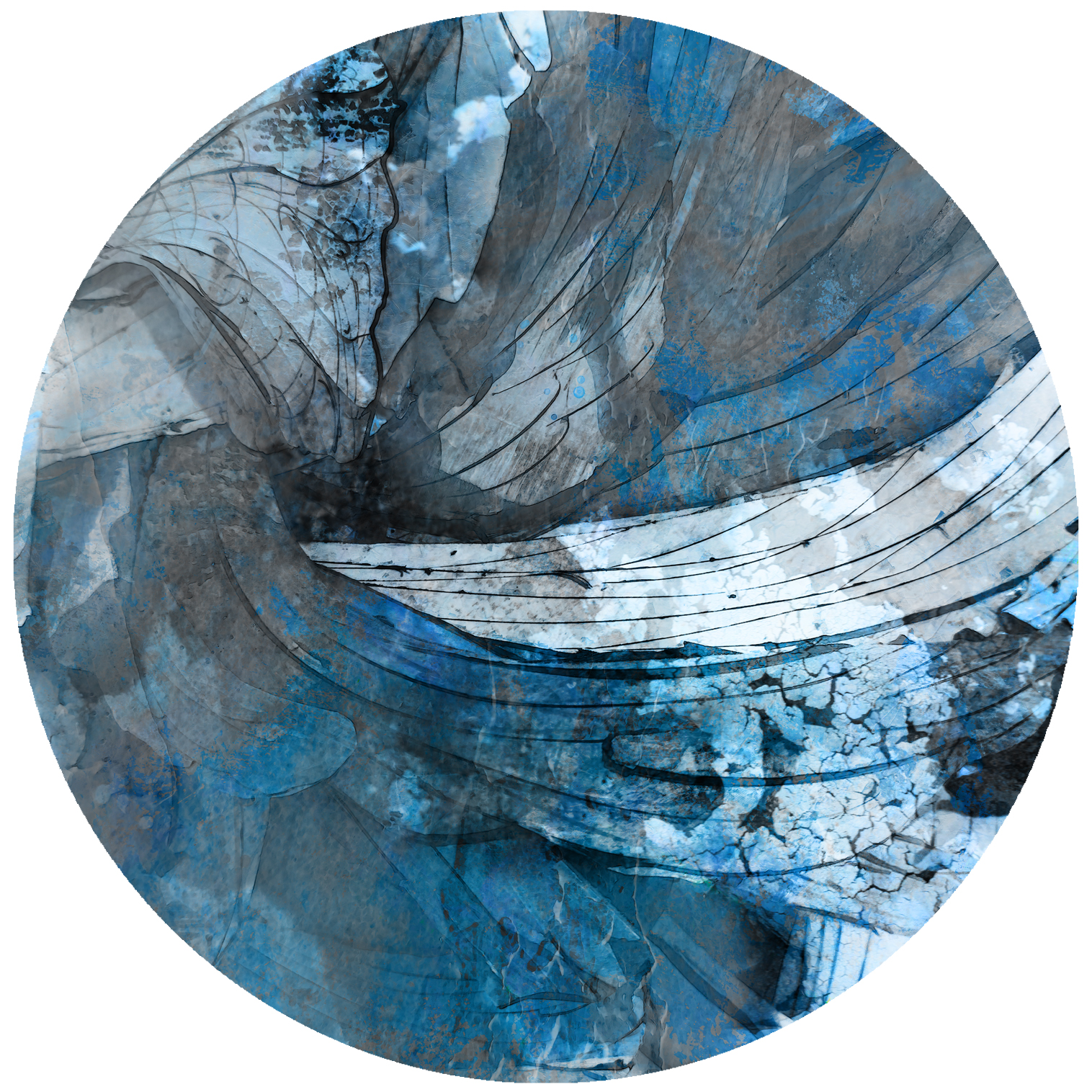
The 4 Inch Round Peel And Stick Decal is perfect for many applications beyond cars and comes in a sealed envelope ( shipped for free )