“A canvas is an arena in which to act.” — Jackson Pollock
The Art of Splatter Painting — A Celebration of Movement, Memory & the Unseen Dance of Color
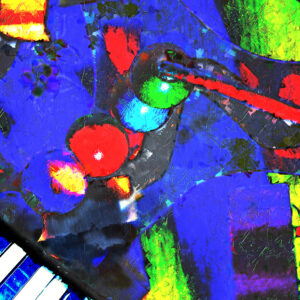
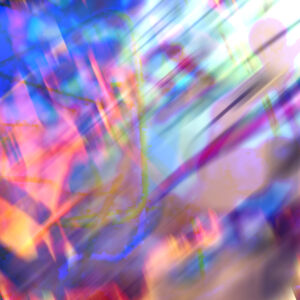
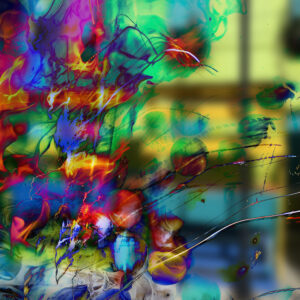
In the pantheon of modern abstract expressionism, few techniques have captivated the imagination, challenged perceptual boundaries, and redefined artistic agency like splatter and drip painting. The Art of Splatter Painting by Michael John Valentine is a dynamic testament to this legacy, channeling not just the visual energy of the medium but its emotional and philosophical core. This piece is not merely a visual ornament; it is a singular experience of form, motion, and spirit—a conversation between artist and viewer that unfolds with every contour and speck of color.
Heritage of a Revolution
The lineage of splatter painting begins with a seismic shift in 20th-century art. Artists like Jackson Pollock rejected traditional brushwork and compositional hierarchy, embracing instead a liberated approach that saw paint itself become an instrument of expression. Pollock’s pioneering actions—walking around canvases laid on the floor, allowing gravity and gesture to guide paint’s path—transformed the act of painting into a performative dance between intention and chance.
In the spirit of this lineage, Valentine’s The Art of Splatter Painting embodies both reverence and reinvention. It acknowledges the rhythms of Pollock’s fluid, sweeping gestures while carving its own artistic identity—an identity rooted in precision, emotion, and the symbiotic relationship between control and letting go.
Materiality and Technique: A Multisensory Encounter
This work features rich layers of overpainting, sealed under a glossy protectant that both preserves and amplifies its depth. Each pigment seems to float above the next, forging a luminous interplay that invites close inspection and prolonged reflection. Delivered unstretched and rolled in a heavy-duty tube, the piece offers the collector the rare joy of choosing their own framing path—a tactile continuation of the artistic journey from studio to sanctuary.
The materiality of The Art of Splatter Painting is not incidental; it is central to its impact. The dense, textured surfaces are the result of deliberate decisions—where to accelerate or slow, where to overlay or allow space. These subtleties reward viewers who return again and again, discovering new harmonies in each viewing.
Visual Rhythm and Emotional Resonance
At first glance, the painting appears an explosion of color—an orchestrated chaos imbued with intensity. Yet, upon deeper engagement, an elegant architecture emerges. Cupid pathways of pigment lead the eye across the canvas in waves, arcs, and loops that suggest not randomness but intentional rhythm. This duality—seeming spontaneity underlaid with masterful command—echoes Pollock’s assertion that technique is a means to a statement, not an end in itself.
What splatter painting does so beautifully is externalize the internal. Just as Pollock spoke of expressing “the energy, the motion, and other inner forces” of the modern artist, Valentine’s work captures the emotional currents beneath the visible surface. Each paint flick and line carries a trace of its creator’s heartbeat, making the canvas a mirror of vitality itself.
Collector’s Perspective: Why This Piece Matters
For the discerning collector, The Art of Splatter Painting represents more than a decorative acquisition—it stands as a bridge between historic avant-garde and contemporary imagination. The broad range of sizes and formats—from glossy matted prints to large overpainted canvases—allows this piece to adapt into diverse spaces while retaining its commanding presence.
Investing in this work means owning a piece of the ongoing conversation within abstract art—a conversation about movement, identity, presence, and the expressive potential of paint itself. It is a conversation that began over seventy years ago and continues to evolve with every generation of creators and collectors who embrace its challenge.
The Experience of Seeing
When encountered in person, The Art of Splatter Painting defies visual flattening. It evokes sound and motion, as if the paint were frozen mid-dance. Light plays across layers, revealing dimensional interplay that no photograph can fully convey. In this, the work shares an affinity with Pollock’s greatest canvases: both demand an active viewer, one who enters the “arena” of the painting and responds with body and mind.
Here, the painting becomes a living presence in your space—a catalyst for introspection, an invitation to explore nuance, and a perpetual source of aesthetic joy.
A Legacy of Personal Encounter
Splatter painting, by its very nature, is relational—it speaks of gestures, decisions, and moments that resist complete control. Like life itself, it is at once unexpected and deeply human. Valentine’s piece captures this tension beautifully: it is crafted, yet spontaneous; bold, yet refined. It suggests that art is not merely something to be viewed but something to be felt and inhabited.
In the words of Jackson Pollock—whose ethos echoes throughout this genre—“A canvas is an arena in which to act.” This work invites not just observation but participation: an emotional and intellectual engagement that transforms both object and observer.