“Every good painter paints what he is.” — Jackson Pollock
The Day That Found Us — A Study in Gesture, Memory, and Layered Presence
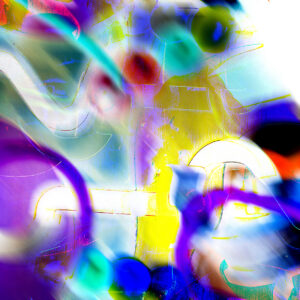
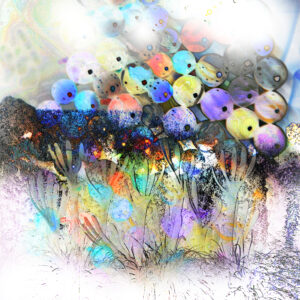
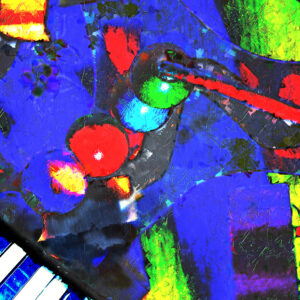
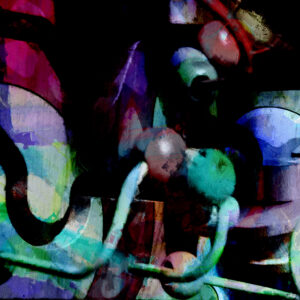
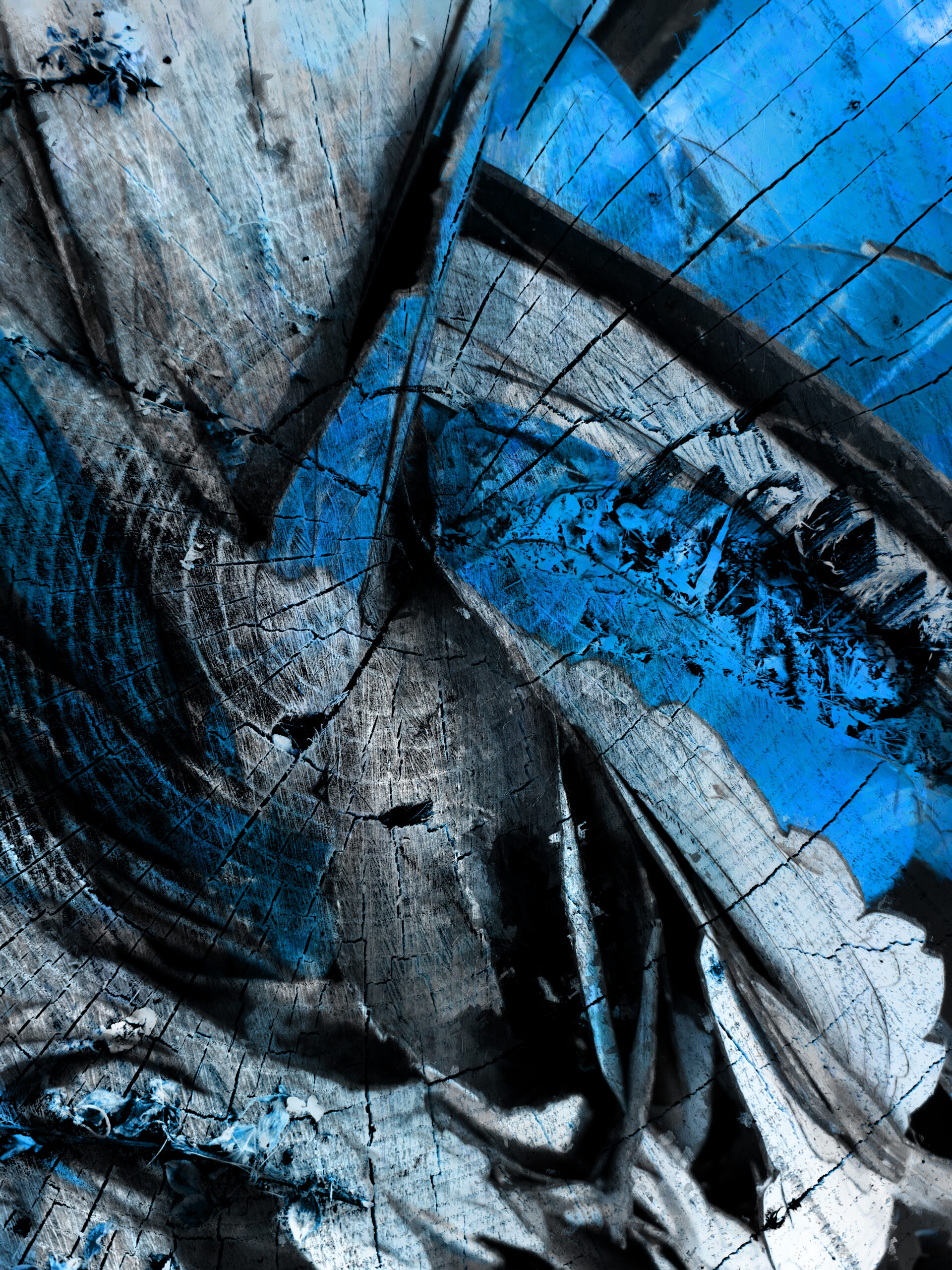
In The Day That Found Us, Michael John Valentine continues his exploration of perception as an evolving field rather than a fixed image. The work exists in a state of continual becoming—where form, memory, and light are not static elements but active participants in the construction of meaning. Rather than presenting a resolved narrative, the painting offers an encounter: a moment that feels discovered rather than depicted.
This sense of discovery is essential. The viewer does not simply observe the painting; they arrive within it, as though stepping into an atmosphere already in motion.
Overpainting as Emotional Archaeology
Valentine’s overpainting process is the structural foundation of The Day That Found Us. Each piece begins with an initial compositional layer—often grounded in photographic reference or gestural abstraction. This early stage is intentionally open-ended, functioning as a first memory of the image rather than its final articulation.
What follows is a sustained process of revision through layered acrylic application. Forms are built, partially obscured, and then reintroduced through successive passes. This cycle of addition and subtraction creates a surface that contains multiple temporalities at once. The painting is not built in a single direction, but through accumulation—where each decision remains partially visible beneath what comes next.
This method transforms the canvas into a kind of emotional archaeology. Beneath the visible surface lies a history of gestures, corrections, and intuitive shifts. Nothing is fully erased; instead, it is absorbed into the structure of the work. The result is a density that feels lived rather than composed.
In The Day That Found Us, this process generates a subtle tension between emergence and concealment. Certain forms assert themselves briefly before dissolving back into atmospheric fields. Others remain faintly present, like echoes of earlier states of perception. The painting becomes a record of looking itself—how vision changes over time rather than arriving all at once.
Glazing as Atmospheric Intelligence
Once the layered structure reaches a critical threshold, Valentine introduces glazing to unify and modulate the surface. These translucent applications of pigment and medium act not as decorative finishes, but as atmospheric interventions.
Glazing softens transitions between forms, compresses spatial depth, and alters the way light interacts with the painting. In The Day That Found Us, it produces a sensation of suspended air—where color seems to exist both on and within the surface simultaneously.
This stage is essential to the painting’s emotional tone. The glaze does not resolve complexity; it disperses it gently across the surface, allowing multiple layers to remain perceptually active. Earlier gestures remain visible beneath translucent veils, creating a sense that the painting is simultaneously revealing and withholding information.
Light becomes a structural force here. It shifts the painting depending on viewing distance and environmental conditions, ensuring that the work never settles into a single fixed identity.
Mixed Media as Unified Perception
Although Valentine’s practice incorporates multiple materials and methods, it is not fragmented in intention. Instead, it operates as a unified perceptual system in which photography, painting, layering, and glazing are all stages of a single evolving process.
In The Day That Found Us, this unity is experienced as movement. The viewer’s attention drifts between areas of clarity and dissolution, constantly recalibrating what is foreground and what is atmosphere. At times, structure appears to surface; at others, it recedes entirely into abstraction.
This oscillation is not decorative—it reflects the instability of perception itself. What we see is always contingent, always shaped by memory, context, and time. The painting mirrors this condition, refusing to settle into a singular reading.
The Gesture of Presence
Pollock’s idea that “every good painter paints what he is” resonates deeply within Valentine’s process. The overpainting method, in particular, becomes a form of presence embedded into material. Each gesture is not only an aesthetic decision but a trace of physical and emotional engagement with the surface.
In The Day That Found Us, presence is not declared; it is accumulated. It builds through repeated contact with the canvas, through layers that preserve the energy of earlier decisions. Even when forms are obscured, their influence remains embedded in the composition’s structure.
This creates a sense of intimacy within the work—not as narrative content, but as residue of process. The viewer is not simply seeing an image; they are witnessing the aftermath of sustained attention.
Light, Memory, and the Experience of Becoming
The painting ultimately operates as a study in how moments are formed rather than how they are recorded. Memory here is not linear or fixed. It behaves more like layered perception—reconstructed each time it is accessed, altered by new impressions.
Valentine’s overpainting and glazing techniques translate this condition into physical form. Each layer becomes a version of the moment, partially preserved beneath newer interpretations. Nothing is fully lost, yet nothing remains entirely intact.
This creates a sensation of temporal depth: the feeling that the painting contains not one “day,” but many overlapping versions of it.
A Field That Never Settles
The Day That Found Us resists closure. It does not resolve into a single image or emotional state. Instead, it maintains a delicate instability—where meaning emerges, shifts, and dissolves in continuous cycles.
Through overpainting, Valentine constructs a surface that holds time rather than freezing it. Through glazing, he transforms that surface into atmosphere. Together, these processes create a work that feels less like an object and more like an experience unfolding in real time.
In the end, the painting does not simply represent a day. It behaves like one—unstable, luminous, and constantly in the act of becoming.
A Special Modern Abstract Series about time, memory, atmosphere, and fleeting perfection.
The Series Includes the following releases- The Shape Of A Perfect Day, A Day Worth Holding, The Calm After Color, The Day That Found Us, Just Before Evening, Before The Day Breaks, A Sky That Wouldn’t Leave, After The Light Fades, A Moment Without End, The Day That Stayed, The Longest Light, One Fine Day
The Exhibition Canvas comes in 3 sizes and goes through several steps that include overpainting with acrylics, signing with acrylics on the front and a final glazing to protect the canvas before being rolled in a sealed tube then a box ( shipping is free in the USA )
The Matted Prints come in 3 sizes and are shipped in a box. ( shipping and handling is free in the US)
The Glossy Poster Print measures 16 x 24 and arrives in a sealed tube that is placed in a box. ( shipping is free in the US )
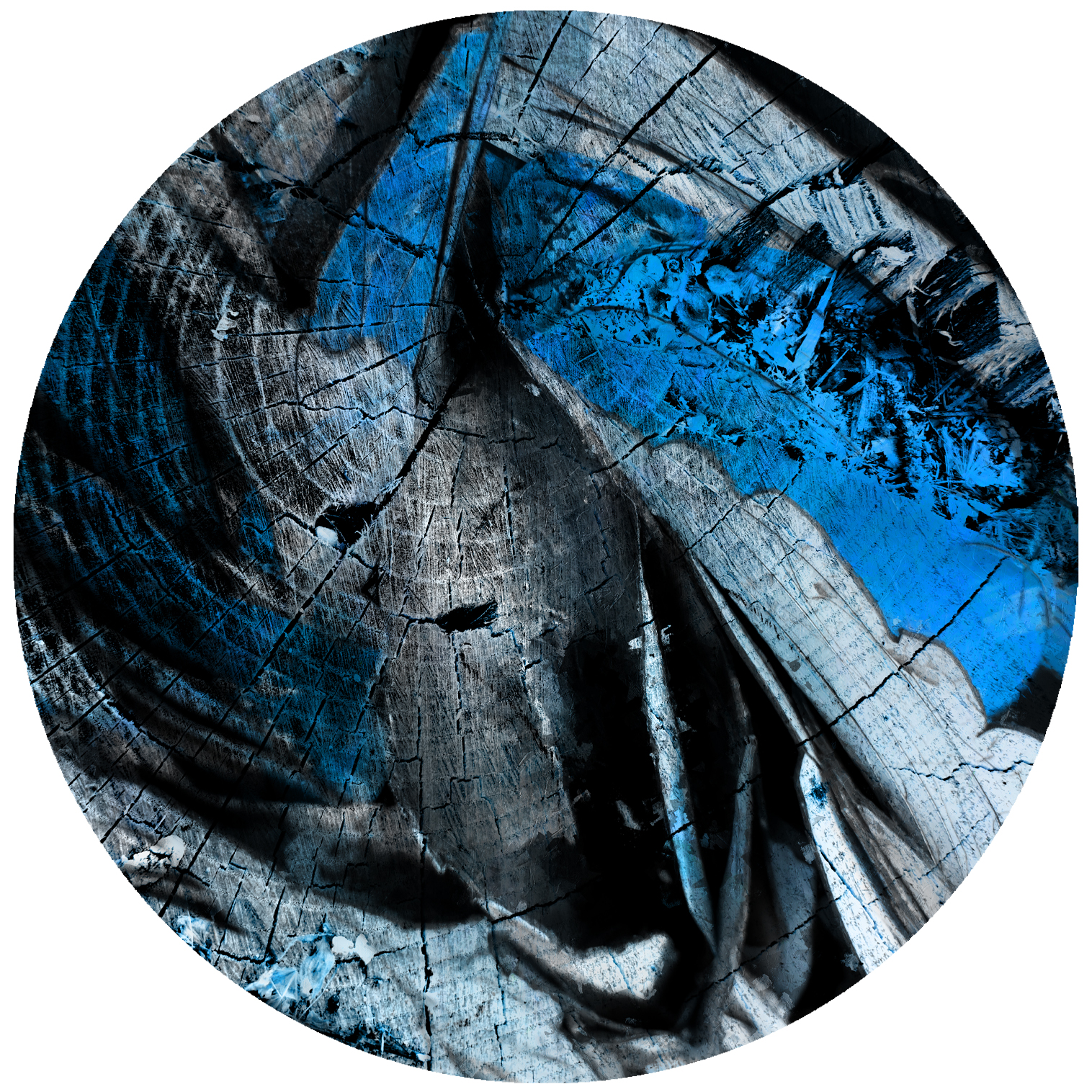
The 4 Inch Round Peel And Stick Decal is perfect for many applications beyond cars and comes in a sealed envelope ( shipped for free )